What Europeans Think of Trump

Just got home from a two-week vacation in the Czech Republic and Germany, including a week in what used to be East Germany. All of us learn from travel, of course, but this trip—planned long before last year’s election—was an incisive tutorial on how the rest of the Western world sees where we’re headed.

As of today, there are warnings against travel to the United States for citizens of Canada, Germany, England, Denmark, Netherlands, and France—probably the easiest and most accessible nations for Americans to visit.

I grew up in Michigan, where Canada hardly felt like a foreign country. I have friends who live in Windsor, but work in Detroit. College students in Michigan have routinely made pilgrimages to Ontario, where the legal drinking age is 19. Losing that easy camaraderie is huge—and that’s without taking into account the auto industry’s dependence on Canadian-made parts and trade.

I was interested and a little anxious about what the vibe would be in Europe. I’m too old for rail passes/backpacks/hostels travel—we’d be staying in hotels and led by English-speaking guides—but if you pay attention, in between historic dates and landmarks, you can hear and see what daily life is like in places that used to be Russian-controlled territories, how they see themselves in the world, and their fears for the United States.

I was also curious about my fellow American travelers. Would they agree with Jim Acosta, who said: Think of the damage done to America’s standing in the world, in the minds of young people across the globe. They see a president who is often out of touch with the real world, thoroughly corrupt and vengeful, beginning his second term launching a crypto scheme and turning government against vulnerable migrants as well as his enemies, both real and imagined.

We began our journey in Prague, a gorgeous medieval city that has been overrun by competing rulers for centuries, part of the Holy Roman Empire as well as the Kingdom of Bohemia. The old core of the city was almost untouched by WWII, but our local walking tour guides–find ‘em on the internet–occasionally pointed out architectural anomalies, calling them Communist buildings, which (local joke) come in three colors: light gray, medium gray and dark gray.

Because the walking tour groups were nationally diverse, the focus was on the enchanting city and its rich history—including the Velvet Revolution of 1989, wherein the Czechs reclaimed their own heritage and autonomy.

Traveling into Germany—the former GDP, East Germany—was revelatory. Guides were excellent—they all knew the historical markers but would often tuck bits of human perspective in their remarks.

  • Our guide in Wittenberg was born in the 1950s and grew up there. In secondary school, she said, she studied Russian. It was the only “foreign” language available. She also studied Russian in college. When she was in her 30s, and the Wall came down, she decided she wanted to learn English—and did. I never wanted to speak another word of Russian, she said darkly.
  • In Potsdam, we visited the estate where the Potsdam conference was held and the iconic photo of Truman, Stalin and Churchill was taken, before Germany was carved up. Potsdam is a beautiful town, including the upscale neighborhood where Vladimir Putin and his KGB comrades lived, in the1980s, considering what other beautiful villages and terrain they might appropriate.
  • In Dresden, we got a quick tutorial on how much of Dresden was bombed into smithereens, in February of 1945. American woman (who should, IMHO, know better) asks the guide: Who bombed this city? The allies, he replies, tactfully. You mean us? She says. Why would we do that? Well, the guide says— revenge, maybe? Later, I hear the woman ask her husband if the Germans are communists, leaving me to wonder just what we are teaching in World History classes.
  • In Torgau, where the allied armies met the Russian army, effectively shoving the tattered German army out of their homeland, April 25, 1945, five days before Hitler took his own life in a bunker. We looked at the site where the armies met, on the Elbe river. Flags from the United States, Russian and Germany have flown there for 75 years, in a memorial. The flagpoles are now empty—and have been since earlier this year, when Germany decided the peace agreement no longer applied.

Our guide in Torgau pointed out that there were a few things—free child care, for one—that made living in East Germany easier (these kindergartens were shut down as “too socialist” after the reunification). On the other hand, the omnipresent occupying Russian soldiers were brutes. His great-grandmother was shot dead in the town square, for resisting the attentions of one of them. He reminded us that Hitler came to power peacefully, and stayed there, courtesy of the Nazi party.

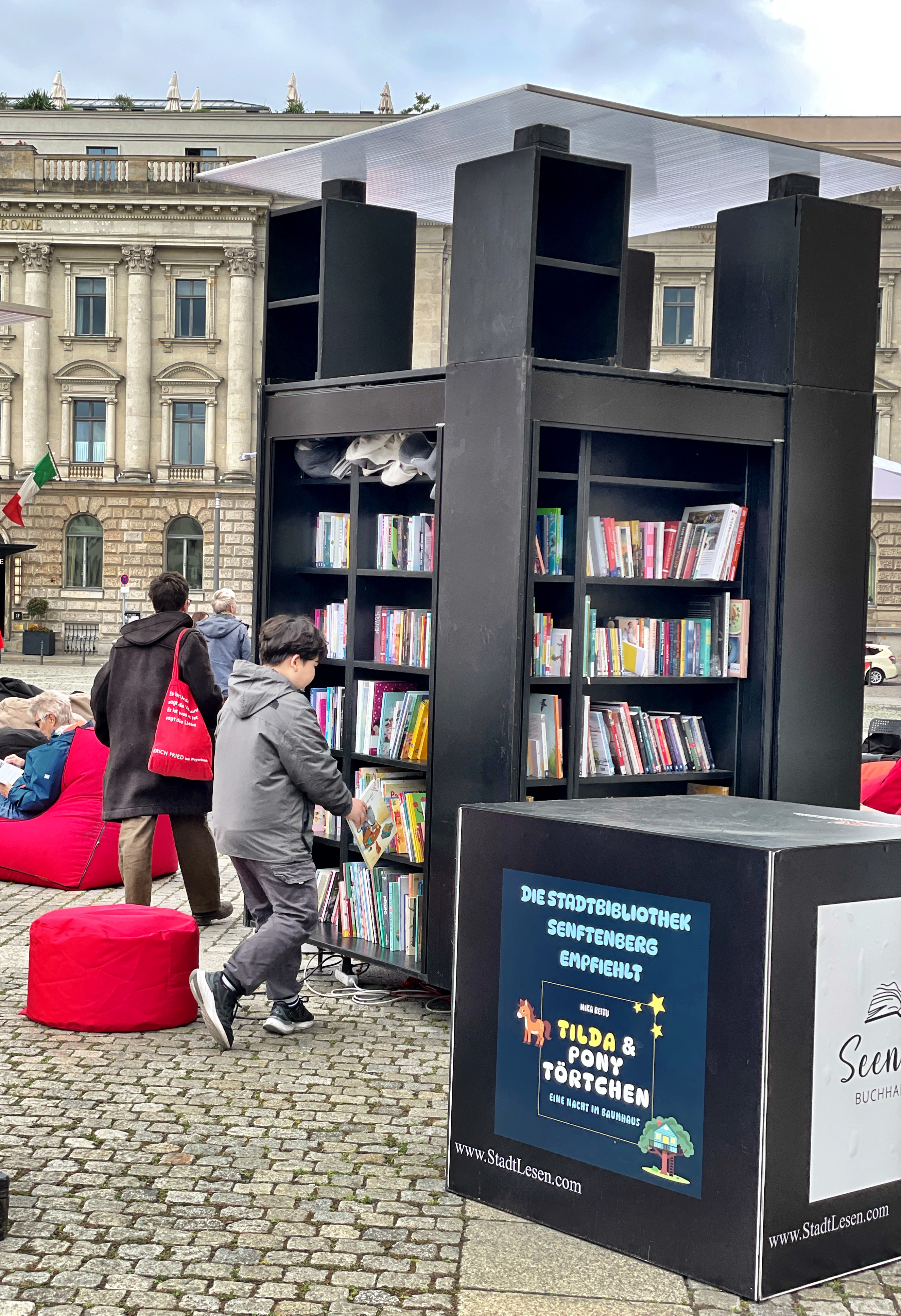
  • Berlin, of course, is a kind of living museum. Most powerful moment in Berlin? The square where, in May of 1933, the Nazis held their first book-burning. There’s a memorial there. Our guide said, quietly: First they burn books. Then, they burn people. But there is a little free library in the square, with hammocks and beanbag chairs. It was a chilly day—but there were children there, reading. Hope.

Everywhere we went, people were kind and hospitable. And honest. Aware of how long it takes to overcome the destruction of a great nation.  As Jen Rubin wrote, this morning:

Other countries, much older than the United States, have gone through grim, even disastrous years, decades, or centuries. And yet in Europe, the spirit of liberal democracy (however imperfect) remains alive and well. A sense of the public good still thrives, and millions of people strive to keep the achievements of Western Civilization from the clutches of fascism, xenophobia, know-nothingism, and conspiracy-mongering. The world is carrying on, albeit with dismay, as Americans struggle through its Dark Age.

Amen.

Are Women the Cause of Reluctance to Read?

I remember learning–perhaps in a grad class or professional development session, years ago–that boys didn’t like to read about girl things. You know—relationships, communication, emotions, the finer points of making a home or enriching family life. Boys wanted to read stories about adventures, we were told. Starring, naturally, other boys.

Ergo, if we wanted to turn boys into enthusiastic readers, we needed books where boys did boy stuff—creeks, animals, cars, fights, danger, you name it. Write it and they will come.

I thought about this when re-reading A Separate Peace this month. My book club is doing a “Books You’ve Already Read—or should have read” month, and I thought it was time to re-read a book that I put on my Top Ten list for decades.

(Seriously—I kept continuously updated top ten lists of books, movies and LPs until I had both children and a full-time job. There are still some gems on those lists—but also some really embarrassing stuff.)

I wouldn’t, however, call Separate Peace an embarrassing pick. I read it in high school, although not as a class novel. In the late 60s, my public high school adopted a choice-based language arts curriculum. Instead of English 9/10/etc, there was an array of semester-long courses. I took journalism, speed reading and Great Books, a totally wonderful class where students did nothing but read books, then journal their impressions.

There was a list of great books (SP was on it), but you could also deviate, with the teacher’s permission. It was that teacher—Mrs. Palmer—who introduced me to Daphne du Maurier, Virginia Woolf, and Madeleine L’Engel.

It’s hard for me to put my finger now on why I loved Separate Peace so much. Partly, it was the boarding school setting—what it would be like to live in dorms, with other students whose parents weren’t scraping to pay the mortgage, for whom college was a certainty, not a stretch.

Mostly, though, I think it was because—spoiler—there’s a death in the book, under unusual circumstances, leading the reader (this teenaged reader, anyway) to muse on Big Meaningful Issues. In case you’re wondering whether I noticed the homoerotic flavor of the relationship between the narrator and his best friend, the answer (1969) is no and (2025) yes.

But here’s what really jumped out at me, some 50+ years later: there are no women in this book. Aside from a couple of sentences mentioning a screechy school nurse, and a sentence describing a classmate’s mother as kindly, there is zero female presence in this book. There’s plenty of adventure, danger, scrapes and disobedience. Even a student-led tribunal, and a World War. But not a single woman, or girl.

From a recent article in The Guardian, about a newly formed publishing house that intends to publish only books by men: 

Cook said the publishing landscape has changed “dramatically” over the past 15 years as a reaction to the “prevailing toxic male-dominated literary scene of the 80s, 90s and noughties”. Now, “excitement and energy around new and adventurous fiction is around female authors – and this is only right as a timely corrective”.

“This new breed of young female authors, spearheaded by Sally Rooney et al, ushered in a renaissance for literary fiction by women, giving rise to a situation where stories by new male authors are often overlooked, with a perception that the male voice is problematic,” he said.

Hunh. I wasn’t really paying attention to any toxic literary scene in the 1980s and 90s, due to the aforementioned family and job. But I was still reading a lot—and was deeply involved in whether and what my students were reading. Or not reading.

It was a time when getting any kind of reading material—from comic books to Captain Underpants— into kids’ hands was the prescription for reluctant readers. There was a rolling bookshelf in my band room, filled with books about music and musicians. Some had some vaguely naughty photos. I purchased all of them, and they were well used.

My take on any reduction in male readers in the 21st century is that omnipresent screens, not problematic masculine voices, are responsible.

Still. What I notice about this (well-meant, I assume) announcement is that it only took a couple of decades for men to perceive that women were “ushering in a renaissance,” then set up their own literary clubhouse, no girls allowed.

There’s also this:
Less than half of parents find it fun to read aloud to their children, new research shows. Only 40% of parents with children aged 0 to 13 agreed that “reading books to my child is fun for me”, according to a survey conducted by Nielsen and publisher HarperCollins. The survey shows a steep decline in the number of parents reading aloud to young children, with 41% of 0- to four-year-olds now being read to frequently, down from 64% in 2012.

A significant gender disparity was identified, with 29% of 0- to two-year-old boys being read to every day or nearly every day compared with 44% of girls of the same age.

Plus this, ominously: Many parents focus on the literacy element of reading, seeing it as a skill, rather than encouraging a love for reading in their children.

So—who’s not reading, and why?

If you talk to the Science of Reading crowd, boys’ reading difficulties and reluctance to read can be laid at the feet of teachers who were never taught the only correct protocols for reading instruction, or—worse—fail to use them with fidelity, a word I have come to loathe when applied to pedagogy.

And since the overwhelming majority of early-grades teachers are women, this can be construed as another way in which women are not paying attention to the needs of boys. But it’s so much more complex than phonemic awareness, yada yada.

The Great Books class at my high school only lasted a few years, then fell when the “cafeteria curriculum” became outmoded, in favor of … what? I forget. Back to Basics? One of our cyclical returns to The Canon—in which white male-authored books have literally always been deemed more worthy of study?

All children deserve to be read to, daily, even when they’re able to read themselves. Stories about both boys and girls. Because that’s how they learn to be curious about the real world.

Version 1.0.0

A Veteran Teacher’s Thoughts about ADHD

I can remember the first time I heard about ADHD. It was in the early 1990s—and the person who was educating me was the mother of one of my students. His teachers—six of us, plus an admin—were sitting around a table, meeting to discuss his classroom behaviors (not good), when she whipped out stapled packets of articles on ADD.

He’d been officially diagnosed, and she was part of a parent support group, which provided materials for teachers. The packets she gave us were thick—maybe 50 pages—and filled with scientific-sounding information about diagnosis and treatment of this disease, then thought to apply to perhaps three percent of all students.

Reading through it (rather than round-filing it, as a couple of colleagues did), you could see what was coming. The Attention-Deficit Era had begun. He wasn’t hyperactive or oppositional-defiant, or a troublemaker. Not anymore. He had ADD.

Let me say, upfront, that I believe ADHD is a real thing, and using medication judiciously to treat it is often a lifesaver for parents and teachers. Let me also say that the way some classrooms operate is not conducive to deep learning for a range of students who need lots of movement and hands-on activities. And—side note– this is often not their teachers’ fault, given our increasing national focus on testing, compliance and narrowing the curriculum. Raising the damned bar.

I was horrified to read in Paul Tough’s excellent piece in the NY Times Magazine, Have We Been Thinking About A.D.H.D. All Wrong?  that nearly a quarter of 17-year old boys in the United States have now been diagnosed as having ADHD. Tough does a good job of tracking the factors—drug treatments, specifically—that have made one in four boys unable to focus in a quiet classroom without chemical assistance.

He rightfully notes that ADHD symptoms also look like a lot of other things: anxiety, head injury, lead exposure and many other traumas.

But the piece ends on a hopeful note, with lots of testimony from young adult men who have found the right jobs and life circumstances and seldom experience troublesome ADHD symptoms. Which makes me ponder what there is about school that makes the kids we used to call hyperactive need drugs to get by every day, even though the medicines don’t improve their learning.

“Believing the problem lay in their environments rather than solely in themselves helped individuals allay feelings of inadequacy: Characterizing A.D.H.D. as a personality trait rather than a disorder, they saw themselves as different rather than defective.”

The kid whose mother insisted he had a disease, rather than merely being disobedient? He was, in fact, hyperactive and prone to (cheerfully) destroying order in a classroom. Once, while I was moving band equipment, chairs and stands across the hall from the band room for an assembly in the gym, I instructed him to load percussion equipment on a flat pushcart. (Teacher tip: Always give restless students an important job.)  

Instead, he assembled the drum set on the cart, then had another kid push him down the hall while he pounded out a little Metallica. Down the hall—and past the office. It didn’t end well for either of us. He wasn’t a bad drummer, by the way. According to mom, it was his favorite class.

I looked him up on internet, and he’s now a multimillion-selling real estate agent. Go figure.

I taught for two more decades after that day I first heard of ADD. Lots more students were diagnosed with ADD, over time—then, ADHD. My colleagues and I talked often about accurate language, and accurate diagnoses, and the differences in kids when they were medicated. Sometimes, parents let teachers know their child had been diagnosed—sometimes, they didn’t.

I took kids to camp and on field trips where I had to administer their ADHD medications, or have conversations with their concerned parents about behavior issues when they were unmedicated—at an evening performance or band camp.

And I often felt grateful that I was teaching band, with 65 students at once, all holding noisemakers. There was a lot of stimulation in the band room, plenty of activity. There was also discipline (because otherwise there would be chaos), but my attention-deficit kids could tolerate rules and procedures, as long as they were moving and doing things. Mostly.

I also taught 7th grade math for two years. I found that maintaining student focus with 28 students in a desks-and-chalkboard setting was often way more difficult than keeping 60 band kids on track.

Read Paul Tough’s piece, if you get a chance. It’s nuanced and layered with contradictions, like most things about schooling, and raising healthy children. We could be doing lots more for kids who are immersed in screens and entertainment daily, and have difficulty staying on task when that task involves paper and pencils.

But then—we could be doing a lot more for many kids, who bring their various backgrounds and issues to school. If only we had the resources. And a genuine commitment to the next generation.

SRFilterFavoriteBlackwhitesoft: kSREffectControlIntensityKey =

Boys

I’m old enough to remember…

When we were all sharing data in the 1990s about how boys got called on more often, and their comments got more affirmative responses from their female teachers. We actually had a professional development session at my school on the topic, urging us to self-monitor our teaching practice, to encourage girls to speak up in class and to acknowledge their skills. There was, of course, pushback, mainly from veteran (male) teachers. But we were dedicated to the idea of building confidence in girls.

I’m also old enough to remember an honors assembly where a (female) math teacher in my middle school, when presenting a top award from a statewide math contest to a young lady, remarked to everyone in the assembly that “the girls don’t usually try very hard on these competitive tests.” Parents and teachers seemed to take her comment in stride—and when I asked her about it later, she defended the remark and expanded on her belief that boys were just naturally better at math.

It must be scary for folks whose ingrained beliefs about male vs. female proclivities are now riding up against data on the next generation of our most powerful professions, while local community colleges are trying to attract male students by offering courses in bass fishing?

In ABA-accredited law schools, women now constitute 56.2% of all students, outnumbering men for the eighth consecutive year. Historically, law schools were dominated by men. In the 1970s, only 9% of law students were women.

According to the Association of American Medical Colleges (AAMC), in the 2023-2024 academic year, women accounted for 54.6% of medical school students in the United States. This marks the sixth consecutive year that women have made up the majority of medical school enrollees. 

So–I was eager to read a recent article in Edweek: Middle School Is Tough for Boys. One School Found the ‘Secret Sauce’ for Success.

Who doesn’t want to know the secret sauce for boys, since their dominance seems to be fading and their profile as reluctant learners rising?

Let’s cut to the chase. That sauce, those school leaders say, consists of reducing rules, trusting the boys, giving them more hands-on responsibilities and real-world applications for the things they learn (like DJ-ing a dance, designing a vehicle in teams—or not requiring hall passes).

Now, all those ideas sound fine to me. They worked when I used them, for 30 years or so. Treat your students (male, female, anywhere on the gender spectrum) with trust and give them real tasks to do. Challenge them, but build personal autonomy. Easy peasy.

However– why would we save that good stuff just for boys?

How much influence do schools have on boys’ ambition, effort and moral formation? And what’s happened to American boys in the past decade or so?

Lately, there’s been a lot of chatter about Adolescence, a four-episode drama about an angelic-looking 13-year old boy who kills a female classmate. I can’t watch stuff like that, but I am horrified by comments from teachers who say that “incel culture” depicted in the show is growing, in middle and high schools: Teachers described boys uttering sexual slurs about them in the classroom, talking about their bodies or just generally expressing a loathing of women. One boy, who had been harassing [teacher] all year, ended up spitting in her water bottle. Witnessing the harassment of their female students was also painful for these teachers. 

And here’s a fact that scares the daylights out of me. In the 2024 election, in the group of voters aged 18-25, the gender gap was 20 points.  Way more young white men–63%, first and second-time voters–cast their ballots for Trump, a man convicted of sexual harassment, a man who ordered 26,000 images removed from the Pentagon’s database and website, because they featured people of color and women.

As author and educator John Warner writes:  All progress has been met with backlash and Trump II could really be seen as a backlash presidency, a man who proudly preys on women as President, surrounded by others who seem similarly oriented. What is the positive message about gender equality for young men when joining the broligarchy seems to have real-world benefits?

While it’s important for boys to have personal agency in their learning, and be trusted by their teachers, boys need to have role models, as well. Who are we offering up as heroes, men whose lives and actions are worthy and admirable? Men worth emulating, who care for their spouses and children, men whose values serve as guardrails, men who are civically engaged?

Boys are growing up in schools where their neighbors on the school board worry about “weaponizing empathy.”  Where men at the highest levels of government power are uninformed bullies, careless in their actions but never held accountable.  

I attended graduation ceremonies annually in the mid-sized district where I taught. Usually, I was directing the band, but sometimes, I sat on the stage with any of my faculty colleagues who felt like giving up a Sunday afternoon and putting on a gown and academic hood.

The students sat in the center section of the auditorium, and I was always bemused by the front row of boys—how many of them were wearing shorts under their gowns, and rubber shower slides, with or without white socks. They were manspreading and snickering with each other, and I thought about how many of them were already 19, having been held back in preschool or kindergarten so they’d be bigger, and more likely to make first string, come middle school.

In another age, those young men would be on their own, perhaps married, perhaps working toward a house or business, perhaps serving in the military. But we gave them an extra year in school.

When perhaps what they really needed was real responsibilities, and someone to model how to live a life of integrity.

Bad Words in Schools

Over the past few years, I have volunteered in four local schools, in varied programs. And—as a retired veteran teacher—I understand why students’ identities and actions must be rigorously protected. But I want to share this recent experience, because—even with 30-odd years in various middle school and high school classrooms and plenty of exposure to Things Kids Say—it rocked me. Which school, which program—doesn’t matter.

It’s a marker about the coarsening of our culture—but the question is why.

So–there’s an 8th grade boy who’s talking to other middle school boys. They’re not huddling in the corner or trying not to be heard. The boy refers to a girl they know as a “Hawk Tuah girl”.  The other boys snicker. There is some head-turning in the room, including another adult volunteer.

What did you call her? she asks, curious. And the 8th grade boy proceeds to share an accurate definition of “hawk tuah”—out loud, with sound effects. Boys try to suppress their mirth, again. Girls walk away, clustering together. The other volunteer turns to me, wide-eyed, and says: Have you ever heard that word before?

Unfortunately, yes. Just didn’t expect to hear it explicated in a middle school classroom.

I’ve seen and heard plenty of appalling things in the classroom. I’ve heard angry students drop the F- bomb and nice girls call other nice girls ‘whores’ when their boyfriend showed interest. Also, if you haven’t been in a K-12 classroom since your own experience there, the line of what is acceptable and what will get you sent to the office has definitely moved over time.

My own vocabulary—both public and private—is hardly pure. Sometimes, I’m kind of like the dad in that You Tube video, trying to explain how the word fuck loses its power depending on how it’s used. Because this isn’t precisely about naughty words, per se.

Sending a kid who swears (especially if it’s not habitual) to the office isn’t ever likely to achieve anything useful. Plus—with social media and personally selected entertainment in every teenager’s pocket—it’s become harder and harder to say what is and is not overtly wrong.

The 8th grader learned how to define certain girls from watching videos and social media. He’s 13 and has no reliable filter for “inappropriate”—trust me—and he wasn’t swearing. So who do we blame for his language, let alone his idea that someone he knows and goes to school with just might be a Hawk Tuah girl, ha-ha? Do you call his parents? What will that yield?

I think about the well-meaning MI school official who compelled two middle schoolers to remove “Let’s Go Brandon” sweatshirts—and how the school got sued, won in court, but are now looking at an appeal supported by the so-called Liberty Justice Center.  I’m thinking there’s probably an assistant principal who wishes he’d just let those sweatshirts and the prepubescent political prisoners-in-training wearing them go.

Because that’s where we are now. There is no reliable list (like George Carlin’s seven dirty words) of what words are OK and Not OK.

Early in my career, I was called into the office by my principal, who said she’d fielded a complaint about me swearing in class—and the parent had already called the superintendent. I was genuinely mystified. What did I (supposedly) say?

Ass, she said. You said [Student] was an ass. Yesterday. He went home and told his mom you swore at him in class.

Well, the truth of the matter was this: The kid (a percussionist) was dropping cymbals on the tile floor. I directed him to stop. So he started kicking over suspended cymbals and temple blocks, which are on easily tipped stands. I took him out in the hall for a cheek-to-cheek, and chatted with him (severely, I admit) about why was he back there acting like a jackass? He had no response.

His mom, of course, hadn’t heard that part of the story. But when she did, she said that dropping equipment was no excuse for a teacher swearing. Damaging expensive equipment that all the bands use? Not a factor, apparently.

Today, language is at the heart of the ongoing, month-long trashing of our entire federal government—way more trigger words than George Carlin ever dreamed of. From a piece in the Atlantic:

Fear that other words could run afoul of the new [anti-DEI] edicts led anxious agency officials to come up with lists of potentially problematic words on their own. These included: Equity. Gender. Transgender. Nonbinary. Pregnant people. Assigned male at birth. Antiracist. Trauma. Hate speech. Intersectional. Multicultural. Oppression. Such words were scrubbed from federal websites.

Language is powerful. When we are afraid to speak freely, explore ideas, argue about meanings and outcomes from the language used in the classroom, we’re in real trouble. A whole lot of the purpose and success of a quality education depends on the language we use, and the way students understand it.

Should adults—calmly and dispassionately–explain to kids why their language may be offensive? I know that makes me sound old and out-of-touch.  

But I keep thinking about the girls in that classroom, listening to the boy describe sexual acts he’d heard about on social media, and the girls who were willing to engage in them. It felt like witnessing an obscenity, performed by someone who didn’t fully realize it was offensive, that it wasn’t just about sexual behaviors, but about denigrating all girls?

There’s been a cultural shift in schools.

Did it start with kids yelling “Build That Wall!” in November, 2016?

Who is in Favor of Authoritarianism? Are Schools Authoritarian?

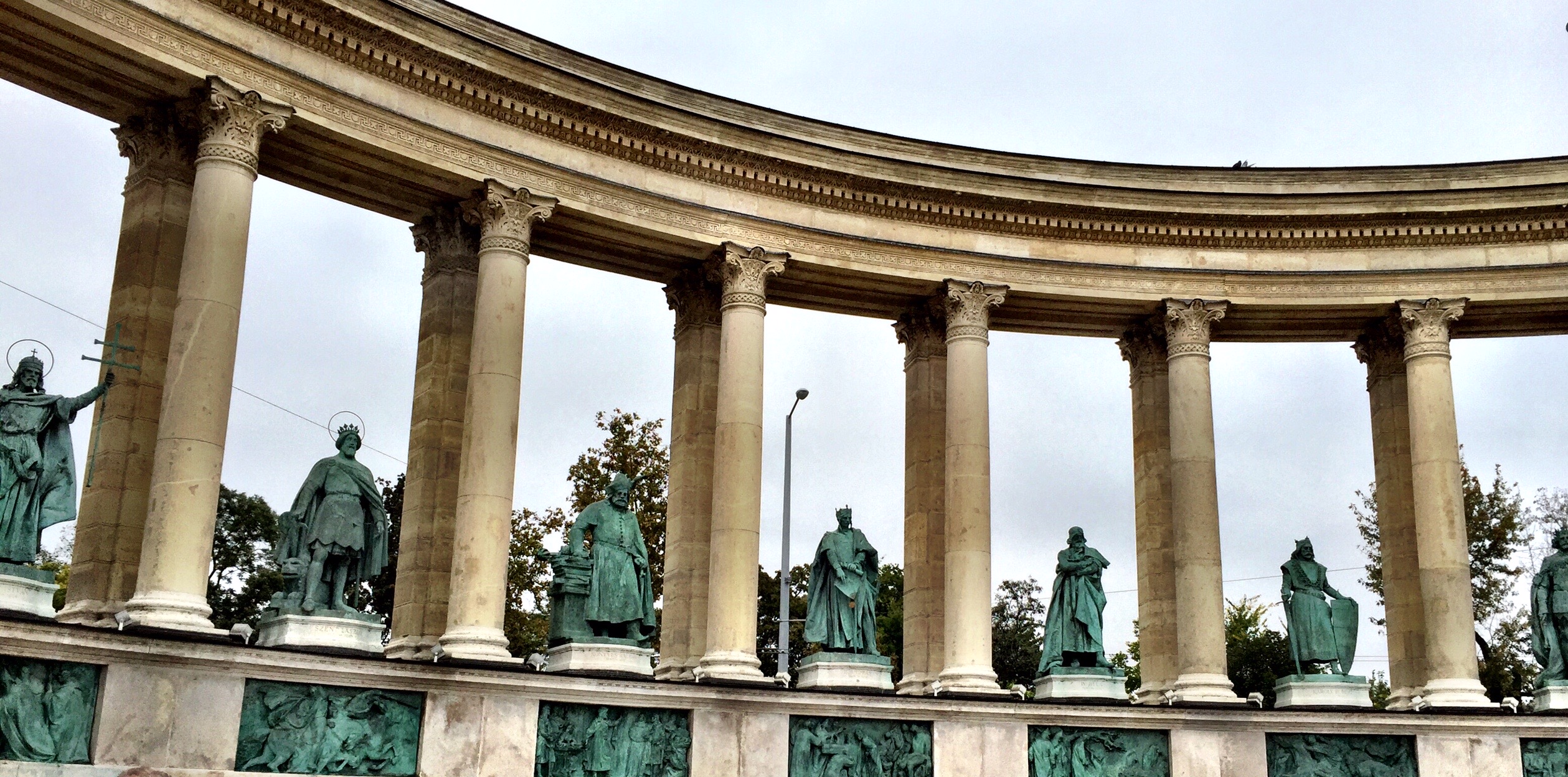
In 2014, we went on a much-anticipated two week cruise—the Grand European, from Budapest to Amsterdam. On the first day, we took a day-long tour of Budapest, with a charming and articulate guide. First stop: Heroes Square.

Our guide was a proud and patriotic Hungarian, well-versed in her nation’s history, all the way back to Atilla the Hun. I am embarrassed to say I knew very little about modern-day Hungary, except for the fact that Hungarian citizens are universally musically literate, because of Zoltan Kodaly, whose method of teaching music to children is internationally renowned.

As the distracted touring group wandered around snapping pictures of the impressive statuary, our guide completed her thumbnail history and then, very quietly, said that Hungarians—so brave and bold—were losing their democratic independence to their authoritarian Prime Minister, Viktor Orban.

Glancing around, she spoke for perhaps two minutes about how he was suppressing freedoms and dismissing the courts, stealing money and power from the people. It was clear that she was nervous, and that this was not part of her assigned guide-spiel. Most of the Americans in this heavily American group were not paying attention to her final, whispered words: You Americans are lucky.

That was 10 years ago. Today, from a piece entitled The Path to American Authoritarianism:

Democracy is in greater peril today than at any time in modern U.S. history. America has been backsliding for a decade: between 2014 and 2021, Freedom House’s annual global freedom index, which scores all countries on a scale of zero to 100, downgraded the United States from 92 (tied with France) to 83 (below Argentina and tied with Panama and Romania), where it remains.

The country’s vaunted constitutional checks are failing. Trump violated the cardinal rule of democracy when he attempted to overturn the results of an election and block a peaceful transfer of power. Yet neither Congress nor the judiciary held him accountable, and the Republican Party—coup attempt notwithstanding—renominated him for president. Trump ran an openly authoritarian campaign in 2024, pledging to prosecute his rivals, punish critical media, and deploy the army to repress protest. He won, and thanks to an extraordinary Supreme Court decision, he will enjoy broad presidential immunity during his second term.

While this is a powerful statement, it is not difficult to find a dozen pieces, by credible authors, in credible publications, saying pretty much the same thing, over the last three weeks. We are headed toward Hungary (Global Freedom Score: 65) or perhaps Saudi Arabia (GFS: 8), where our President is now going to sell out Ukraine (GFS: 49).

It’s clear we are not the land of the free anymore. Nor are we the home the brave. We’re the home of the partisan cowardly and the feckless appeasers.

It is easy to point fingers at the clueless voters who wanted cheaper eggs (and, one hopes, a corresponding end to galloping and threatening bird flu). It’s a short distance from there to wondering why schools are turning out more and more dumb people. If people understood the importance of preserving our liberties, we wouldn’t find ourselves with a completely incompetent president. Again.

This—the ‘let’s blame schools’ rationale—is always popular when things are shaky politically. Richard Nixon blamed ‘bums blowing up campusesfor political unrest, rather than his own disastrous foreign policy. Academic and political scholars spent decades comparing Johnny and Ivan, invariably coming to the same conclusion: our schools suck, when it comes to preparing upstanding and industrious citizens. That we are now preparing to aid Russia in its criminal intent to capture some or all of a struggling democracy, Ukraine, is the ultimate irony.

Schooling is actually one of those public institutions where a kind of benign authoritarianism—because I said so—is commonplace, even approved. When Alabama Senator Tommy Tuberville suggested that kids who have ADHD don’t need medication—they need to be whipped with a belt—there were plenty of MAGA types nodding in agreement.

The rise in book-banning, the faux outrage over the fewer than 10 trans athletes (out of a half-million) in college sports, the equally faux outrage over “CRT” and “DEI” (both of which should require scare quotes)—these are happening because public education is funded and controlled by the government (as accountability requires).

There’s a reason why the Department of Education is being so quickly dismantled. It’s not a business (as everyone is fond of saying). It doesn’t make money. It’s entirely dependent on a mixture of public funding streams. There are accountability strings (state and federal) on nearly every aspect of the way public education runs, from where the money goes, qualifications for workers, rules for instructional materials and practices, punishments for low test scores, how to get kids to school, even when they prefer not to go.

For the current administration, bent on “saving” federal dollars for their own preferences, breaking up this monolith will be a giant display of power that impacts some 50 million students and their families. Think you’re in charge of your local school, your classroom? Think again. Easy peasy.

No, the federal government–and supporting Republicans and conservative courts–say. No, we don’t want your media literacy classes. No, we don’t want kids nosing around in issues like fairness and equity in our recent history. No speaking Spanish. No arts classes or events to help students make sense of the world they live in. No vaccines to protect them, or accurate health information.

No, we don’t want you out there teaching kids to ferret out the truth.

I think about our Hungarian guide all the time, especially recently, watching Tucker Carlson gush about what an amazing, transformative job Viktor Orban has done. At the time, she seemed a little desperate, sharing her political beliefs with American strangers.

Now, she seems like a prophet. Guard what you have. You never know when you’re going to elect a despot. Before our schools crumble, I hope every teacher will gather up their courage and speak truth to power, even to first graders.

As Steven Bechloss wrote: Despite this onslaught of gaslighting, aggression and attacks on facts, don’t assume we are powerless to respond. This is our duty to the future and the truth.

Diversity and Tracking

If you were in the classroom, as I was for well over three decades, you will have had some experience with tracking— ability grouping, or dividing the class into the Bluebirds, the Orioles and the Buzzards at reading time. And you will know that some teachers strongly resist the impulse to sort and label students, while others endorsed the practice of dividing students by their—key word alert!—perceived differences.

I taught 7th grade math for two (non-consecutive) years. Students were leveled into math groups both times, although the labeling process was different. The first time, there were four levels—Honors, Advanced, Basic and Remedial—and I taught Basic math.

The math faculty, understanding that ability differences were, indeed, perceived rather than scientifically determined—and that skills and understanding were also likely to shift, over the course of a semester or two—proposed testing the students quarterly, using the same test. Any student whose test scores were wildly out of line with their perceived peers could be moved. Up or down.

Except—this was a lot less feasible in practice. Most kids (and their parents) had internalized their math labels. Honors or Advanced? Try suggesting, after nine weeks, that their skills were really… kinda basic.

I also had a couple of kids in my “basic” group who, right off the bat, were obviously sandbagging. Their actual skills and math sense were so far above the norm that I wondered immediately how and why they were placed in the Basic group.

After a few weeks, however, I started to understand how behavior issues impacted the sixth grade teachers’ divvy-up process at the end of the previous year. Act like an attention-seeking four year old? No Honors for you! The only African American kid in the 7th grade? Basic.

Point being: Leveling students, in most academic settings, has limited and conditional value. More importantly, grouping students is often about things totally unrelated to academic ability or potential.

There is probably no education writer who has influenced me more than Alfie Kohn, whose book No Contest inspired me to stop using chairs and challenges, something band directors everywhere see as a normal practice. (I wrote about how that actually improved my school bands, HERE.)

Alfie Kohn just wrote a rather brilliant essay: Heterogenius; Why and How to Stop Dividing People into Us and Them. It’s well worth the read, packed with evidence-based observations and sharp analysis, and incredibly timely in an era when we have to be reminded that diversity, equity and inclusion are actually good goals—especially when teaching children—not merely “DEI,” a catch-all trigger for the people currently in power to run roughshod over the rest of us, including our future citizens.

Here’s a sampling from Kohn’s column, on the measurable, research-supported benefits of diversity:

The idea of minimizing homogeneity has a great deal to recommend it even on a biological level. Genetic diversity allows for adaptation to a changing environment. Species diversity makes for more robust ecosystems. Plant diversity (for example, through crop rotation) protects against pests and disease. Even nature, in other words, seems to be saying “Mix it up!”

As for human interaction, the experience of being in a heterogeneous group not only attenuates tribalism but can enhance performance on various tasks. Social psychologist Adam Galinsky put it this way: “Diversity increases creativity and innovation, promotes higher quality decisions, and enhances economic growth because it spurs deeper information processing and complex thinking…[whereas] homogeneous groups run the risk of narrow mindedness and groupthink (i.e., premature consensus) through misplaced comfort and overconfidence.”

It’s that last quote that explains why Trump, after raving about–and winning an election on—his goal of deporting millions of brown people, has now decided to welcome White “refugees” of European descent from South Africa.

It’s all out in the open now—how politicized the pushback against diversity and equity are. Long-time right-leaning ed-research houses like Fordham keep pumping out anti-diversity reports, in favor of reserving education goodies for the top layer of (white and Asian) HS students. However:

As the report notes, research does support the finding that many students are insufficiently challenged. The research is also mixed on how best to design schools to avoid any students languishing academically. But the report fails to take seriously the decades of research showing the harms of the tracking and ability grouping systems in secondary schools that have stratified opportunities to learn. After muddling the research evidence, the report then recommends the practice most harmful to equity: increased tracking (called, “readiness grouping in separate classrooms”).

Ah. You’re not tracking kids. You’re readiness grouping them. In separate—but decidedly unequal—classrooms.

A blithe quote from the Wall Street Journal:  On day two of his administration, President Trump ordered federal agencies to terminate “diversity, equity and inclusion” programs in the government and combat them in the private sector. The order follows through on his promise to forge a colorblind, merit-based society and to end the engineering of race and sex into every aspect of American life.

Jamelle Bouie: This is the “merit” two-step. First, you strongly imply or state outright that the presence of anyone who isn’t a straight, able-bodied white man is unfair “DEI,” then you argue that just because an institution is all-male and lily-white doesn’t mean there is discrimination. That’s just merit!

Been there. And had those conversations with my fellow math teachers, back then. One of the words to watch for: deserve.

As in: He’s going to be an engineer, like his Dad. He deserves to be in Honors math, even though his score is a little low. Or: She doesn’t turn her homework in—says she has to babysit. Even if she aces the test, she doesn’t deserve to be in Advanced math.

Because tracking (stratifying, merit-based clustering, readiness grouping, whatever) happens at the school level, it is something local schools and districts have some control over, despite Donald Trump’s empty threats against Stuff He Doesn’t Like in schools resulting in pulling federal funding.

Teachers, even threatened, fearful teachers, can hold firm to the time-honored principle of doing their best to challenge every child, to look for and support their strengths, without arbitrarily dividing them into academic stars and lesser lights. They can also honor the principle of diversity, knowing diversity makes a classroom, a school and society stronger.

As Alfie Kohn says:
That’s a message that children need to hear — and to see modeled for them — by the adults in their lives: a commitment to inclusiveness whose implication is that there is no future in tribalism, no justice in “just us.” Every day our kids should watch us encounter and talk about others in a way that highlights how those people are not alien beings; they’re like us with respect to the things that matter — and, at the same time, their qualities can’t be reduced to membership in any category.

Who ARE These People?

For most of my adult life (other than a brief but wonderful stint in the People’s Republic of Ann Arbor), I’ve been the proverbial blue dot on a red background. Although I am out there as a Democrat (on the executive board of the county party, and Democratic candidate for office), I always felt fine about living near, and occasionally hanging out with, Republicans.

They were my neighbors and my work colleagues, the white-collar parents of my students, singers in the church choir I directed. When we moved to northern Michigan, it was easy to understand (if not align with) the uber-conservative, agricultural, take-care-of-your-own legacy of the small rural county where I now live. For long stretches of time, I had a Republican state legislator in mid-Michigan who exemplified cross-the-aisle politics for the greater benefit. I thought I understood good people with different political beliefs and habits.

That was then, of course.

I think the distinction today is not Democrats=good / Republicans=bad. It’s not about liberal vs. conservative, either. What we are seeing is an elevation of fear and disinformation, the breaking of the contract of democracy, where majority beliefs, rule of law and consideration of the common good are suppressed–in favor of anger, chaos and feeding the greed of apolitical billionaires and those bent on amassing power.

Anger and resentment. Fear. Disinformation. Crushing respect and generosity of spirit.

There’s a wonderful, brief passage in Elizabeth Strout’s newest novel, “Tell Me Everything.”  One of the minor characters volunteers at a food pantry, because she’s lonely and likes feeding people. She meets a nice man on an online dating site, and they begin a relationship. He tells her he knows that many undeserving people go to food banks and take food they don’t need—so she stops volunteering. And that, Strout remarks, is how the divisions in our towns and families begin.

Resentment. Disinformation. Crushing the human urge to share and socialize. Simple stuff—the kind of things kindergarten was designed to ameliorate. The kinds of things that a good education should serve as prophylactic against.

Years ago, when school of choice language became law, and charter schools began popping up in Michigan, it seemed to me that the people who were driving the movement to destabilize public education had two goals: 1) It’s my money and you can’t have it and 2) I don’t want my children to go to school with them (whomever their own personal “them” was).

Well-funded, non-diverse public schools chose not to participate in school of choice, claiming that there were no seats available for students who lived two blocks over the district border lines. Poorer schools welcomed kids from ‘over the border,’ each one of whom came from a public school district that couldn’t afford to lose them and the public money they brought with them.

I never anticipated that those two principles–let’s call them greed and discrimination–would become the driving force in larger social issues, like immigration, affordable housing, elitism and ‘political correctness,’ trade and the national economy. Illiberal, lawless crapola for schools to deal with, as well, like faux book bans and suppression of the truth in ordinary school curricula. If you think those aren’t really happening, or can be prevented in a blue-state school, here’s a heads-up from the “new” federal Department of Education.

So who ARE these people, the ones actively working to disrupt public institutions (including public schools) and reasonable laws? It’s important that we know, because they’re everywhere now—including Europe. If they’re not conservatives, and not precisely Republicans (aside from the craven, rabidly partisan, power-hungry idiots in Congress), who are they? And why did they think Trump would make their lives better?

Every now and then, the New York Times (and please don’t tell me not to read the NYT) interviews citizens about their political views, another opportunity to wonder: Who ARE these people? Where did they get them?

Last week, the NY Times Magazine published a glossy piece, What Trump’s Supporters Want for the Future of America. Here are some excerpts:  

I don’t like the way this country’s turned — all this woke stuff. Stuff that the kids shouldn’t be exposed to. I think I was 18 before I knew that there was gay people, you know? 

I believe with Jesus at Trump’s side, America will be safe again.

The left has been so gung ho about just taking away rights and trying to demolish what it means to be an American.

You’re going to see so much economic prosperity, the cost of energy going down.

He has excellent people in place in the cabinet as well as throughout the White House staff. 

He has become wiser because of what happened to him. He almost died.

What we want is that they give us more hope that immigrants won’t get deported if they haven’t committed a crime. 

I was at the Capitol that day [January 6]. It was a setup.

I transferred out of the high school that I was going to graduate from because there were guys that were going into the girls’ bathroom.

We are home-schooling him [son] right now, because of what the schools have become. This one has always been like, obsessed with Donald Trump. I mean, every paper he writes, every project he does in school, everything is about Trump.

All of these people gave their names, occupations and hometowns, and were photographed for the article. They were, apparently, eager to talk about their hopes and dreams for the next four years. None of them were politicians or architects of Project 2025—they were ordinary folks, across the economic spectrum.

It’s easy (and I see this all the time on social media) to call these people dumb—or even evil. But I keep going back to the goals of the 2024 campaigns: Disinformation. Fear. Resentment.

As a lifelong educator, I ask myself if I am partially responsible for young adults who fall for the politicized crapola they hear, who are unable to distinguish just who’s taking away their rights, who believe that the January 6th insurrection was a setup. Why would any student be obsessed with Donald Trump—see him as a hero?

Who are these people? It’s a question that needs answering.

Let’s Blame the Pandemic

Hey, I know it’s the holiday season, the end of a long, incredibly stressful and disappointing year. You’re entitled to a few days’ respite and mindless merry-making before returning to your job, if you are lucky enough to have a job that offers vacation time off over the holidays. I get it.

But as we move into a loosely organized resistance to whatever the hell comes next—Measles? The end of special education? Further loss of reproductive rights?I think it would behoove us to poke around in the causes of what made has now made us, the so-called Greatest Nation on Earth, vulnerable to the likes of Elon Musk and Vladimir Putin.

Perhaps you remember the movie “Don’t Look Up.” The film follows two scientists who discover an extinction-level comet heading for Earth,which they then attempt to warn humanity about. The makers of the film have publicly stated that the film is meant as a satirical metaphor for the response to the climate emergency.

But the movie was also about how people don’t want to hear about bad things coming their way. They find it hard to believe that terrible scenarios could happen—their homes could slide down the mountainside, or an organized group of terrorists could invade the Capitol. So they pretend that genuine crises won’t happen, couldn’t happen—or didn’t happen.

How is it that Trump voters are now wondering—before he even takes office—if he will “keep his promises” to the poor? Why couldn’t they just think back to, you know, eight years ago, when his first (and, it turned out, only) leadership success was focused on tax cuts for the rich? Aren’t they listening when he suggests nominating  as Attorney General a dude who asks his teenaged “girlfriend” for freebie sex, as ”customer appreciation?”

That was not a rhetorical question, by the way. Who IS seriously listening to what Trump and his acolytes are currently saying they intend to do?  Are we all just opening gifts and going to the movies, eating ourselves into a stupor, because nothing can be done? Why is the Titanic backing up, planning to hit the iceberg again?

Think back to a time when it absolutely felt like nothing could be done—and we (everyone on earth) were facing an existential crisis: March 2020, as COVID rolled around the globe, and its potential as history-making killer became obvious.

My working theory for why we were confused enough, as a nation, to vote Donald Trump back into office, centers around the divisions, deprivations and misconceptions we all experienced during the COVID-19 pandemic.

We are still living with the repercussions, but pretending that it’s done, gone forever.

Here are six ideas about how the pandemic is still with us, impacting our institutions and daily life:

We totally underestimated the impact of a pandemic, before it occurred, and since, whenever we declared our personal liberation from living with a potentially mortal disease. We underestimated our capacity for coping with danger, and we underestimated the need to see ourselves as in charge, not helpless in the face of that danger. We underestimated the fear and lack of patience. We were panicked but—living in a rugged individualism/patriarchy—pretended not to be. We talked endlessly about when we could return to normal.

We especially underestimated the impact on childrenon their emotional security, their need to play and learn with children their own age, their need to succeed at tasks set for them, as they built a mature personality. We’re still feeling those insecurities in our schools and often, responding with more pressure, rather than flexibility and the gift of time. We’re still having trouble getting kids to show up at school, a flashing red light for school leaders.

The pandemic was socially disruptive. It took families away from landmark gatherings—weddings, holidays and even funerals. It ruined existing workplace norms; we’re still trying to hire workers and adjust prices. The entire labor market has been disrupted, and the people in control don’t like the backlash of workers (including teachers) demanding more money. Mask-wearing (to keep either wearer or the people they encountered safe) became controversial.

The pandemic unsettled traditional religious beliefs and practices. Injecting the divine into a global pandemic was confusing to believers: Did God send us a lethal pandemic for a reason? If you trusted in Jesus, did that mean you didn’t need to wear a mask? Attendance at churches, which impacted their ability to stay afloat financially, dwindled—causing many churches to close, and others to put more faith in a Christian nationalism theology, where humans were in control.

The pandemic revealed how little Americans knew or cared about actual science. You remember Anthony Fauci, bona fide expert in viral disease transmission, putting his hand over his face at one of Trump’s COVID press conferences, right? Or the charge that the COVID vaccines “didn’t work” when some vulnerable people thought they were a magic shield instead of a lifesaving mitigator? All the scientific advances that have come in the past four years—and now we’re moving   toward vaccine refusal and, God help us, RFK Junior driving the public health ship.

The pandemic was politically disruptive. Donald Trump’s leadership style during the last year of his presidency—the Ivermectin and the bleach, the assertion that we’d be packing the churches by Easter, his drive around in a limosine to wave at fans while being treated for COVID at Walter Reed—was horrifying. But establishment of the Big Lie and the January 6th Insurrection at the Capitol ripped the fabric of American politics more than the previous hundred years’ worth of wars and rebellions. For every person who felt relief at having Uncle Joe in the WH, passing useful legislation, rebuilding international relationships and remembering the dead, there was an angry voter who thought he’d stolen the presidency (and pissed off that he still had to wear a mask in the grocery store).

Which brings me back to the last days of 2024, where we—like the heedless citizens in “Don’t Look Up”—are standing on the tracks of democracy, facing an oncoming train, but feeling too hopeless to muster a response.

Susan Glasser, on the Musk/Bannon/Ramaswamy/Loomer blah-blah on Twitter:

Would it be too 2016 of me to suggest that this is absurd, embarrassing, worrisome stuff? As 2024 ends, the prevailing attitude toward the manic stylings and overheated threats of the once and future President, even among his diehard critics, seems to be more one of purposeful indifference than of explicit resistance; call it surrender or simply resignation to the political reality that Trump, despite it all, is twenty-five days away from returning to the Oval Office.

Or, as Paul Waldman suggests in a terrific piece, everything is just awful: You can date it back as far as you like, but the prime suspect is the covid pandemic, a trauma that still profoundly affects us. That’s true not just for those who lost family members or businesses, or whose kids basically lost a year of schooling, but for everyone, the way it blanketed the country in misery and left us at each other’s throats. One of the most revealing data points is that during the pandemic, pedestrian deaths skyrocketed. People were just driving angry.

Back in the early days of the pandemic, sitting here, lonely, at my computer, I imagined a dozen ways that surviving a global pandemic might lead to improvements in our habits and way of life. Read it—it’s embarrassing to imagine that I believed a country that chose Donald Trump over Hillary Clinton could turn the corner on a dozen issues and needs, courtesy of a pandemic that brought us together. We should all know better, now.

A couple of days ago, Dr. Vin Gupta (speaking of pandemic heroes) wrote this:  I’d recommend everyone regardless of medical risk bring a mask on your airplane journey, a disinfectant wipe to clean the seat you’re in and hand sanitizer. It’s going to be on you alone to protect your health. Warning signs are everywhere.

There you have it. It’s on you. Me, too.
Let’s work together.

Christmas Music: The Good, the Bad and the Downright Ugly

Music is my life. I play several instruments and sing. I majored (and double minored) in music in college and am active in civic groups and church music as participant and conductor. I even went to flute camp (for adults) last summer. And I spent 30-odd years as a public school music teacher.

So– I have a love-hate relationship with Christmas music. Mostly love. But.

December can be brutal for musicians—and for school music teachers, brutal on multiple levels including community expectations and endless rounds of kids-on-risers. Music teachers become de facto activity directors, lurching from frigid parade to caroling at the nursing home. 

But still—there’s the rich opportunity to teach excited kids something about their cultural inheritance and surround. Which includes a clear definition of the divide between music as spiritual practice and music as auditory clutter.

Because you really can’t get away from Christmas music in America in December (or November), hard as you might try. People of other faith traditions, people who don’t believe in any of the Christmas iconography (like Santa or Jesus), people who loathe the downtown decorations and the Hallmark channel—we’re all stuck when Santa Claus comes to town.

For many people, Christmas music becomes irritating aural wallpaper, especially if they’re tuned into one of the omnipresent satellite radio Holly-day stations, or actually paying attention to what’s on the PA system as they’re perusing cheese in the dairy aisle. Because most of the commercial Christmas music readily available in businesses and on Sirius is, frankly, somewhere between uninspired and dreadful. I don’t want to hear—to choose just one example—Burl Ives at any time of year, let alone at holly, jolly Christmas.

I started listening to Christmas music on my little portable record player (Christmas gift from my parents), beginning with the LP records from the gas station ($1 will Fill-up!), where Percy Faith and Ella Fitzgerald were interspersed with the Chipmunks and the NY Philharmonic. When I got my flute, in fifth grade, I was invited to play Angels We Have Heard on High for the church Christmas pageant, a gig I kept through junior high because I liked the wings and halo, as well as the tune. I was hooked.

So I started collecting (and studying) seasonal music as a teenager, eventually making yearly cassette tapes of my favorite cuts. Cassettes morphed into CDs in the 1990s. I made annual gift CDs for family and friends—then eventually, due to the magic of iTunes, custom-selected CD playlists and discs for my regular customers. I requested multiple catalogs from folk and jazz artists and ordered new CDs, unheard, in the fall. At one time, I owned 500 holiday CDs, and had a catalog of over 3000 digital cuts on iTunes.

 Yeah, I know—when does a hobby become a sickness?

The last year I made CDs was 2018, when I realized most people no longer had the equipment to play a CD. I still make my own annual December playlists on Spotify—there are still arrangers and artists creating beautiful new seasonal music. I love listening, but I am really picky about what I am listening to.

Here’s the thing, though, about so-called Christmas music: it’s familiar, or will become familiar in time. A tune you recognize, when you hear it again, come December. We don’t have a lot of those commonly remembered classic songs anymore, holding our culture together. Nostalgia is a part of cultural norms.

For centuries, there was mostly sacred music—all of which has cultural value, whether the listener is a believer in the divine, or not. O Come, O Come, Emmanuel dates back to the 9th century, for example. How often do young listeners authentically interface with such a different time, except through music?

Commercial music has been shaped by the march of new technologies and low-bar popular opinion (lookin’ at you, Frosty). Children no longer know folk songs sung around campfires in the 19th century—unless they learn in school to cross the wide prairie with Betsy from Pike. We are losing bits of our cultural heritage, including traditional carols.

Whatever you want to listen to today is immediately available on your phone. But if you haven’t explored the truly glorious—magnificent or austere or funky–songs and carols of the season, how will you know what to ask for, to know what musicians have created from a simple tune?

In collecting mountains of Christmas music, I have favorite versions of all the songs, of course. But when I want to relax on Christmas Eve, with a glass of wine, this is what I put on: https://open.spotify.com/track/5c0sQY87Iw7qUu46N31f3v