Changing What We Teach

Over the past couple of days, there has been a steady stream of resources, generously shared, for anti-racist teaching.  Here, for example.  Here, here and here and here. And this, just this afternoon.

There are plenty of articles out there speculating on when and how we go back to school, and the consequences of going back too soon. But all the handwringing over alternate schedules, classroom lunches and sanitizing the playground are a great example of focusing on the urgent rather than the important.

Going back to School as Usual only works for a segment of privileged kids in well-resourced schools. All schools, including those where parent satisfaction is high and student achievement is admirable, can benefit from re-thinking what we teach—more than how we teach.

There have been endless conversations on Twitter and Facebook about the value of suggested resources and materials, just how age-appropriate they are, and how they intersect—or don’t—with traditional, standards-based curricula. These conversations, even when argumentative and heated, are good.

This is (or should be) teachers’ professional work. These should be the things we’re reading about, dissecting with our colleagues, discussing with our friends. We can’t go on merely doing what we always did. That’s not teaching. That’s mindless reproduction. It’s clear that it’s not working.

This will involve changing who we are and what we think, sometimes. Take this school superintendent in Michigan, for example, who commented, on his Facebook page:   

“Burning, breaking windows, and looting is also an injustice — what happened to Floyd was wrong! A criminal response is also wrong. Any statement otherwise, condones and perpetuates both criminal acts!!  …it all starts with being a law abiding citizen – had he not paid with counterfeit money, had he not resisted, had he not been under the influence — then there would be no contact with officers; that does not excuse the officer; it just eliminates the conflict to begin with!! It starts with being a good citizen!”

Yeah.  Superintendent of a district with more than 5000 students.

But—I have seen and heard other remarks like his in the past week, and in many years past, in times of unrest. From all kinds of people who see themselves as well-meaning, even progressive. From teachers, too, who see themselves as ‘good citizens.’

Which is why we must do more than space desks six feet apart and set up hand-washing stations. What good is school if it’s just transmitting sterile, pre-approved information, teaching basic skills and collecting data? Why take the risk, unless students we’re giving students something of value, something that challenges them to create a better world?

Skimming through the resources shared by teachers who want to know more about anti-racist teaching, I had a familiar ache: I miss having my own classroom. There is nothing like the juice of having a few hundred students (music teachers often have a few hundred students) and plenty of occasions to talk with them about social justice and equity—and cultural appropriation.

If there were any one thing I hoped my students would learn, it would be an awareness that they’re consuming black musical culture without crediting it to the correct source–or respecting it. That’s the reason I did any anti-racist work (and I’m not suggesting I was good at it): my students were soaking in the outcomes of how to creatively make music out of oppression, and they were totally unaware of it.

We need anti-racist curriculum, all right. Including–maybe even especially–in the arts.

I remember a conversation I had with one of my colleagues, about doing a unit–this was back before the curriculum was steered strictly by CCSS–on ‘tolerance.’ She was teaching 8th grade English and wanted to do some readings and discussions. I got excited about the kinds of music that could support and weave through that kind of unit–artists and composers and reasons why music has value in the culture, helps bridge differences.

We talked about what the community might push back against–we doubted that parents would openly confront teachers over readings about racism, but agreed a handful were likely to complain about readings about tolerance around sexual orientation.

Tolerance (a weak word, but hang with me) might be defined in such a unit as:

In a particular time or place…who is it OK to beat up on a Saturday night? A hundred years ago, for example, it was OK to beat up your wife or girlfriend. The police and neighbors would overlook that as ‘family business.’ That was tolerated. That’s not OK any more—at least on paper. It’s also no longer OK to beat up an immigrant, someone of a different ethnicity or color, or someone with a different sexual orientation.

Except—we can all think of plenty of current examples where tolerance of difference has been shattered. For plenty of spurious reasons. Including righteous declarations about ‘citizenship.’

We’re in trouble. We need to teach our children to do better. We need to look hard at coded language. We need to emphasize the most basic civic acts: Voting. Speaking out. Media literacy. Being broadly informed, about a range of issues. Talking to our neighbors and families.

All of that takes courage. Not as much courage as taking to the streets, but courage. If we just go back to school and do the same old things, then all the ‘learning community’ and ‘21st century’ and ‘high and rigorous’ blah-blah we’ve been tossing around doesn’t reflect what our students observe with their own eyes. If we don’t take this opportunity to teach what matters, we don’t deserve the honor and responsibility of being educators.

Memorial Day 2020

On Memorial Day, I have often dusted off an old column I originally wrote a dozen years ago. It’s about how I never lost my love and appreciation for Memorial Day as an opportunity for school bands and community members to commemorate the sacrifices made so we could live peacefully.

It always seemed like a great lesson for public school children to learn: gratitude and civics.  

When parents would call, a few days before the parade, and say—hey, Jason won’t be at the parade Monday because we have company coming for a day at the lake, I never responded with anger or points-off punishments.

But I would feel sad about the missed opportunity for students and their families to take a couple of hours to honor our own history, our own heroes. Memorial Day services are one of the few chances we get to put our communal, democratic values on display, without glorifying war or violence.

When we moved up north, I joined a community band and chorus which have been at the heart of a Memorial Day service here for decades. No parade—most band and choir members are retirees. But we’ve played a service in a misty rain as well as blazing sun. It’s always the same: a few patriotic tunes, a speaker, a prayer. Then Taps.

This Memorial Day, there will be no traditional service at the Northport Cemetery. No inspiring message, no Scouts raising the flag, no Village Voices singing ‘The Last Full Measure of Devotion’–and no Community Band playing ‘National Emblem’. It is too risky to bring the town’s residents together to honor the military sacrifices made so we can enjoy life on our beautiful, peaceful peninsula.

Instead, the Northport Community Band will be offering a ‘Rolling Taps’ to those who live in Northport. Sixteen members of the band’s brass section will station themselves around town and, one after the other, play Taps. The tribute will begin at the Northport sign, at the South end of town, moving northward a block at a time, and travel through the Village, each player handing off to the next. The final player will be stationed at the cannon in the Northport Cemetery.

The director of the band found it easy to recruit players. Everyone was pleased to find a way to contribute in keeping a cherished tradition—Memorial Day in Northport—alive. If our grandfathers could storm the beaches at Normandy, one trumpeter said, we can certainly stand on the corner and play Taps. It’s the very least we can do to honor those who sacrificed so much more.

Village residents are welcome to listen from their front porches, their bikes or cars, but are asked to maintain a good distance from brass players as they perform, and refrain from talking or applauding.  Taps—originally a bugle call to signal lights out, a time of rest—has become the most solemn military funeral call, a way to thank and say goodbye to those who served their nation.

Much of the Northport Band’s and Village Voices’ summer season has been cancelled. There’s reason to be sad. But there’s also reason to remember sacrifices made. There are sacrifices being made right now, for the health and strength of this nation. Let us continue to keep the flame burning, beginning on Memorial Day.

Day is done. Gone the sun. From the lakes, from the hills, from the sky.
All is well. Safely rest. God is nigh.

The Best Woman for the Job

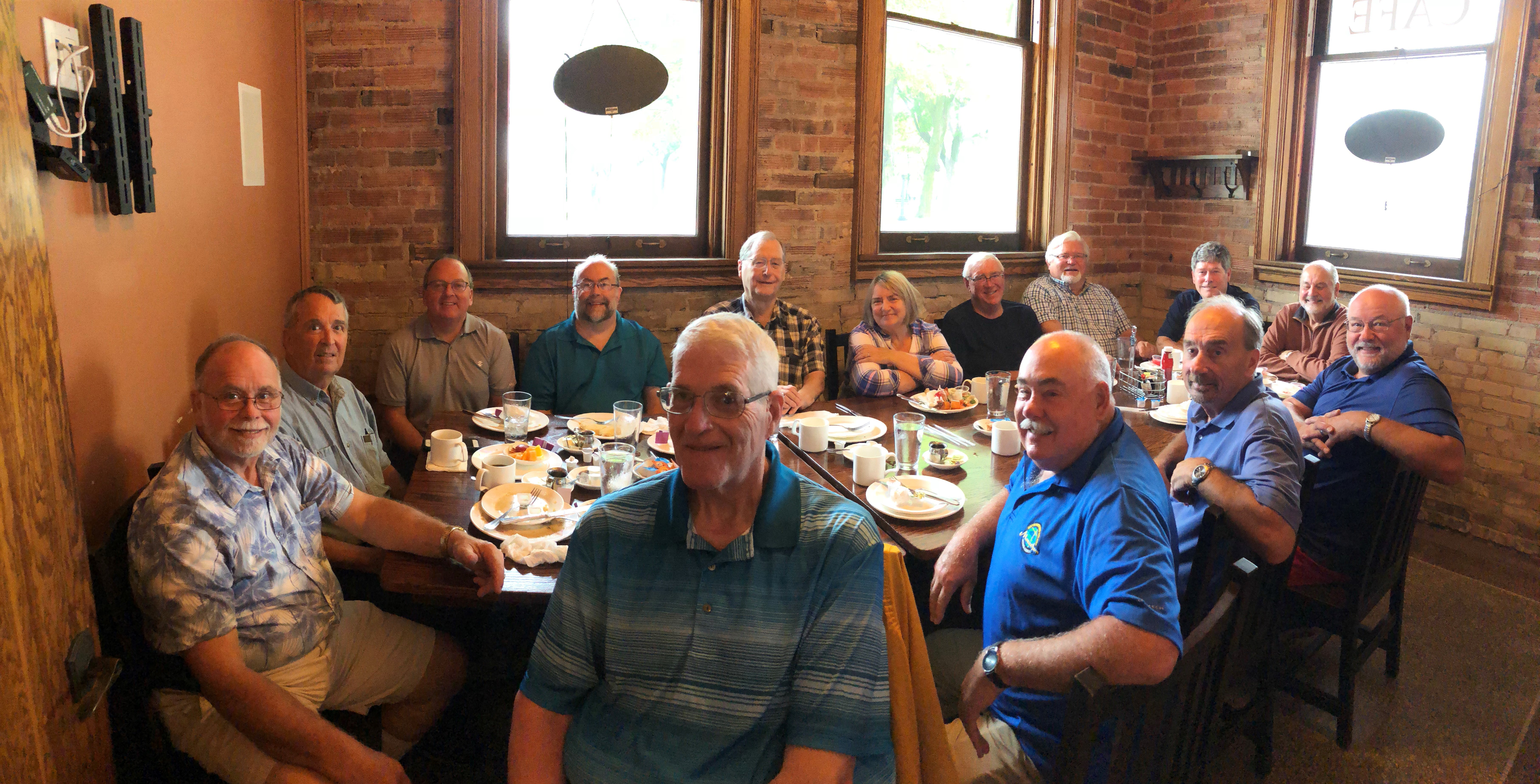
Now that I’m not in the classroom every day, I occasionally have breakfast with a group of retired band directors who live in Northern Michigan and meet monthly to reminisce about the good old days in public school music education. Here we are, in September. Notice anything?

cadillac breakfast.jpg

I’m guessing the gender ratio would be similar in any state, if you got retired school band teachers together.  Kind of looks like Congress did, in the 1970s, when I started teaching. Or graduation day at any law, engineering or medical school, back then. A man’s, man’s, etc. world.

I have a large collection of stories around being the only alto in a room full of tenors and basses, year after year. Some of them are funny (like my very first regional band directors’ association meeting, where I was offered the position of Secretary five minutes after introducing myself—and I took it). Some are terrible, heart-rending memories of being belittled, underestimated and ignored. Or worse.

The funny thing is, I didn’t set out to be a pioneer.

I wanted to teach instrumental music, for two simple reasons. One, playing music was my greatest joy in life. Nothing moved me and fulfilled me more than the challenge and the glory that came from making beautiful music.  That may sound like rhetorical overkill, but it’s true. I got hooked on gorgeous music early in life and wanted to turn it into my life’s work. I wanted to share that joy with kids—make their lives richer and more rewarding.

The second reason I became a band director is because I thought I’d be good at it.  I’d observed many instrumental conductors at all levels, played in lots of groups other than my school band—and knew something about what motivated me as a student musician. I had already worked hard to successfully master an instrument and was confident that I could learn the skills and knowledge necessary to become a school band teacher.

Of course, I knew that most band teachers were men. In fact, I’d never worked with or even met a woman director. My high school band instructor told me that he ‘didn’t believe in lady band directors’ and suggested I pursue elementary music education as a college major. The university I chose (like other universities at the time) did not permit women in the marching bandit took lawsuits to make that happen, around the country. Nobody was encouraging me or mentoring me.

Nevertheless, I persisted. It really wasn’t a dramatic personal quest to break a glass ceiling with my piccolo.  I just wanted to teach band.  It seemed like a fun and rewarding job. For anyone.

I went on job interviews where my fitness and stamina in directing a band were questioned. One principal I interviewed with told me he had no intention of hiring me—he just wanted to meet the girl who thought she could handle his HS band.  When I finally got a job, teaching middle school band, the principal who hired me had been on the job one day.  Maybe he didn’t know the rules about band directors? In any event, once I got a job, I was a band director for 30 years.

I’ve been thinking about this a great deal, as mid-term election outcomes have become clear. You’ve probably seen the photographic comparison of Republican vs. Democratic freshmen in the House of Representatives.  ‘Diversity on Stark Display’ says the headline—and it would be difficult to argue, in a representative democracy, that diversity isn’t the crucial ingredient in a fair and equitable decision-making body—or teaching staff, for that matter.

Senator Debbie Stabenow wrote a piece about how the top four offices on the ballot in Michigan were won by women. Not because they were women. But because they were the best person running for the job. The entire mid-term election was a festival of firsts, on the diversity front—and the outcomes were good.

Numbers, in all jobs and experiences once thought to be (usually white) men’s work, are leveling out. The visible trends are positive. And that—in politics, education and the world of work—is good. I’m grateful to every woman who carved or smoothed the pathway for those who came after her.

That doesn’t mean that subtle, deeply embedded sexism has gone away, though. It hasn’t.

It’s often understated and frequently not recognized by its perpetrators. Men relate differently to other men than they do women, in the workplace (and on line). Sometimes, our buried assumptions drive actions in ways we can’t predict. It’s complicated. I learned to work around bias toward women as band directors, but it never went away.

I’m not just making this up, by the way. There’s research.

Whenever I’ve written a blog about the lopsided gender relationships in education, I get a lot of negative feedback. There is lots of room for growth in the way we value who’s teaching second grade, and who’s writing the laws that govern education, however.

You have to be careful before leveling a charge of sexism. But the fact remains, sometimes the best woman for the job is passed over for someone whose qualifications are being louder and ‘bolder.