Political Violence in the Classroom

In November of 2016, right after Donald Trump was elected for the first time, seventh graders at Royal Oak Middle School were captured on video shouting “Build that wall! Build that wall!”  in the school lunchroom. It drew immediate attention and media coverage, but like all once-shocking incidents, quickly faded from public view.

As events of the last week unfolded, it struck me that the blurry kids in the video would now be about the same age as Tyler Robinson, the man who shot Charlie Kirk. Were they now part of the cluster of young white men who spend all their time online, getting radicalized? Do they follow Nick Fuentes or hang out on 4Chan?

Or—best case scenario—had they merely been immature, clueless, early-adolescent jerks whose irresponsible, harmful “prank” of insulting and perhaps scaring classmates of color, was made clear to them by a community of teachers and parents? In one of the news clips from 2016, the Royal Oak Superintendent talks about how the perpetrators will be dealt with summarily, keeping in mind that youthful mistakes can be learning experiences.

Exactly.

Clueless early-adolescent jerks are a regular feature in middle school teachers’ clientele. Kids do dumb things. In between teaching students about the Bill of Rights and single-variable equations, teachers do double duty as both role models and arbitrators of appropriate behavior.

Because—despite the persistent myth that teachers should just spout content and inculcate skills, nothing more—learning happens in context. When some part of your class feels rejected, afraid or angry about being harassed in the cafeteria, nobody learns. Much of what we absorb in school are lessons about right and wrong. Civility and respect.

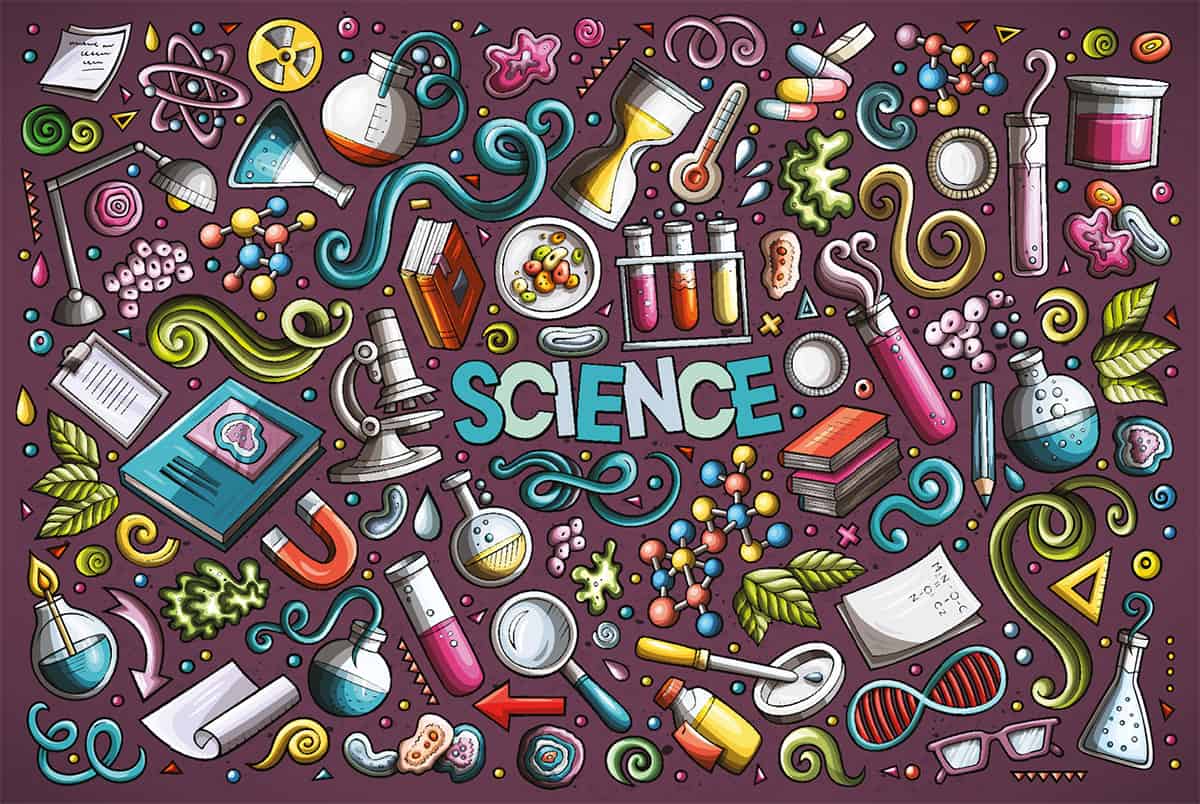
Things that weren’t on the lesson plan–no matter how old your students, or which subject you’re teaching. School is where students learn to deal with personal differences, taking turns and not always getting your way. And teachers—witness the illustration for this blog, just posted by a friend in a series of photos of her classroom—create materials, lessons and discussions to that effect, right out of the gate, even though it’s often considered not their job or, any more, none of their business.

We are at a point, this week, where teachers in twelve states have been fired or suspended for making remarks online about Charlie Kirk’s murder. In some states—you can guess which—state officials are inviting anonymous tips on teachers who may have said something in class that offended somebody, although the veracity of who said what, reported by students, then routed through parents, has to be uncertain at best.

Not to mention a giant waste of time at the beginning of the school year, as teachers are trying to build community and trust. Nor is any of this reducing the likelihood of the most politicized and terrifying violence in our classrooms: school shootings.

While teachers should absolutely keep their partisan loyalties to themselves, speaking about political violence is speaking about current events. As Brittany Page says:

“Political violence” isn’t just a conservative activist getting murdered.

Political violence is a Supreme Court that gives the green light for people to be stopped and detained based on their perceived race or ethnicity, what language they speak, where they work, and where they happen to be standing.

It is found in a society that tells you to start a GoFundMe to pay for your life-saving healthcare so your family doesn’t go bankrupt when you draw the short stick.

Click on the link. It’s a powerful piece, proof that we are all wading around in political violence every day, no matter how much they want us to shut up about it. It’s evil. To pretend it doesn’t exist makes it even more dangerous for all of us, including children.

How did we get here? Jonathan V. Last, at The Bulwark, said this:

Things have changed and it’s not hard to pinpoint the moment when the normalization of political violence re-emerged among our political elites. To pretend otherwise would be to hide our heads in the sand—to deny the plain political reality of the moment. But it doesn’t have to stay that way. Times change; people change.

The best part of that quote comes at the end. Times do change. People do change. And I would assert that changing people for the better happens in good schools, every day. Not all classrooms, not all playgrounds, not all teachers—but public schooling is an overall force for good, for a better, healthier nation.

In my time in the classroom, there have been regular encounters with politicized issues, from shootings to 9/11. In 1988, one of my students lost his father over Lockerbie Scotland, enroute to Detroit via Pan Am Flight 103, which was carrying a bomb planted by a Libyan citizen. Did we talk about that? Yes. I also know his pain was ultimately mitigated by the simple act of going to school each day.

Robert Reich:If you examine our history, you’ll see that the core of that identity has not been the whiteness of our skin, or the uniformity of our ethnicity, or agreement on religion, or like-mindedness about sexual preference or orientation.

The core of our national identity has been the ideals we share: our commitments to the rule of law, to democratic institutions of government, to truth, to tolerance of our differences, to equal political rights, and to equal opportunity.

Every clause in that last paragraph ought to be taught every day in every classroom in America. It’s the antidote to political violence.

What I Learned from my Dad about Politics and How it Applies to 2026

I am a big fan of Jess Piper, a veteran teacher from Missouri, who left the classroom to run for office, and has since reshaped the conversation around why red-staters vote against their own interests. Piper writes often about a childhood spent bouncing around the south, and the family values that influenced her.

When people (including myself here) shake their heads and wonder how so many citizens–despite glaring, flagrant evidence to the contrary–can still stubbornly believe that Trump is leading the country  on the right track, it’s helpful to read Piper’s blog. She gets it.

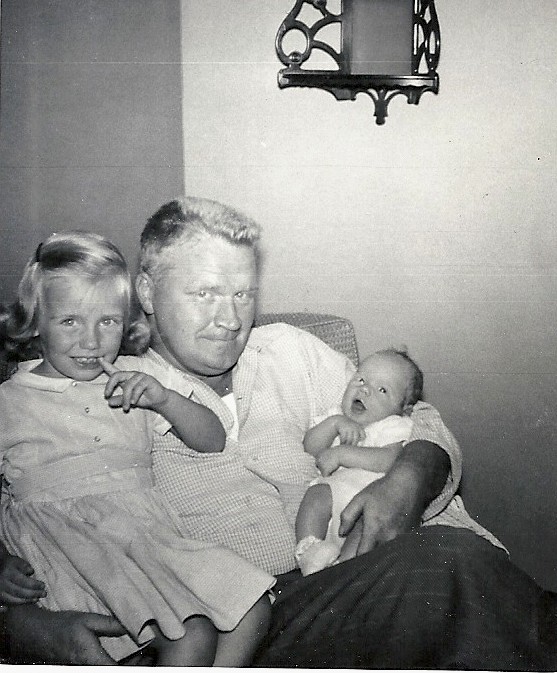
Mostly, I read Piper for her insights on working-class voters–because my own father, were he still alive, would (despite many years of voting for Democrats, post-War) probably be a Trump supporter, voting against his own interests.

Not a careless, “protect my wealth” country-club Republican. But a grievance-driven voter who resented those he believed were simply and unfairly handed benefits and perks, things he would never enjoy, no matter how hard he worked.

Fear and resentment—and the overwhelming conviction that the little guy never gets ahead—were deeply embedded in his character. That doesn’t mean he was not a good father; he absolutely was, caring for his family and living up to his responsibilities as a hard-working adult and citizen who never missed an election. He was a proud Teamster, a church-goer, and the man who drove me 90 miles one-way to take flute lessons at the university.

My dad served in World War II, in the Army Air Corps (later the US Air Force) in the Pacific theatre. His plane was shot down, in 1944, over the Sea of Japan, and the crew was rescued by an Australian sub. He lost his 19-year old brother Don in the first wave of Marines taking Iwo Jima in February of 1945. I wrote more about these things here, explaining why my dad really never got over the war. But it was more than his wartime experiences that molded his character.

He often expressed the sense that he’d been cheated—that other, less-deserving people were moving ahead, because they had money, or were currying favor, while he (a realist from the poor side of the tracks) was left behind. He voted for George Wallace in 1968, because Wallace claimed there wasn’t a dime’s worth of difference between the two parties: both were corrupt and run by elites. Sound familiar?

Thom Hartmann’s new piece– Culture Is Where Democracy Lives or Dies, Because Politics Always Follows the Story a Nation Tells Itself—goes some way to explaining what’s happening today, but also why my dad, surrounded by protests against the Vietnam war and girls burning their bras, turned to a man who supported segregation and repudiated progressivism: ’ Like no candidate before, Wallace harvested the anger of white Americans who resented the progressive changes of the 1960s. Wallace supporters feared the urban violence they saw exploding on television. With tough talk and a rough-hewn manner, Wallace inspired millions of conservative Democrats to break from their party.’

Like many of Trump’s supporters today, my dad saw Wallace as a truth-teller, an advocate for the working man, someone who would work to defend cultural norms around race, gender, authority and social policy. Even when those norms were outmoded, unjust or morally repugnant.

Today, I know better than trying to talk an irrational, ruby-red voter out of their convictions. I really do understand how pointless, even damaging, it is to accuse Trump voters of destroying democracy and erasing progress. Because I spent, literally, years of my life trying to (cough) enlighten my father, who treated me like other fathers of the era treated their know-it-all college-student kids: as spoiled brats who needed to let the real world take a whack at them.

My father died in 1980, of a brain tumor, at the untimely age of 58. I never changed him, but he never changed me. He thought a college education was a waste of time and money, although when I graduated, he came to commencement exercises and danced with me at the Holiday Inn afterward.

 Later, it dawned on me: the fact that he and my mother couldn’t contribute financially to my college education, and couldn’t help me navigate enrollment, might have been part of his insistence that college was for the privileged, not families like ours.

All of this happened in a time when news and opinion came from three mainstream TV channels and the Muskegon Chronicle. Who do Trump  voters turn to now for news? Is that source supporting their racism, sexism, xenophobia and bitterness? Is it filled with fact-free resentment?

Where do we start in changing minds and hearts? I wish I knew.

Teach Your Children Well

It used to be fairly common in Traverse City, Michigan—a Michael Moore sighting. I once stood in line behind him at a Coldstone Creamery on Front Street (no longer there, alas). During the summer TC Film Festival (also no longer in existence), he was everywhere, leading panel discussions and walks around TC’s beautiful, turn-of-last-century downtown neighborhoods.

Michael Moore’s star has faded here, for various reasons. He’s never been an easy person to watch on TV, full of himself and, sometimes, an explosive but unreliable narrator of what’s happening in this country. You certainly know where he stands—but he can be a grating spokesperson.

Nevertheless, I read his free newsletter and found his April 30 column on the Vietnam Warwhere he points out that we’ve never as a nation, admitted our guilt or apologized–moving and worth deep consideration:

“They kicked the ass of a military superpower — and sent 60,000 of our young men home to us in wooden boxes (nine of them from my high school, two on my street) and hundreds of thousands more who returned without arms, legs, eyes or the mental capacity to live life to its fullest, forever affected, their souls crushed, their nightmares never-ending. All of them destroyed by a lie their own government told them about North Vietnam “attacking” us and the millions of Americans who at first believed the lie. This past November 5th showed just how easy it still is for an American president, a man who lies on an hourly basis, to get millions of his fellow citizens to fall for it. 

I think we need to do this for our children’s sake, for our grandchildren, for the sake of our future if there still is one for us. We should take just one day every year and participate in a national day of reckoning, recollection, reflection, and truth-telling, where together we actively seek forgiveness, make reparations and further our understanding of just how it happened and how easy it is for the wealthy and the political elites and the media to back such horror, and then to get the majority of the country to go along with it… at least at first. And how quickly after it’s over we decide that we never have to talk about it again. That we can learn nothing from it and change nothing after it. 

Teach our children this truth about us. About our history. Give them this knowledge and with it comes the opportunity for us to change and make different choices for our future. To be a different people. A peaceful people. The Germans did it. The Japanese, too.”

And here we are, again, creating an unnecessary war—this time on our own city streets. And the question bubbles up: Are we teaching our children the truth about the place where they live? And, even more important, what will happen if/when they believe the lies their government is peddling?

I was interested in this observation from the new National Teacher of the Year, Ashlie Crosson, from Pennsylvania: “Teachers shouldn’t shy away from using challenging texts and conversations in their classrooms, even if they touch on divisive topics.

It’s a reasonable statement you might expect from any accomplished teacher—but one that could now get you fired in some states and districts. Chaos and fear and flooding the zone are part of media assessments of public education in June 2025, along with smiling photos of HS graduates and end-of-year academic honors.

Robert Reich said it well:
“Why is Trump trying to cancel “Sesame Street,” which has helped children learn to read and count for over half a century? Why is he seeking to destroy Harvard University? Why is he trying to deter the world’s most brilliant scientists from coming to the United States?

Because he is trying to destroy American education — and with it, the American mind.”

Is there anything teachers can do to stop the ongoing attack on becoming genuinely well-educated? To not be fearful of ideas or painful truths?

Individual teachers are seldom visible enough to draw widescale media-fed wrath (which is why I found the new National TOY’s remarks brave)—political opponents of public education generally target teacher unions, well-endowed universities, and programs that provide free breakfast and lunch or wraparound healthcare for kids who need it.

With the upcoming NO KINGS National Protests, I’ve seen lots of social media memes urging people to do what they can. To march and carry signs, of course—but also to speak to those in their circle of influence, to write, to model democratic principles. To behave as engaged citizens—and to teach their children the truth about our history, with the goal of becoming a peaceful people.

Let’s teach our children well. (click—it’s worth it)


Bad Words in Schools

Over the past few years, I have volunteered in four local schools, in varied programs. And—as a retired veteran teacher—I understand why students’ identities and actions must be rigorously protected. But I want to share this recent experience, because—even with 30-odd years in various middle school and high school classrooms and plenty of exposure to Things Kids Say—it rocked me. Which school, which program—doesn’t matter.

It’s a marker about the coarsening of our culture—but the question is why.

So–there’s an 8th grade boy who’s talking to other middle school boys. They’re not huddling in the corner or trying not to be heard. The boy refers to a girl they know as a “Hawk Tuah girl”.  The other boys snicker. There is some head-turning in the room, including another adult volunteer.

What did you call her? she asks, curious. And the 8th grade boy proceeds to share an accurate definition of “hawk tuah”—out loud, with sound effects. Boys try to suppress their mirth, again. Girls walk away, clustering together. The other volunteer turns to me, wide-eyed, and says: Have you ever heard that word before?

Unfortunately, yes. Just didn’t expect to hear it explicated in a middle school classroom.

I’ve seen and heard plenty of appalling things in the classroom. I’ve heard angry students drop the F- bomb and nice girls call other nice girls ‘whores’ when their boyfriend showed interest. Also, if you haven’t been in a K-12 classroom since your own experience there, the line of what is acceptable and what will get you sent to the office has definitely moved over time.

My own vocabulary—both public and private—is hardly pure. Sometimes, I’m kind of like the dad in that You Tube video, trying to explain how the word fuck loses its power depending on how it’s used. Because this isn’t precisely about naughty words, per se.

Sending a kid who swears (especially if it’s not habitual) to the office isn’t ever likely to achieve anything useful. Plus—with social media and personally selected entertainment in every teenager’s pocket—it’s become harder and harder to say what is and is not overtly wrong.

The 8th grader learned how to define certain girls from watching videos and social media. He’s 13 and has no reliable filter for “inappropriate”—trust me—and he wasn’t swearing. So who do we blame for his language, let alone his idea that someone he knows and goes to school with just might be a Hawk Tuah girl, ha-ha? Do you call his parents? What will that yield?

I think about the well-meaning MI school official who compelled two middle schoolers to remove “Let’s Go Brandon” sweatshirts—and how the school got sued, won in court, but are now looking at an appeal supported by the so-called Liberty Justice Center.  I’m thinking there’s probably an assistant principal who wishes he’d just let those sweatshirts and the prepubescent political prisoners-in-training wearing them go.

Because that’s where we are now. There is no reliable list (like George Carlin’s seven dirty words) of what words are OK and Not OK.

Early in my career, I was called into the office by my principal, who said she’d fielded a complaint about me swearing in class—and the parent had already called the superintendent. I was genuinely mystified. What did I (supposedly) say?

Ass, she said. You said [Student] was an ass. Yesterday. He went home and told his mom you swore at him in class.

Well, the truth of the matter was this: The kid (a percussionist) was dropping cymbals on the tile floor. I directed him to stop. So he started kicking over suspended cymbals and temple blocks, which are on easily tipped stands. I took him out in the hall for a cheek-to-cheek, and chatted with him (severely, I admit) about why was he back there acting like a jackass? He had no response.

His mom, of course, hadn’t heard that part of the story. But when she did, she said that dropping equipment was no excuse for a teacher swearing. Damaging expensive equipment that all the bands use? Not a factor, apparently.

Today, language is at the heart of the ongoing, month-long trashing of our entire federal government—way more trigger words than George Carlin ever dreamed of. From a piece in the Atlantic:

Fear that other words could run afoul of the new [anti-DEI] edicts led anxious agency officials to come up with lists of potentially problematic words on their own. These included: Equity. Gender. Transgender. Nonbinary. Pregnant people. Assigned male at birth. Antiracist. Trauma. Hate speech. Intersectional. Multicultural. Oppression. Such words were scrubbed from federal websites.

Language is powerful. When we are afraid to speak freely, explore ideas, argue about meanings and outcomes from the language used in the classroom, we’re in real trouble. A whole lot of the purpose and success of a quality education depends on the language we use, and the way students understand it.

Should adults—calmly and dispassionately–explain to kids why their language may be offensive? I know that makes me sound old and out-of-touch.  

But I keep thinking about the girls in that classroom, listening to the boy describe sexual acts he’d heard about on social media, and the girls who were willing to engage in them. It felt like witnessing an obscenity, performed by someone who didn’t fully realize it was offensive, that it wasn’t just about sexual behaviors, but about denigrating all girls?

There’s been a cultural shift in schools.

Did it start with kids yelling “Build That Wall!” in November, 2016?

The Folly of Settled Science

It was on Morning Edition, seven years ago—a cheery little piece on how we now know just how to teach students with dyslexia how to read. Interesting, I thought then, expecting to hear about some new breakthrough technique in reading pedagogy. Instead, what I heard was this:

Dyslexia is the most common learning disability, affecting tens of millions of people in the United States. But getting help for children who have it in public school can be a nightmare. “They wouldn’t acknowledge that he had a problem. They wouldn’t say the word ‘dyslexia.’’’

Wow. Not true in my school. We talked about dyslexia and reading instruction endlessly, being very careful not to throw around the label (which impacts 3% to 7% of students, depending on how the condition is defined) indiscriminately. I found it hard to believe that parents who sought help for a genuinely dyslexic child would find the process ‘nightmarish.’

I spent most of my career in one school district, but teachers there expended a great deal of effort and analysis in teaching kids to read and reinforcing ‘reading across the curriculum’ in upper grades. Over three decades, and via my own children’s reading instruction there, I saw several reading programs come and go. I was part of countless conversations about how to incorporate new pedagogical thinking into practice. But–teachers refusing to identify the issues with a student who struggled to read? Never.

Turns out, the Morning Edition piece (in 2018, remember) wasn’t really about a new, proven strategy for helping kids with reading disabilities. The program was fanning new flames of the always-politicized Reading Wars:

Research shows that they learn to read better when they are explicitly taught the ways that sounds and letters correspond. And research shows that even students without dyslexia learn better this way. “I have started to call it not dyslexia but dysteachia. It’s the teachers who are not giving the right kind of instruction!”

Aha! Kids can’t read? It’s the teachers’ fault. Again.

The Reading Wars (which have been going on for over 100 years) tore local school boards apart in the 1990s, in an effort to determine which reading program was “the best.” Many of these bitter arguments were framed as “Phonics” vs. “Whole Language,” but anyone who’s studied the acquisition of literacy knows that’s a simplification so gross as to be useless. Reading instruction is never binary, or limited to right vs. wrong strategies.

The National Reading Panel, convened by a government department with an agenda, put forth a major report, designed to settle the question, once and for all—but the lone practitioner on the panel strongly disagreed with the methodology and policy implications that rolled out, post-reportif not with the actual findings. So, hardly a consensus among teachers.

Then the heavy hand of accountability pushed the discussion—the professional work of reading teachers—out of the classroom, and into whatever place it is that reading programs are measured by their efficacy in raising test scores. And possibly forcing children to repeat the third grade.

I am sincerely happy to know that students correctly identified with dyslexia, a complex, multi-layered diagnosis, seem to be more successful in learning to read, using a phonemic awareness/phonics-intensive program. Still, I am putting my faith, as always, in the discernment and expertise of the teacher.

Students classified as dyslexic have varying strengths and challenges and teaching them is too complex a task for a scripted, one-size-fits-all program. Optimal instruction—meaning the most effective methods for students with disabilities as well as those already reading fluently and making meaning–calls for teachers’ professional expertise and responsiveness, a full tool bag and the freedom to act on the basis of that professionalism.

It’s worth mentioning—again—that formal reading instruction in Finland does not begin until students are seven years of age, long after some children in the United States have been identified as dyslexic or learning disabled, because they’re unable to decode at age six.

Seven years ago, the author of the Morning Edition piece, Emily Hanford, claimed that the superiority of phonics/phonemic awareness instruction for all children—and the failure of whole language programs—was settled science, ‘like climate change.’

I certainly hope there’s never a rigid, unchanging agreement on the One Best Way to teach people of any age to read. All scholarly disciplines should undergo regular re-assessment, as research reshapes knowledge. There are still classrooms in the United States, after all, where evolution is not settled science.

I dug some of this information out from a piece I wrote in March of 2018 for Education Week, because yesterday, for the first time, I had an unpleasant skirmish on Bluesky.

I had posted a comment re: the just-released, drooping NAEP reading scores which are now being dissected in the media. There’s a lot of alarmism and pearl-clutching in the mainstream media, but here’s a pretty good piece from NPR. (The piece also reminds readers that “proficient” doesn’t mean adequate or even OK—it means considerably above average.)

While 4th and 8th grade reading scores overall are still below pre-pandemic levels, it’s worth remembering that this year’s fourth graders were in kindergarten when the pandemic hit, and many spent much of first grade, prime learn-to-read time, learning remotely. Fourth graders in the tested NAEP group did not experience typical reading instruction.

Scores for advantaged students—the top of the heap, economically—were actually strong; scores for the poorest quadrant were dismal. Nothing new, but that gap was much bigger in this round of testing. That is actually useful information. We should be putting more resources into the public schools that serve disadvantaged students (not vouchers to subsidize wealthy families choosing private or religious schools).

I thought about how the ‘settled science” of learning to read has become the “Science of Reading”—and how, over the past seven years, since I first heard that piece on Morning Edition, kids who were first learning to read then (and are now 8th graders) have not moved up the testing ladder, even though over 40 states now have laws or policies based on the so-called Science of Reading.

If SOR was the one best way, why haven’t scores been creeping up? It was a simple, non-hostile question.

Which drew a very hostile response from a Bluesky account that appears to be an online tutoring service with one of those improbably aspirational—think Rocket Reader!!–names.  He or she refused to give his/her name, and the exchange (wherein I kept asking for research supporting his/her claims) got increasingly antagonistic.

S/he kept returning to how old and out of touch I am, and insulting not only me, but other researchers and opinion writers with far more credibility than I on the topic of learning to read. His/her final comment (before I blocked him/her) was “Go live in the nursing home with Lucy Calkins!”

Here’s the thing, though. Having seen reading instruction up close and personal—as a professional, not a student—over decades, it’s very clear that it will never be settled (or, probably, science).  It’s complex and variable and entirely dependent on what students bring to the table.

Who ARE These People?

For most of my adult life (other than a brief but wonderful stint in the People’s Republic of Ann Arbor), I’ve been the proverbial blue dot on a red background. Although I am out there as a Democrat (on the executive board of the county party, and Democratic candidate for office), I always felt fine about living near, and occasionally hanging out with, Republicans.

They were my neighbors and my work colleagues, the white-collar parents of my students, singers in the church choir I directed. When we moved to northern Michigan, it was easy to understand (if not align with) the uber-conservative, agricultural, take-care-of-your-own legacy of the small rural county where I now live. For long stretches of time, I had a Republican state legislator in mid-Michigan who exemplified cross-the-aisle politics for the greater benefit. I thought I understood good people with different political beliefs and habits.

That was then, of course.

I think the distinction today is not Democrats=good / Republicans=bad. It’s not about liberal vs. conservative, either. What we are seeing is an elevation of fear and disinformation, the breaking of the contract of democracy, where majority beliefs, rule of law and consideration of the common good are suppressed–in favor of anger, chaos and feeding the greed of apolitical billionaires and those bent on amassing power.

Anger and resentment. Fear. Disinformation. Crushing respect and generosity of spirit.

There’s a wonderful, brief passage in Elizabeth Strout’s newest novel, “Tell Me Everything.”  One of the minor characters volunteers at a food pantry, because she’s lonely and likes feeding people. She meets a nice man on an online dating site, and they begin a relationship. He tells her he knows that many undeserving people go to food banks and take food they don’t need—so she stops volunteering. And that, Strout remarks, is how the divisions in our towns and families begin.

Resentment. Disinformation. Crushing the human urge to share and socialize. Simple stuff—the kind of things kindergarten was designed to ameliorate. The kinds of things that a good education should serve as prophylactic against.

Years ago, when school of choice language became law, and charter schools began popping up in Michigan, it seemed to me that the people who were driving the movement to destabilize public education had two goals: 1) It’s my money and you can’t have it and 2) I don’t want my children to go to school with them (whomever their own personal “them” was).

Well-funded, non-diverse public schools chose not to participate in school of choice, claiming that there were no seats available for students who lived two blocks over the district border lines. Poorer schools welcomed kids from ‘over the border,’ each one of whom came from a public school district that couldn’t afford to lose them and the public money they brought with them.

I never anticipated that those two principles–let’s call them greed and discrimination–would become the driving force in larger social issues, like immigration, affordable housing, elitism and ‘political correctness,’ trade and the national economy. Illiberal, lawless crapola for schools to deal with, as well, like faux book bans and suppression of the truth in ordinary school curricula. If you think those aren’t really happening, or can be prevented in a blue-state school, here’s a heads-up from the “new” federal Department of Education.

So who ARE these people, the ones actively working to disrupt public institutions (including public schools) and reasonable laws? It’s important that we know, because they’re everywhere now—including Europe. If they’re not conservatives, and not precisely Republicans (aside from the craven, rabidly partisan, power-hungry idiots in Congress), who are they? And why did they think Trump would make their lives better?

Every now and then, the New York Times (and please don’t tell me not to read the NYT) interviews citizens about their political views, another opportunity to wonder: Who ARE these people? Where did they get them?

Last week, the NY Times Magazine published a glossy piece, What Trump’s Supporters Want for the Future of America. Here are some excerpts:  

I don’t like the way this country’s turned — all this woke stuff. Stuff that the kids shouldn’t be exposed to. I think I was 18 before I knew that there was gay people, you know? 

I believe with Jesus at Trump’s side, America will be safe again.

The left has been so gung ho about just taking away rights and trying to demolish what it means to be an American.

You’re going to see so much economic prosperity, the cost of energy going down.

He has excellent people in place in the cabinet as well as throughout the White House staff. 

He has become wiser because of what happened to him. He almost died.

What we want is that they give us more hope that immigrants won’t get deported if they haven’t committed a crime. 

I was at the Capitol that day [January 6]. It was a setup.

I transferred out of the high school that I was going to graduate from because there were guys that were going into the girls’ bathroom.

We are home-schooling him [son] right now, because of what the schools have become. This one has always been like, obsessed with Donald Trump. I mean, every paper he writes, every project he does in school, everything is about Trump.

All of these people gave their names, occupations and hometowns, and were photographed for the article. They were, apparently, eager to talk about their hopes and dreams for the next four years. None of them were politicians or architects of Project 2025—they were ordinary folks, across the economic spectrum.

It’s easy (and I see this all the time on social media) to call these people dumb—or even evil. But I keep going back to the goals of the 2024 campaigns: Disinformation. Fear. Resentment.

As a lifelong educator, I ask myself if I am partially responsible for young adults who fall for the politicized crapola they hear, who are unable to distinguish just who’s taking away their rights, who believe that the January 6th insurrection was a setup. Why would any student be obsessed with Donald Trump—see him as a hero?

Who are these people? It’s a question that needs answering.

Why Senate Cabinet Hearings are a Lesson for Schools

Here’s a reflective statement that will probably irritate—or enrage—my fellow music educators: When it comes to inappropriate behavior on the part of educators, performing arts teachers have a bad reputation. Often deservedly so.

Offhand—and I’m only one music teacher—I can think of a dozen instances of band, orchestra and choir teachers who have been accused of sexually unacceptable behaviors with students. Am I going to name them? I am not—although I have written about my own experience with a sexual predator/band director who used his power in that position in destructive, demeaning ways. For years.

Why are teachers in certain disciplines and grade levels more prone to sexually abusive behaviors? Opportunity. When you take students to camp, or on regular field trips—or when you are responsible for private lessons or after-school rehearsals—there are plenty of occasions when bad stuff can happen.

I kept thinking about this, watching the Hegseth hearings. Stuff that used to be distasteful and shameful is now, per Markwayne Mullins, a mere “mistake” up to and including criminal acts Why did Hegseth do it? Because he could. Sound familiar?

Holly Berkley Fletcher has a great piece on the hearings in Bulwark: Mullin went on, “The only reason I am here and not in prison is because my wife loved me, too. . . I’m not perfect, but I found somebody that thought I was perfect . . . but just like our Lord and Savior forgave me, my wife’s had to forgive me more than once, too.”

Mullin’s mini-sermon was a lasagna of problematic messaging—the lauding of a woman for sticking with an abusive man, more generally giving women responsibility for men’s redemption, and calling longstanding patterns of behavior a “mistake.” Oh, and there was also the obligatory reference to Jesus—whom Hegseth also repeatedly invoked to get out of every jam free.

David Brooks, in the NY Times, had a hissy fit about all the ‘character’ questions lobbed at Hegseth, calling them “short attention span” and “soap opera” queries. He lists some undeniably concerning realities about our military and the global conditions it might be called upon to address—and hey, all of that is fine, and very relevant.

But. Character still matters in the application of expertise (which, it must be noted, Hegseth has pretty much none of, either). Being in charge of our military is the ultimate “opportunity for malfeasance” job.

As I watched the brand-new, low-information Senator from Montana—not naming him either—joke with Hegseth about how many genders there were and how many pushups he could do, I thought about how this works in my bailiwick—public school teaching.

What do we ask new teachers or principals, in hiring interviews? Questions that reveal character? Or questions strictly related to the disciplinary knowledge and pedagogical skills necessary for the job? More specifically, how did all those music teachers I’m not naming get hired?

(And yes, I do realize, that merely getting someone certified to teach is often the best many districts can do, in 2025, given teacher shortages.)

Not all that long ago, Michigan was a teacher exporting state. Recent grads, who would have preferred to teach near home, were actively recruited by other states, often in the south. Interviews and job offers were done by telephone—before Zoom, where you can at least see the person you’re talking to. A number of my former students moved out of state to begin their teaching careers after a couple of phone calls netted them a job.

I used to wonder how administrators or hiring teams felt they knew enough about a person to believe they would do a good job with the children entrusted to them, with only a phone conversation. One of my formers, on her way to South Carolina, told me that her interviewer said they were impressed with her local university’s reputation as a teacher-prep institute, and her resume’ (which, it must be noted, showed zero experience as an actual teacher).

As Fine Arts Department Chair for many years in my district, I sat on lots of hiring committees. A strong resume’ is a good reason to interview, as are references. But there are things—character things, maybe even “soap opera” things—that emerge in an interview.

The guy who’s too slick, and can’t meet your eyes. The person who makes promises when they have no idea whether they can keep them. Worst of all, the teacher who’s leaving their previous district because the principal is “dysfunctional.” Things like this emerge when you ask character-related questions. And you use your human judgment skills to observe and evaluate.

This week, we’ve had a front row seat for the most important and consequential job interviews in the nation. Every person being grilled by senators has a comprehensive, publicly available resume’. And each of them deserve to have the nation watching them squirm or deflect or repeat their pre-arranged, “anonymous smear” responses.

Who’s going to get hired? As always, the person the administrator wants. But establishing a public record of questions asked and answered—or avoided—is critical.

And no question—not a single one—is unfair or irrelevant.

Would YOU Go to the Inauguration?

Should prominent Democrats attend the inauguration next Monday? Including Michelle Obama?

Old 2024 me would have said yes– part of the peaceful transfer of power, respect for the office if not the man, norms and institutions, blah blah. Even though Trump did not invite Biden to the WH or attend the 2021 inauguration, we go high when they go low. Maybe.

But now– I am saying “You are right to sit this one out, Michelle Obama.” Partly this is because I read Rachel Bitecofer’s book “Hit ’em Where It Hurts” wherein she points out that in American politics, nice and respectful politicians lose. And in order to govern for justice and equity, to get things done, you actually have to win.

It’s one thing to call the returning president tRump, or elderly golfer, or any number of clever pejoratives. You can dissect his “speeches” and comment on his addled goals. But it’s not funny any more, if it ever was. The man is immoral and malevolent. He’s going to cause a lot of damage and heartache.

So why is anyone duty-bound to stand by, quietly, and watch him take the oath of office?


Not showing up is a tangible, noticeable act of resistance. A statement of principles. Not today, Satan.

What do you say?

TIASL Best Blogs of 2024

I used to blog for Education Week—for nine years, in fact. And at the end of each year, the teacher bloggers were asked to choose our ten best blogs and post a piece about them. We were given viewership statistics (for our personal blog only), so we’d know which ones got the most eyeballs. And invariably, the most popular ones—the winners–were my least favorite pieces.

I’m writing for myself and like-minded readers these days, so I’m not sharing the most-read 2024 columns from Teacher in a Strange Land. I’m sharing eight blogs that I think best reflect the, well, Strange Land we find ourselves in, educationally speaking.

Before I list them, I’d suggest you read two recent—important– blog posts from Peter Greene. The first informs his regular readers (I’m among them): If you have ever had an urge to send money my way, I ask that you transfer that urge to someone whose work you appreciate and who has, however shyly or boldly, held their hat out. Plunk down some bucks for the work that you value and that you want to see staying in the world.

You’ve probably noticed that the most famous people who write about education are often not educators. The best—most accurate, most creative, most humane—writing about schools and learning comes from people (like Peter) who’ve done the work and have first-hand observations about doing right by children. In 2024 alone, I have subscribed to seven newsletters, paying a modest fee and developing an informed reading habit on screens, rather than newspapers and magazines. Some of those writers have interactive publishing modes and write back.

I have favorite ed writers—and it is those writers who introduce me to other ed writers. Which is Peter Greene’s second point: Share the good stuff. If you’re wondering who to read, click here. There are dozens of suggestions, curated by Greene. But first, subscribe to his blog, because his work is terrific, soaked in reality. And free.

Here are my eight picks:

Do Core Democratic Values Belong in Schools? Some Say No.
When looking at curricular change over the past five years—immediately preceding the onset of the COVID pandemic—it’s easy to see that there were plenty of precursors to the anti-wokebook-banningteacher-punishing mess we find ourselves in as we slowly recover from that major shock to the public education system.

The scariest thing to me about the abuse teachers are taking, across the country, is its impact on curriculum. Here’s the thing: you really can’t outsource teacher judgment. You can prescribe and script and attempt to control everything that happens in the classroom, but it doesn’t work that way.

My Research is Better Than Your Research:

Simple theoretical questions—like “which method produces greater student understanding of decomposing geometric shapes?”—have limited utility. They’re not sexy, and don’t get funding. Maybe what we need to do is stop ranking the most influential researchers in the country, and teach educators how to run small, valid and reliable studies to address important questions in their own practice, and to think more about the theoretical frameworks underlying their work in the classroom.

Ignoring the Real World in the Classroom:

What happens when teachers can’t take questions about the daily news? It makes us look like idiots, for starters. Uninformed content-dispensers, unable to connect facts to causes or outcomes. What have our students learned from our unwillingness to discuss national crises, like 9/11?

Weaponizing Empathy and other Heritage Foundation Rhetoric for School Reform:

I was dumbstruck on hearing this little clip from a recent school board meeting.

Board member says: “This gets into the weaponization of empathy, where empathy is taught as the highest goal, the highest order. Do we teach empathy to the effect where students disregard parental authority—and accept anything and everything? Do we teach kids that any kind of judgment is bad?”

Wait. What? Who is he accusing? And what is the weaponization of empathy?

Too much empathy leads to kids defying their parents, evidently. The moral ambiguity of school confuses students. That’s their big fear?

DIS-Information in Schools:

There are, indeed, public schools where media literacy is a formal part of the curriculum. There are outstanding digital literacy resources for students, supported by high-quality research. What’s missing is the will and the urgency of the need to educate kids about distinguishing between truth and whatever it is they’re getting on TikTok.

Or, unfortunately, at their kitchen tables or their church or on the bus. Misinformation—can you remember Things You Used to Believe?—has always been a factor in growing up and becoming educated. Disinformation is a darker thing altogether. Especially when it comes from people who should, theoretically, represent integrity. Legislators, for example.

What do parents know about public education:

Adults’ perceptions of what’s happening in public schools mainly come from their own personal experiences (and this includes people with no K-12 children in the home). The percentage of people who read books or articles, watch cable news or videos, or listen to podcasts about education is small. People who get their education news from newspapers? Fifteen percent. Second highest source of ed news? Social media.

That’s a lot of guesswork, memes and faulty memories.

Man with Sixteen College Degrees Can’t Read:  

Things that ARE apparent in this article:

  • Third grade is WAY too early to label ANY child a non-reader (or punish them by retaining them). It’s too early for labels, period.
  • When it comes to effective learning (the kind that sticks, and can be applied), experiences trump worksheets.
  • Continuously reading to your children, even when they are supposedly “reading to learn” at age eight, is absolutely the right thing to do.
  • Visual interpretation of text symbols is not more efficient or of higher value than hearing that text read aloud.
  • Many, many children are “bright but different.”

The Return of the Trad Teacher:

It strikes me that tradwives are just another glitzy, social media-driven facet of a larger wave of backlash against a whole lot of un-trad trends in American society: Full-blown reproductive freedom. The continued shrinkage of mainline religions. Honoring personal sex/gender choices. Women running for office and corner offices–and winning. And so on.

I also see lots of pushback against untraditional teaching, curriculum and school organization models. The whole “Science of Reading” battle rings very familiar to those of us who started teaching in the 1970s, when teachers were pushing back against the “Why Johnny Can’t Read” –because teachers theoretically weren’t teaching phonics–crusade in the late 50s.

Thanks for reading. Remember: Share the good stuff.

Let’s Blame the Pandemic

Hey, I know it’s the holiday season, the end of a long, incredibly stressful and disappointing year. You’re entitled to a few days’ respite and mindless merry-making before returning to your job, if you are lucky enough to have a job that offers vacation time off over the holidays. I get it.

But as we move into a loosely organized resistance to whatever the hell comes next—Measles? The end of special education? Further loss of reproductive rights?I think it would behoove us to poke around in the causes of what made has now made us, the so-called Greatest Nation on Earth, vulnerable to the likes of Elon Musk and Vladimir Putin.

Perhaps you remember the movie “Don’t Look Up.” The film follows two scientists who discover an extinction-level comet heading for Earth,which they then attempt to warn humanity about. The makers of the film have publicly stated that the film is meant as a satirical metaphor for the response to the climate emergency.

But the movie was also about how people don’t want to hear about bad things coming their way. They find it hard to believe that terrible scenarios could happen—their homes could slide down the mountainside, or an organized group of terrorists could invade the Capitol. So they pretend that genuine crises won’t happen, couldn’t happen—or didn’t happen.

How is it that Trump voters are now wondering—before he even takes office—if he will “keep his promises” to the poor? Why couldn’t they just think back to, you know, eight years ago, when his first (and, it turned out, only) leadership success was focused on tax cuts for the rich? Aren’t they listening when he suggests nominating  as Attorney General a dude who asks his teenaged “girlfriend” for freebie sex, as ”customer appreciation?”

That was not a rhetorical question, by the way. Who IS seriously listening to what Trump and his acolytes are currently saying they intend to do?  Are we all just opening gifts and going to the movies, eating ourselves into a stupor, because nothing can be done? Why is the Titanic backing up, planning to hit the iceberg again?

Think back to a time when it absolutely felt like nothing could be done—and we (everyone on earth) were facing an existential crisis: March 2020, as COVID rolled around the globe, and its potential as history-making killer became obvious.

My working theory for why we were confused enough, as a nation, to vote Donald Trump back into office, centers around the divisions, deprivations and misconceptions we all experienced during the COVID-19 pandemic.

We are still living with the repercussions, but pretending that it’s done, gone forever.

Here are six ideas about how the pandemic is still with us, impacting our institutions and daily life:

We totally underestimated the impact of a pandemic, before it occurred, and since, whenever we declared our personal liberation from living with a potentially mortal disease. We underestimated our capacity for coping with danger, and we underestimated the need to see ourselves as in charge, not helpless in the face of that danger. We underestimated the fear and lack of patience. We were panicked but—living in a rugged individualism/patriarchy—pretended not to be. We talked endlessly about when we could return to normal.

We especially underestimated the impact on childrenon their emotional security, their need to play and learn with children their own age, their need to succeed at tasks set for them, as they built a mature personality. We’re still feeling those insecurities in our schools and often, responding with more pressure, rather than flexibility and the gift of time. We’re still having trouble getting kids to show up at school, a flashing red light for school leaders.

The pandemic was socially disruptive. It took families away from landmark gatherings—weddings, holidays and even funerals. It ruined existing workplace norms; we’re still trying to hire workers and adjust prices. The entire labor market has been disrupted, and the people in control don’t like the backlash of workers (including teachers) demanding more money. Mask-wearing (to keep either wearer or the people they encountered safe) became controversial.

The pandemic unsettled traditional religious beliefs and practices. Injecting the divine into a global pandemic was confusing to believers: Did God send us a lethal pandemic for a reason? If you trusted in Jesus, did that mean you didn’t need to wear a mask? Attendance at churches, which impacted their ability to stay afloat financially, dwindled—causing many churches to close, and others to put more faith in a Christian nationalism theology, where humans were in control.

The pandemic revealed how little Americans knew or cared about actual science. You remember Anthony Fauci, bona fide expert in viral disease transmission, putting his hand over his face at one of Trump’s COVID press conferences, right? Or the charge that the COVID vaccines “didn’t work” when some vulnerable people thought they were a magic shield instead of a lifesaving mitigator? All the scientific advances that have come in the past four years—and now we’re moving   toward vaccine refusal and, God help us, RFK Junior driving the public health ship.

The pandemic was politically disruptive. Donald Trump’s leadership style during the last year of his presidency—the Ivermectin and the bleach, the assertion that we’d be packing the churches by Easter, his drive around in a limosine to wave at fans while being treated for COVID at Walter Reed—was horrifying. But establishment of the Big Lie and the January 6th Insurrection at the Capitol ripped the fabric of American politics more than the previous hundred years’ worth of wars and rebellions. For every person who felt relief at having Uncle Joe in the WH, passing useful legislation, rebuilding international relationships and remembering the dead, there was an angry voter who thought he’d stolen the presidency (and pissed off that he still had to wear a mask in the grocery store).

Which brings me back to the last days of 2024, where we—like the heedless citizens in “Don’t Look Up”—are standing on the tracks of democracy, facing an oncoming train, but feeling too hopeless to muster a response.

Susan Glasser, on the Musk/Bannon/Ramaswamy/Loomer blah-blah on Twitter:

Would it be too 2016 of me to suggest that this is absurd, embarrassing, worrisome stuff? As 2024 ends, the prevailing attitude toward the manic stylings and overheated threats of the once and future President, even among his diehard critics, seems to be more one of purposeful indifference than of explicit resistance; call it surrender or simply resignation to the political reality that Trump, despite it all, is twenty-five days away from returning to the Oval Office.

Or, as Paul Waldman suggests in a terrific piece, everything is just awful: You can date it back as far as you like, but the prime suspect is the covid pandemic, a trauma that still profoundly affects us. That’s true not just for those who lost family members or businesses, or whose kids basically lost a year of schooling, but for everyone, the way it blanketed the country in misery and left us at each other’s throats. One of the most revealing data points is that during the pandemic, pedestrian deaths skyrocketed. People were just driving angry.

Back in the early days of the pandemic, sitting here, lonely, at my computer, I imagined a dozen ways that surviving a global pandemic might lead to improvements in our habits and way of life. Read it—it’s embarrassing to imagine that I believed a country that chose Donald Trump over Hillary Clinton could turn the corner on a dozen issues and needs, courtesy of a pandemic that brought us together. We should all know better, now.

A couple of days ago, Dr. Vin Gupta (speaking of pandemic heroes) wrote this:  I’d recommend everyone regardless of medical risk bring a mask on your airplane journey, a disinfectant wipe to clean the seat you’re in and hand sanitizer. It’s going to be on you alone to protect your health. Warning signs are everywhere.

There you have it. It’s on you. Me, too.
Let’s work together.