“Progressive” Schools

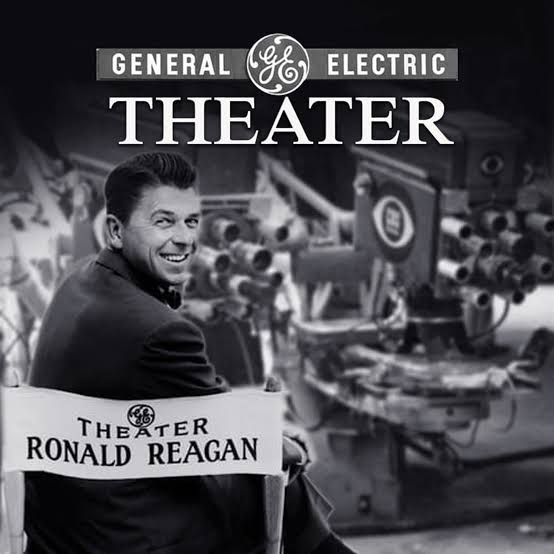
I’m old enough to remember Ronald Reagan hosting General Electric Theater, on Sunday nights, when he would look sincerely into the camera and say “General Electric, where progress is our most important product.”

Presumably, progress was both inevitable and desirable—a mashup of American technologies and innovation, bringing (GE again) good things to life. On television, anyway.

Who would stand in the way of progress? Certainly not schools, who were educating rapidly increasing numbers of Boomer kids, using the modern look-see method of reading instruction, and embracing New Math.

According to family legend, my first grade teacher sent home a note asking my mother to stop letting me read to her, in case she said or did something wrong, impeding my literary progress with pre-approved books about Dick and Jane. She stopped immediately. Teacher knew best.

Stephen Bechloss, on this Indigenous Peoples Day, shared a fine essay on progress:

“Examples of progress are all around us. I carry in my pocket a computer that gives me access to almost all the existing knowledge in the world. That same device allows me to instantaneously connect with family and friends thousands of miles away. I can flip a switch and light my kitchen. If my heart gives out, I can get a new one. I can fly in the sky and travel almost anywhere on the planet. Nearly everywhere I may go, I will meet people who know how to read.

The world is a wonder. Let’s not doubt it. The creative power of humankind has yielded a modern world that is safer, richer, more connected, more mobile and full of opportunity for more people than our ancestors could have imagined.”

Where did all this progress come from? In addition to the inherent creative power of humankind, progress is nurtured by education, wherein creativity and curiosity turn knowledge into progressive action: Machines. Ideas. Institutions. Literature and art.

Maybe even better government. Countries, for example, where everyone has health care, and citizens embrace collective efforts to address global issues like climate change. Progress—if you define progress as moving forward to solve problems, bring good things to life.

Possibly you’re raising your hand right now, itching to tell me that there are multiple definitions of progress and progressivism, or that the opposite of conservative is not liberal, but progressive. I would suggest that what we’re seeing now—the movement to damage public education—is not conservative. It’s authoritarian vandalism. But let’s try to agree on a definition of what it means to be progressive.

Miriam-Webster: A left-leaning political philosophy and reform movement that seeks to advance the human condition through social reform. Adherents hold that progressivism has universal application and endeavor to spread this idea to human societies everywhere.

It was not surprising to read this, in a must-read piece by Megan O’Matz and Jennifer Smith Richards at ProPublica: “In a 2024 podcast, Noah Pollak, now a senior adviser in the Education Department, bemoaned what he sees as progressive control of schools, which he said has led to lessons he finds unacceptable, such as teaching fourth graders about systemic racism.”

Progressive control of schools? Seriously?

Speaking as a person who has spent decades working in public schools and with public school teachers across the country, schools are generally among the most conventional and cautious institutions on the planet, subject to pressures and opinions from a wide range of (often clueless) critics. And likely headed by someone who adamantly does not want to get phone calls from honked-off parents.

I also say this as a person who taught fourth graders about systemic racism, in a general music unit from our REQUIRED music textbook, a collection of songs (Follow the Drinking Gourd; Swing Low, Sweet Chariot; Bring Me Little Water, Silvie and others) plus some pretty neutral fourth grade-appropriate text about the African formal and rhythmic roots of American popular music.

We were sitting on the big, round rug and one of the fourth graders asked why so many African-American songs (again, songs in our traditional music series) were about God. If their lives were so bad, he asked, why did they believe in heaven? It was a good question and led to an equally good discussion about what happens when people are oppressed—how they maintain cultural traditions, and hope.

If progressivism is about advancing the human condition, who’s against it? Besides the handful of people running the fatally compromised US Department of Education? The very people to whom diversity, inclusion and equity—progressive values– are anathema.

Convincing people that public school educators are a) raging leftists and b) persuading their students to defy their parents and adopt outrageous worldviews, then calling that progressivism is a fool’s errand. And 70 percent of the people who have first-hand experience with that—parents—generally believe that their public schools are doing the job they want them to do.

But societal shifts happen when false and unsubstantiated statements are repeated so often they become common knowledge. So be prepared to hear a lot of blah-blah about “progressive” public schools in the near future.

How about a Pause on the Race to Embed AI in Schools?

I haven’t written much about AI and education, for several reasons.

First, there are already many people writing compellingly and with considerable expertise about the uses and misuses of AI in the classroom. Some of those people will show up in this blog. Follow them. Read what they write.

Also, some years ago I developed a reputation for being a cranky Luddite. I wrote pieces about the downside of the ubiquitous online gradebook, accessible to parents 24/7, and other uses of computer programs that added to teachers’ workloads and didn’t fit with the important content and skills I was teaching students (lots of students) the old-fashioned way. The real costs of “free” programs and apps, no matter how glittery and hip, seemed obvious to me. Why didn’t other educators see this?

This came to a head when I was invited to be part of an online panel on ed technologies. Presenters sent me the language they planned to use to introduce me—did I approve? I confirmed, and then they messaged back: the bio had been created by ChatGPT. Ha-ha.

Finally, I haven’t written much about AI because I just find it hard to conceptualize how it could be useful in the classroom. In other fields, perhaps—with a lot of caveats, oversight and suspicion—but it runs contrary to the essential purpose of teaching and learning. Doesn’t it?

It’s never seemed right to let machines do the ‘thinking’ or ‘creating’ that is better done, or at least attempted, daily, by children. In short, I don’t get it. Maybe that’s because I haven’t been enlightened? So—shut up already?

I think many, if not most, practicing educators are in the same boat: Unclear about what AI actually is, and what use could be made of AI tools in their vital mission to make children independent thinkers, evaluators and creators.

For starters, who’s cool with Big Data collecting info on our public school kiddos’ engagement with their products? NEPC Report on digital platforms:  

While educators may see platforms as neutral tools, they are in fact shaped by competing interests and hidden imperatives. Teachers, students, and administrators are only one market. The other market involves data on performance, usage patterns and engagement—data flowing to advertisers, data brokers and investors, often without users’ knowledge or consent.’ 

A pretty good synopsis of what AI is, from Josh Marshall, Talking Points Memo:

“AI is being built, even more than most of us realize, by consuming everyone else’s creative work with no compensation. It’s less ‘thought’ than more and more refined statistical associations between different words and word patterns.” He goes on to make the salient point that the AI “products” being produced that will be “privately owned and sold to us.”

Doesn’t sound like something that schools need to quickly embrace, what with all our other problems, like teaching kids to read, rising absence rates and budgets stripped of our ability to feed children a nutritious breakfast and lunch.

Add in the environmental concerns and rampant intellectual property theft to teachers’ uncertainty about dumping more new, unvetted toys into an already-crammed curriculum. So I was thoroughly surprised to see the AFT get on the “AI in the classroom!!” bandwagon.

Why not take a pause—let’s call it a shutdown—on the race to embed AI in our schools? Why not sort through those competing interests and hidden imperatives? We’ve been bamboozled by climbing on attractive but ultimately damaging educational bandwagons before. Just who wants us on this one?

Well, scammers. And the folks who turned DEI into something to be avoided. Clueless Tik-Toking middle schoolers could up their game with AI. And right-wing edu-site The 74 says educators can save six hours a week by using AI to make worksheets, tests and exit tickets. Really? That’s an awful lot of worksheets.

Wouldn’t it make more sense to approach this transformative technology with great caution, holding fast to the evergreen principle of teaching and learning being a social endeavor? To look at the available research before being bedazzled by something new?

‘Participants, mostly undergraduate and graduate students, who constructed essays with the assistance of ChatGPT exhibited less brain activity during the task than those participants who were asked to write on their own. The AI-users were much less likely to be able to recall what they had written and felt less ownership over their work. Independent evaluators who reviewed the essays found the AI-supported ones to be lacking in individuality and creativity.’

If you want to read better pieces on AI, many are hyperlinked in this blog. But here are a few folks whose words and thoughts come from places of deep knowledge and experience:

Audrey Watters, the best Ed-Tech thinker on the planet,
for my money.

Pete Buttigieg, who thinks ahead of trends. Stop worrying about when he’s going to run for President and start absorbing his ideas on politics and relevant policy. Including AI.

Lucian Truscott, who writes about many things and made me understand why AI may ultimately fail: The men who run the big AI companies would do well to think through what they are doing with all those big buildings and all that electricity they consume. The “answer,” such as it is, to what they are seeking to accomplish may not exist, or it may be simpler than they think.

Educator Alfie Kohn, who points out that those most receptive to this technology are the people who know the least about it. This piece made my skin crawl.

My friend Peter Greene does a better job of debunking AI crapola than anyone I know. I credit this to his decades of classroom experience, during which he Paid Attention to Things—things more important than launching new products and making the big bucks.

So why should anyone pay attention to what a tech skeptic writes about AI in schools?

Because we’ll all be lured into making photos come to life, or relying on a questionable AI answer to an important question, or laughing at Russ Vought as Grim Reaper. Sticky and fun, but ultimately shallow, inconsequential.  Not what school-based learning should be.

Earlier this year, on a day when I made a (delicious) strawberry pie, I clicked on a song-writing app. Give us some lyrics, and a musical style, and we’ll write a song for you.

Here is my song: Strawberry Pie. Sticky and fun, but not much effort on my part.

Teach Your Children Well

It used to be fairly common in Traverse City, Michigan—a Michael Moore sighting. I once stood in line behind him at a Coldstone Creamery on Front Street (no longer there, alas). During the summer TC Film Festival (also no longer in existence), he was everywhere, leading panel discussions and walks around TC’s beautiful, turn-of-last-century downtown neighborhoods.

Michael Moore’s star has faded here, for various reasons. He’s never been an easy person to watch on TV, full of himself and, sometimes, an explosive but unreliable narrator of what’s happening in this country. You certainly know where he stands—but he can be a grating spokesperson.

Nevertheless, I read his free newsletter and found his April 30 column on the Vietnam Warwhere he points out that we’ve never as a nation, admitted our guilt or apologized–moving and worth deep consideration:

“They kicked the ass of a military superpower — and sent 60,000 of our young men home to us in wooden boxes (nine of them from my high school, two on my street) and hundreds of thousands more who returned without arms, legs, eyes or the mental capacity to live life to its fullest, forever affected, their souls crushed, their nightmares never-ending. All of them destroyed by a lie their own government told them about North Vietnam “attacking” us and the millions of Americans who at first believed the lie. This past November 5th showed just how easy it still is for an American president, a man who lies on an hourly basis, to get millions of his fellow citizens to fall for it. 

I think we need to do this for our children’s sake, for our grandchildren, for the sake of our future if there still is one for us. We should take just one day every year and participate in a national day of reckoning, recollection, reflection, and truth-telling, where together we actively seek forgiveness, make reparations and further our understanding of just how it happened and how easy it is for the wealthy and the political elites and the media to back such horror, and then to get the majority of the country to go along with it… at least at first. And how quickly after it’s over we decide that we never have to talk about it again. That we can learn nothing from it and change nothing after it. 

Teach our children this truth about us. About our history. Give them this knowledge and with it comes the opportunity for us to change and make different choices for our future. To be a different people. A peaceful people. The Germans did it. The Japanese, too.”

And here we are, again, creating an unnecessary war—this time on our own city streets. And the question bubbles up: Are we teaching our children the truth about the place where they live? And, even more important, what will happen if/when they believe the lies their government is peddling?

I was interested in this observation from the new National Teacher of the Year, Ashlie Crosson, from Pennsylvania: “Teachers shouldn’t shy away from using challenging texts and conversations in their classrooms, even if they touch on divisive topics.

It’s a reasonable statement you might expect from any accomplished teacher—but one that could now get you fired in some states and districts. Chaos and fear and flooding the zone are part of media assessments of public education in June 2025, along with smiling photos of HS graduates and end-of-year academic honors.

Robert Reich said it well:
“Why is Trump trying to cancel “Sesame Street,” which has helped children learn to read and count for over half a century? Why is he seeking to destroy Harvard University? Why is he trying to deter the world’s most brilliant scientists from coming to the United States?

Because he is trying to destroy American education — and with it, the American mind.”

Is there anything teachers can do to stop the ongoing attack on becoming genuinely well-educated? To not be fearful of ideas or painful truths?

Individual teachers are seldom visible enough to draw widescale media-fed wrath (which is why I found the new National TOY’s remarks brave)—political opponents of public education generally target teacher unions, well-endowed universities, and programs that provide free breakfast and lunch or wraparound healthcare for kids who need it.

With the upcoming NO KINGS National Protests, I’ve seen lots of social media memes urging people to do what they can. To march and carry signs, of course—but also to speak to those in their circle of influence, to write, to model democratic principles. To behave as engaged citizens—and to teach their children the truth about our history, with the goal of becoming a peaceful people.

Let’s teach our children well. (click—it’s worth it)


Trump and his “Aptitude for Music”

There are so many things to be said about the ongoing demolition of the American government that your average reader—even someone who follows politics closely–can’t keep up. Everything from the Massive Erroneous Deportation to the Declaration of Independence in the Oval Office to the biggest upward transfer of wealth in history. Not to mention Goodbye to the Department of Education.

Lots of great writing about where we find ourselves as a nation, as well—I am learning to get along without the Washington Post, with the great political commentary coming from independent newsletters like The Contrarian, Meidas, Robert Reich, Heather Cox Richardson, Lucian Truscott, The Education Wars and the Bulwark, which are only the ones I’m currently paying for. Can’t add much, beyond my personal open-mouthed horror, to the wall-to-wall political coverage available.

However. Here’s one inane Trump declaration where I have considerable expertise: Touring Kennedy Center, Trump Mused on His Childhood ‘Aptitude for Music.’ 

In case you’ve missed it (and you’re forgiven if you have): President Donald J. Trump — who recently overhauled the once-bipartisan board of directors at the John F. Kennedy Center for the Performing Arts and installed it with loyalists who elected him to serve as its chairman — held court Monday in a place that he had not publicly visited during either of his terms in office: the Kennedy Center.

Remarks were made to the Washington Post by Trump officials who recently toured the arts venue and described it as “filthy,” noted that it “smelled of vomit,” and added that they “saw rats.”

But not to worry! Trump alone can fix the Kennedy Center. In fact, Trump—who could have been a superb musician, if his parents hadn’t pushed him into becoming an outstanding athlete and phenomenally successful businessman instead— can add “born arts connoisseur” to his  already-substantial resume’. Because ‘the test’ showed what we’ve all missed: the guy who bragged about punching out his music teacher in second grade was really an untapped musical genius.  

First of all: Hahhahahhahaha.

Like all Trump anecdotes—Sir! Sir!– this one is mainly bullshit: He told the assembled board members that in his youth he had shown special abilities in music after taking aptitude tests ordered by his parents, according to three participants in the meeting. He could pick out notes on the piano, he told the board members.

If you polled actual music teachers, all of them could tell you stories about small children whose parents considered them exceptional, because they could dance to a beat , clap a rhythm or pick out a tune on the keyboard. Many of them had a great-grandmother who taught piano or uncle who was a whiz on the saxophone—thereby confirming that their talent was inherent, according to mom.

Some of those kids (especially the ones whose parents encouraged practice and persistence, attending every concert) turned out to be good musicians, after some basic musical instruction. Others, not so much.

Second: Testing children’s innate musical ability has fallen out of favor, for the same reasons that other standardized testing has been rightfully criticized. In the post-war years, a ‘musical abilities test’—the Seashore Test—was popular, often used to determine who should get to use expensive school-owned instruments. I took it myself, in the 4th grade.

What the Seashore Test did, mostly, was identify kids who had some musical experience—piano lessons, singing in the church choir, music-making in their families. Because the more you do music, the better your ‘ear’ and sense of rhythm. Kind of like the way kids who go on family trips to the library or museum get a leg up on other kids, when tested on their reading abilities or content knowledge.

Is there such a thing as talent? Sure. But testing as a means of determining talent—or taste, or creativity—when the testee is a child is pointless. Genuine, exceptional talent emerges as a result of passion and tenacity and, sometimes, good luck.

Here’s a story about my own failing in assessing talent, as a music teacher.

Why did such testing fade away? Because it missed a lot of students who became strong musicians—singers and trombonists, the lead in the school musical—down the road.

Lesson learned: ALL children should all enjoy making music in our schools. Because you never know if someday your child might be Chair of the Kennedy Center Board.

Eve of Destruction: How Close Are We?

From a brilliant essay with scholarly references by Laurie Winer, on Timothy Snyder’s Substack:

As we brace for further actions from a cabinet catering to a serial fabulist, it is important to note that the president’s abstruse nonsense is not random. It has a history. A history that takes us in only one direction, to catastrophe.

Winer gives us six researched markers of what will happen, on this eve of destruction. The first one:

It was this observation that made me decide to read the rest of the column, because it’s precisely where most of my somewhere-on-the-liberal-scale friends and colleagues are, right now.

I belong to two women’s groups that meet regularly and that’s exactly what we’ve been doing for the past four months—agonizing about the headlines over pastries and coffee. If that’s what the well-meaning housewives of Dachau were chatting about in 1933– Was baut Herr Hitler da drüben?—we are in serious trouble. Because a fair chunk of the population isn’t paying attention yet.

Is this a constitutional crisis? Or is this an existential crisis, as evidenced by collaborative Democrats yesterday (including one of my own senators)?  

America is facing an existential crisis. This is a fight for the survival of our democracy. Yes, a government shutdown is a terrible thing, but it would have created the conditions for a real fight against the intolerable and quickening plummet into oligarchy and fascism. The surrender also fails to recognize the useful role that public protests would have played during a shutdown to push back against the Republicans.

Are we, truly, on the Eve of Destruction? I ask this because young people in 1965, when P.F. Sloan wrote the song Eve of Destruction, are now drawing Social Security checks. Are they ready to return to the streets in unrelenting public protests, the kind that ended the Vietnam war or took Nixon down? Is it going to take messing with Social Security and Medicaid for Boomers to wake up?

It’s easy to laugh at Eve of Destruction today—kind of a one-hit wonder, reminiscent of flower power, that was banned by radio stations across the country for being “too controversial:”

Think of all the hate there is in Red China
Then take a look around to Selma, Alabama
Ah, you may leave here for four days in space
But when you return, it’s the same old place
Hate your next door neighbor but don’t forget to say grace

Sixty years later—and with the knowledge that the republic did, indeed, survive and even thrive—this all feels pretty idealistic, even innocent. But not all constitutional/existential crises are survivable, mere storms that rock, but don’t sink, the great ship.

Here are the other historical markers shared by Laurie Winer (read the linked essay):

  • People around you will forget that they once were anti-Trump.
  • The administration will issue absurd denunciations of opponents whose expertise is needed.
  • There will be parades and possibly mandatory public displays of support for the administration.
  • News sources will disappear or be radically altered.
  • MAGA will continue to believe what the leader says up until the very brink of disaster.

Any of those resonate?

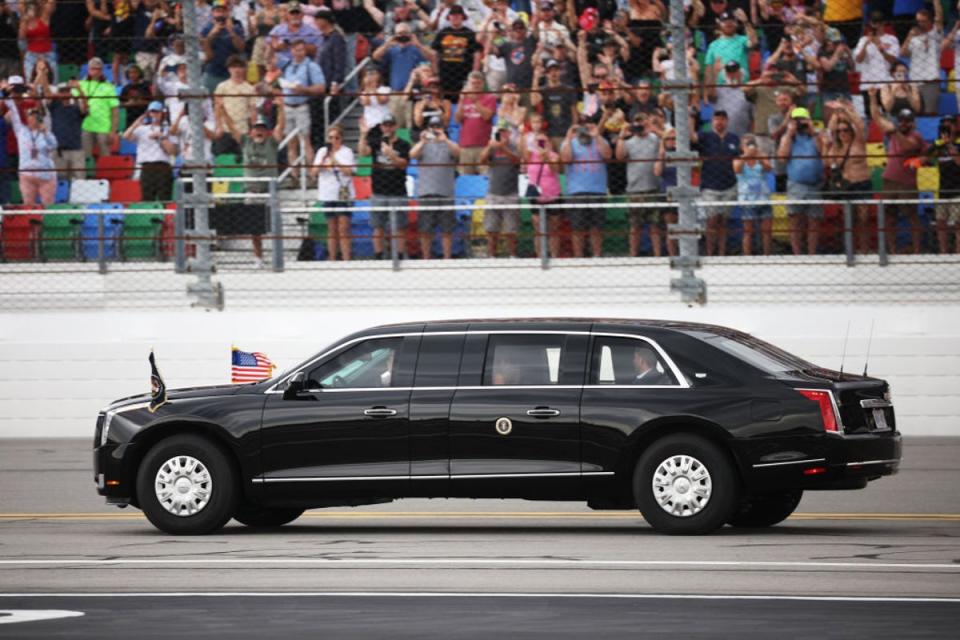
When I saw Trump being driven around the Daytona 500 track, I remembered how he wanted military parades in his honor, missile trailers destroying the concrete of Washington streets, and camo-clad, heavy-booted soldiers carrying weapons.

Nobody’s talking him down from his bad decisions and co-conspirators—the ‘cabinet catering to a serial fabulist,’ per Winer—any more.

Surreal, indeed.

Diversity, Political Culture and Middle School Band

Like all educators, I’ve been following the repercussions of the “Dear Colleague” letter the federal government sent to public schools, threatening to cut off funding for schools that dabble in things like human rights and accurate history. The fact that the poor, strapped (snort) Department of Education used some of their evidently dwindling resources to set up a snitch line so parents could rat out teachers and school leaders is telling.

Dear Colleague, my ass.

More like Big Brother is watching. Or Here’s Our Grand Portal of baseless conspiracy theories and fear-mongering to support so-called “parents’ rights”—jump right in!

To make this all seem “normal,” the ED sent out a nine page read-what-our-lawyers-say explainer that further muddies the waters. The purpose of this second epistle seemed to be upping the threat while appearing to be efficient and legal-ish.

Many times, in my long career as a vocal and instrumental music teacher, I’ve had dear colleagues (ahem) express mild envy over that fact that the general public saw my subject discipline as what we used to call a “frill”—nice, but neither substantial nor essential.

Parents, these teachers suggested, didn’t really care about what kids were learning or singing in music class. It was an elective, not part of the more important career-preparation/serious-academics curriculum. In other words, my students were not being tested on the music curriculum, like theirs were. In band and choir class, we were just, you know, playing around. Fluff.

As you may imagine, I’ve written countless blogs and think pieces about what kids take away from a quality music program. If you think that the arts are a value-free zone—not tested, so not important—I’ve got news for you.

The classroom where I spent more than 30 years, teaching secondary vocal and instrumental music, was a platform for learning about lots more than the fingering for Eb and how long to hold a dotted quarter note. It was a place where we could explore how the music that students are marinating in, 24/7, came to be—a cultural voyage, through time and place, and the human response to make art reflecting the artist’s circumstances.

Proof of that–a couple of days ago, a young band director, on a Facebook page for instrumental music, asked his dear virtual colleagues for advice on this dilemma: His 8th grade band had been preparing Moscow 1941, a terrific composition, for an upcoming performance. Given the current fluctuating official opinion on Russia, Russia, Russia, he was stymied by his middle schoolers asking if they were playing a Russian march to show support for the Trump administration.

What do I do? he asked. Do I tell them Russians were the good guys in 1941, but not now? Do I say it’s just notes and rhythms, forget the title? Do I just pick something else? The kids like the piece and we have it ready for performance. Also—I’ve already talked to the kids about great Russian composers and the dark and moody music they have produced, over centuries.

First—I love that there’s an online forum for discussing these professional issues. Responses were mostly thoughtful, ranging from “tell kids the truth about Russia, then and now” (including a couple of good resources) to “get your principal involved.” There were also a few “avoid conflict, always—dump the piece” responses, which I took as evidence that teachers, in general, are rightfully anxious about threats from federal, state and local officials. Music programs are chronically in the crosshairs and choosing music that Trump-voting parents could misinterpret could be risky.

The discussion morphed into examples of band directors who chose music to represent Ukraine, and other masterworks inspired by political events, like Karel Husa’s Music for Prague, 1968. This is what the arts are supposed to do—help us make sense of the world.

Back in the 1990s, I bought a piece for my middle school bands called A Lantern in the Window, a musical depiction of the Underground Railroad. There was a quiet, spooky opening, followed by a pulse-pounding chase, and the piece ended with a richly harmonized quote from an old Negro spiritual, Steal Away to Jesus.

I programmed Lantern often, every two or three years, because it was a perfect teaching piece. There were multiple tempos and styles, and I could talk about the use of familiar songs, how a few measures could remind us of a powerful cultural idea.

Students always wondered why an enslaved person would believe in Jesus—and yes, these conversations had to be carefully handled. But they were worth it. They illustrated the power of music to tell an important story. And that, I thought, was the heart of my job.

Last week, “The President’s Own” Marine Band quietly canceled a concert program originally billed as the “Equity Arc Wind Symphony.” The performance was to be the culmination of a “multi-day music intensive with musicians from ‘The President’s Own’” and high school musician fellows selected through auditions organized by the Chicago-based Equity Arc, a nonprofit organization that provides “specialized mentoring support for young BIPOC musicians and helps institutions take meaningful steps toward equity and inclusion.”

When I see stories like this in the news, I wonder how music teachers, specifically, can stand against federal threats. Our job—our low-paying, high-importance, mega-stressful job—is to give children of all ages, colors and abilities the chance to love, understand and perform music. Politicizing that—for whatever stupid reason—is both wrong and damaging to children and to our American culture. That’s a good reason to push back.

I have empathy for teachers, like the band director worried about Moscow, 1941, but I also know that huge masses of the middle class workers will have to stand against the takeover of our government and our national culture in order to stop the carnage going on right now.

Deep breath. Buck up. There is lots of work to do.

Christmas Music: The Good, the Bad and the Downright Ugly

Music is my life. I play several instruments and sing. I majored (and double minored) in music in college and am active in civic groups and church music as participant and conductor. I even went to flute camp (for adults) last summer. And I spent 30-odd years as a public school music teacher.

So– I have a love-hate relationship with Christmas music. Mostly love. But.

December can be brutal for musicians—and for school music teachers, brutal on multiple levels including community expectations and endless rounds of kids-on-risers. Music teachers become de facto activity directors, lurching from frigid parade to caroling at the nursing home. 

But still—there’s the rich opportunity to teach excited kids something about their cultural inheritance and surround. Which includes a clear definition of the divide between music as spiritual practice and music as auditory clutter.

Because you really can’t get away from Christmas music in America in December (or November), hard as you might try. People of other faith traditions, people who don’t believe in any of the Christmas iconography (like Santa or Jesus), people who loathe the downtown decorations and the Hallmark channel—we’re all stuck when Santa Claus comes to town.

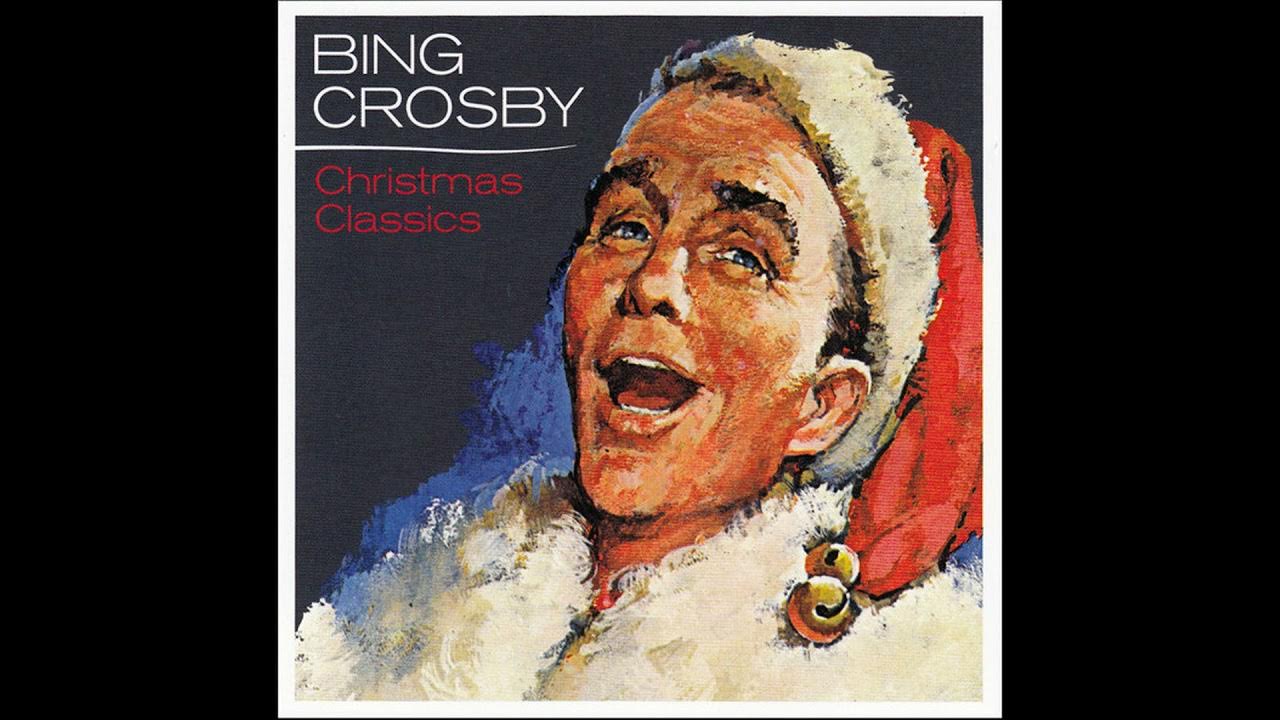
For many people, Christmas music becomes irritating aural wallpaper, especially if they’re tuned into one of the omnipresent satellite radio Holly-day stations, or actually paying attention to what’s on the PA system as they’re perusing cheese in the dairy aisle. Because most of the commercial Christmas music readily available in businesses and on Sirius is, frankly, somewhere between uninspired and dreadful. I don’t want to hear—to choose just one example—Burl Ives at any time of year, let alone at holly, jolly Christmas.

I started listening to Christmas music on my little portable record player (Christmas gift from my parents), beginning with the LP records from the gas station ($1 will Fill-up!), where Percy Faith and Ella Fitzgerald were interspersed with the Chipmunks and the NY Philharmonic. When I got my flute, in fifth grade, I was invited to play Angels We Have Heard on High for the church Christmas pageant, a gig I kept through junior high because I liked the wings and halo, as well as the tune. I was hooked.

So I started collecting (and studying) seasonal music as a teenager, eventually making yearly cassette tapes of my favorite cuts. Cassettes morphed into CDs in the 1990s. I made annual gift CDs for family and friends—then eventually, due to the magic of iTunes, custom-selected CD playlists and discs for my regular customers. I requested multiple catalogs from folk and jazz artists and ordered new CDs, unheard, in the fall. At one time, I owned 500 holiday CDs, and had a catalog of over 3000 digital cuts on iTunes.

 Yeah, I know—when does a hobby become a sickness?

The last year I made CDs was 2018, when I realized most people no longer had the equipment to play a CD. I still make my own annual December playlists on Spotify—there are still arrangers and artists creating beautiful new seasonal music. I love listening, but I am really picky about what I am listening to.

Here’s the thing, though, about so-called Christmas music: it’s familiar, or will become familiar in time. A tune you recognize, when you hear it again, come December. We don’t have a lot of those commonly remembered classic songs anymore, holding our culture together. Nostalgia is a part of cultural norms.

For centuries, there was mostly sacred music—all of which has cultural value, whether the listener is a believer in the divine, or not. O Come, O Come, Emmanuel dates back to the 9th century, for example. How often do young listeners authentically interface with such a different time, except through music?

Commercial music has been shaped by the march of new technologies and low-bar popular opinion (lookin’ at you, Frosty). Children no longer know folk songs sung around campfires in the 19th century—unless they learn in school to cross the wide prairie with Betsy from Pike. We are losing bits of our cultural heritage, including traditional carols.

Whatever you want to listen to today is immediately available on your phone. But if you haven’t explored the truly glorious—magnificent or austere or funky–songs and carols of the season, how will you know what to ask for, to know what musicians have created from a simple tune?

In collecting mountains of Christmas music, I have favorite versions of all the songs, of course. But when I want to relax on Christmas Eve, with a glass of wine, this is what I put on: https://open.spotify.com/track/5c0sQY87Iw7qUu46N31f3v

I am a Patriot

I am a patriot and I love my country. Because my country is all I know.

Jackson Browne

Of all the things manifested by the upheaval dividing this nation politically, the appropriation of the concept of patriotism by the right wing troubles me the most. Why? Because my country is all I know–and I am loyal to its virtues and principles, while fully recognizing its many tribulations.

I’m sure that every citizen registered to vote in November feels the same way: they’re voting to save the country from sliding into despotism, to secure freedom, the blessings of liberty, yada yada. The fact that the two distinct roads to said patriotism diverge in a black forest of confusion, even violence, is terrifying, however.

Who’s the patriot? And who deserves to have their lives and values suppressed?

Watching the news, and reading—one laborious, revolting chapter at a time—Project 2025, it’s pretty clear that the authors of that document feel that their activist zeal to change the nation is driven by patriotism, their love of country, And if that drifts over the line to white nationalism, well… many of our leading Senators are down with that, too.

It’s funny. One of the things I was never uncomfortable teaching or promoting in the classroom was an explicitly pro-America, patriotic point of view. Musically, and culturally, I endorsed patriotic traditions and celebrated the musical innovations that sprang from so-called melting pot.

Kind of ironic, considering how I felt about the Vietnam war, and the arguments I used to have with my father, a WWII veteran. My country, right or wrong, was his modus operandi. But I thought then, back in the 1970s, and even now, that loving the place where you live, where your ancestors settled, where you’ve put down roots and built community, means you can also be clear-eyed about mending  its every flaw.

I am a patriot. And I love my country.

I love the idea that it took decades of discourse for the early, 18th century Rebels (by no means a majority) to organize in resisting colonial rule, fighting the imposition of taxation without representation (which still resonates today). I think all children in America should know the truth about our Founding Fathers, and their multi-racial legacies.  I think elementary schools should hold mock elections and HS Social Studies teachers should organize voter registration drives. I think flying the national flag—right side up—is everyone’s prerogative.

I also think the Superintendent of Schools in Norman, Oklahoma, who declared “We’re not going to have Bibles in our classrooms”—after a memo from Ryan Walters, their moronic State Superintendent specifying that all OK classrooms will offer Bible-based instruction—is a patriot.

A patriot who understands our foundational principles–the separation of church and state, for example. Perhaps even a patriot who sees citizenship-building, not just job training, as a core purpose of public schools.

Can patriotism be taught?

E.D. Hirsch just published a book in which he states that we can:

 “…transform future citizens into loyal Americans.” Hirsch feels that “patriotism is the universal civil religion that our schools need to support on moral and pragmatic grounds as the glue that holds us together.” He believes the foundation of patriotism is in a shared knowledge base, which all citizens must have to participate together in a community or engage in communication. Hirsch states, “we can create specific standards, so each classroom becomes a speech community whose members all understand what is being said, because they all possess the needed relevant background knowledge.”

This is classic, evidence-free Hirschian blah-blah. If only everyone analyzed the Articles of Confederacy together, or memorized the Gettysburg address, or studied Julius Caesar in the 8th grade (using Hirsch’s handy-dandy curriculum guides, of course), we’d all get a boost of love-yer-country loyalty? Because we’d all be on the same academic wavelength?

Having spent decades hanging out with actual middle schoolers, who were taught a fairly universal set of ideas and skills, I can tell you that more standardization will not make anyone more aware of the virtues or drawbacks of real life in a diverse democracy. Furthermore, the whole idea is vaguely reminiscent of other, failed social movements.

You can model genuine patriotism. You can teach patriotic–and protest–arts and literature, to enlarge students’ perspectives on what it means to endure hardship and sacrifice in the service of one’s country. You can toss out provocative ideas—Should everyone be compelled to recite the Pledge of Allegiance?—and your average fourteen year old will undoubtedly have an opinion, which you can then dissect and examine.

But you can’t make kids love the United States of America.

No T-shirt or baseball cap, let alone a traditional school curriculum, can do that. It comes from maturity, and the heart.

My Country ‘Tis of Thee (Land of Inequity)  Song by Reina del Cid

O Christmas Tree

… A Fox host said this weekend that more Americans need to buy artificial Christmas trees because tree farms are needed for AI data centers: “There will be transmission lines that have to go through developments and farms. That’s the nature of a growing economy. Everybody needs to get on board. Buy a fake tree.” …

Are Schools the Problem?

I was somewhere between irritated and curious when I saw the headline: America’s Children Are Unwell. Are Schools Part of the Problem? The subhead: From A.D.H.D. to anxiety, disorders have risen as the expectations of childhood have changed. Well, yeah. A.D.H.D. is now better defined and diagnosed. And I certainly believe that anxiety is on…

Youth. For Christ? At School?

I should probably preface what I’m about to say by noting that I self-identify as a liberal Christian. Without getting too far into the theological weeds—or alienating those who are rightfully skeptical about some current Christian churches’ lack of commitment to feeding the poor, etc.—I have been a church member and/or employee for decades, off…

Ever Had a Student Like Taylor Swift?

Ever had a student like Taylor Swift?

The question I’m asking is not “Did you ever have a student who turned out like Taylor Swift after they were a full-grown adult—unbelievably well-known and well-off?”

It’s this: Did you ever have a student you felt was full of promise? A kid for whom you could foresee a big future—in any number of arenas, from business to politics to entertainment?

A kid who looked and acted like Taylor Swift in this video, when she was 16 and a sophomore at Hendersonville High School? You can see the talent, drive and ambition from a mile off, and you think the student will end up doing something remarkable with their one wild and precious life.

In the video, however, we see Taylor pledging allegiance, solving a math problem and sort-of mouthing off to her mom. Her comments on camera reveal an atypical mountain of 16-year-old self-confidence, something that can be annoying in a classroom. As it happens, the video was shot near the end of her time actually attending high school, as her career took off, and she finished high school via homeschooling. A practical solution. And, I have to say (quoting Paul Simon), her lack of education hasn’t hurt her none.

My follow-up question: What happened to your student like Taylor Swift—the ultimate prize-winning science geek, the creative senior whose novel you expected to buy in the future, the talented trumpeter headed off to Julliard? Did they rise to greatness? Fizzle? Run into a roadblock and blow all that talent and potential?

Speaking only for myself, I would say that of course some students show enormous promise, but nobody’s future is guaranteed—or even predictable. I have had many former students end up in positions of leadership and acclaim, even fame, in varying fields—just as their teachers expected. And others who made a wrong turn someplace, sometimes disastrously.

What’s more interesting to me is those students of whom little was predicted, who leapfrogged over a lackluster secondary school presence into a successful adulthood. I had a student in my 7th grade math class whose homework was perennially missing, and whose test scores were abysmal. We had tons of meetings around this kid with his beleaguered parents—how to get him to focus on schoolwork, benefit from extra tutoring, knuckle down and pass the seventh grade, etc. etc.

You know what’s next, right? By the time he was 21, Mr. Anti-math was a million-dollar real estate salesman, back when selling a million dollars’ worth of real estate meant something. His little headshot, with its cool haircut, appeared in every edition of the local news. Presumably, he had someone else doing his taxes, and drawing up contracts.

I also know that many of my middle school students’ future goals were centered on riches and fame. You don’t often meet a pre-teen who hopes to live their life humbly, in service to others. Self-effacement and altruism are difficult when you’re not really sure of who you are, to begin with. Besides, aiming high will please your parents and your teachers.

Celebrity, however, is not all that it’s cracked up to be:

When a celebrity is that prominent, they are always in danger of becoming the figurehead of cultural and societal frustrations. Which is one of the many reasons celebrities periodically recede from the public eye: no matter how many people love you, there comes a point when the structure of a star image cannot shoulder the weight of the star’s meaning and import. The history of celebrity is filled with examples of people who did not or could not protect themselves from this scenario — because of their youth, because of addiction, because of others’ greed, including our own as consumers and fans — and careers and lives that imploded because of it.

Taylor Swift’s ‘meaning and import,’ in 2024, have made her the target of a whole segment of American society:

She’s doing too much, except when she’s not doing enough, and she’s always doing it wrong… a pretty blonde dating a handsome football player should, at least for white people of a certain age, evoke all the simpler bygone vibes (Friday-night lights, milkshakes with two straws, letterman jackets) that conservatives could want. Except — oops! — the pretty blonde endorses Democrats. And Travis Kelce, the football hero, appears in commercials for vaccines (bad) and Bud Light (somehow worse).

And why does she hog the spotlight at his games? She’s Yoko Ono-ing him and jinxing his team, the Kansas City Chiefs, except when she misses a game — and is still, somehow, jinxing the team, which made it to the Super Bowl anyway, proof right there, somehow, of a vast left-wing conspiracy.

Taylor even gets people like the execrable Jesse Waters claiming she is a left-wing asset.  And worse.

Here’s the thing about Taylor Swift: she is a genuine talent, who writes her own material. As a life-long musician and music teacher, that fact alone elevates her above many, if not most, popular music superstars, to me. Of all the amazing things she’s accomplished, I most admire her reclaiming her own music by re-recording albums released when she was younger, and under the thumbs of record producers whose goals centered on promotion more than artistry and message.

That makes her a role model for all girls who want to speak with their own, authentic voice.

And that’s a goal that teachers can get behind, with all their students. Wealth and glory are often fleeting, but knowing who you are and what you stand for can be accomplished by all students.

The picture below was shot at the Musical Instrument Museum in Scottsdale, AZ, one of my favorite places on the planet, eight years ago this month. If you go on a weekday, you are likely to run into a field trip in progress. And even though there were Chinese drums to pound, and John Lennon’s Steinway (on which he composed “Imagine”) to reverently view, where were the students clustered? In front of Taylor Swift’s sparkly dress and banjo, mouthing the words to her songs.

Those kids are probably 20-something now. Let’s hope they’re claiming their own voices.

 A Crowded Table

I have been celebrating the coming of the light in eight different decades now—in ways considered sacred, secular, and even pagan—and don’t remember any end-of-year condition worse than the place where we find ourselves on this Winter Solstice, 2023.

We have the endless grinding, bloody conflict in Ukraine, and the ghastly war in Gaza which has divided our country as well. Politically, the nation is flirting with the destruction of democracy—with frail old Uncle Joe leading the good guys. And then there’s the rapidly warming planet

Where, oh where, is the thrill of hope, the weary world rejoices”because boy howdy, we need it about now.

I live in a small, but exquisitely beautiful, rural county surrounded by water, a place not especially marked by diversity of thought, or faces. In fact, we struggle here with feeding and housing our poor, educating our kids, getting along peacefully. When it comes to problem-solving, we rely on local government, non-profit organizations and a handful of (Christian) churches.

Recently, Atlantic writer Tim Alberta shared his—very painful, very personal—story about being the son of a conservative, Trump-supporting minister, senior pastor in a church of over 2000 families, in southeastern Michigan. It’s a thoughtful but disturbing story, one very familiar to me, as my own family lived just down the road from this church, before we moved north. Many of my students were in the youth group there, absorbing conservative ideas about abortion, capital punishment and how the lazy don’t deserve handouts.

For the religiously skeptical, it’s churches like Cornerstone that illustrate how Christianity has crossed a line between serving our neighbors with compassion, because Jesus asked us to–and accruing power and riches because being a “Christian” means we’re entitled to them. For all my friends who are non-believers, or adherents to different traditions, or fed up with Christians whose lives are on centered on dominion rather than devotion —yup, I see you.

But I want to share one tiny spark of warmth—of hope, joy, peace and love—that still flickers here in the Little Finger of Michigan’s mitten. For five years, beginning in 2017 (and pausing for COVID in ’20 and’21), my church, Trinity UCC of Northport celebrates an Advent Afternoon, on a Sunday in December.

We invite the whole community to share their music, a kind of local holiday talent show. There’s a pick-up choir, comprised of singers from local churches and community choral groups. There are vocal solos and instrumental ensembles. Ministers from local churches do invocations and benedictions. All followed by cookies and wassail punch and talking over the local news, at crowded tables.

This year, last Sunday, our theme came from the Highwaywomen’s Crowded Table:

I want a house with a crowded table
And a place by the fire for everyone
Let us take on the world while we’re young and able
And bring us back together when the day is done.

If we want a garden
We’re gonna have to sow the seed.

Plant a little happiness, let the roots run deep
If it’s love that we give, then it’s love that we reap.

There were handbells, a clarinet playing Faure’, an old-time gospel quartet, a recorder ensemble and heartfelt solos. A trombonist accompanied himself in a pre-recorded trombone quartet, and a fiddle, bass, drum and superb accompanist played along with the singing, in this creaky, 150-year old sanctuary, as the day faded into twilight. There was jazz (Chick Corea) and 92-year-old Hugh Willey played a rip-snorting version of Jingle Bells.

The choir sang Gesu Bambino and Bethlehem Hallelu and Advent Alleluia. We dedicated our version of Eliza Gilkyson’s Requiem to the troubles—have mercy on us all—in the world.

In the end, there is still hope. There is still joy. On the darkest day of the year, there is still light.