TIASL Best Blogs of 2024

I used to blog for Education Week—for nine years, in fact. And at the end of each year, the teacher bloggers were asked to choose our ten best blogs and post a piece about them. We were given viewership statistics (for our personal blog only), so we’d know which ones got the most eyeballs. And invariably, the most popular ones—the winners–were my least favorite pieces.

I’m writing for myself and like-minded readers these days, so I’m not sharing the most-read 2024 columns from Teacher in a Strange Land. I’m sharing eight blogs that I think best reflect the, well, Strange Land we find ourselves in, educationally speaking.

Before I list them, I’d suggest you read two recent—important– blog posts from Peter Greene. The first informs his regular readers (I’m among them): If you have ever had an urge to send money my way, I ask that you transfer that urge to someone whose work you appreciate and who has, however shyly or boldly, held their hat out. Plunk down some bucks for the work that you value and that you want to see staying in the world.

You’ve probably noticed that the most famous people who write about education are often not educators. The best—most accurate, most creative, most humane—writing about schools and learning comes from people (like Peter) who’ve done the work and have first-hand observations about doing right by children. In 2024 alone, I have subscribed to seven newsletters, paying a modest fee and developing an informed reading habit on screens, rather than newspapers and magazines. Some of those writers have interactive publishing modes and write back.

I have favorite ed writers—and it is those writers who introduce me to other ed writers. Which is Peter Greene’s second point: Share the good stuff. If you’re wondering who to read, click here. There are dozens of suggestions, curated by Greene. But first, subscribe to his blog, because his work is terrific, soaked in reality. And free.

Here are my eight picks:

Do Core Democratic Values Belong in Schools? Some Say No.
When looking at curricular change over the past five years—immediately preceding the onset of the COVID pandemic—it’s easy to see that there were plenty of precursors to the anti-wokebook-banningteacher-punishing mess we find ourselves in as we slowly recover from that major shock to the public education system.

The scariest thing to me about the abuse teachers are taking, across the country, is its impact on curriculum. Here’s the thing: you really can’t outsource teacher judgment. You can prescribe and script and attempt to control everything that happens in the classroom, but it doesn’t work that way.

My Research is Better Than Your Research:

Simple theoretical questions—like “which method produces greater student understanding of decomposing geometric shapes?”—have limited utility. They’re not sexy, and don’t get funding. Maybe what we need to do is stop ranking the most influential researchers in the country, and teach educators how to run small, valid and reliable studies to address important questions in their own practice, and to think more about the theoretical frameworks underlying their work in the classroom.

Ignoring the Real World in the Classroom:

What happens when teachers can’t take questions about the daily news? It makes us look like idiots, for starters. Uninformed content-dispensers, unable to connect facts to causes or outcomes. What have our students learned from our unwillingness to discuss national crises, like 9/11?

Weaponizing Empathy and other Heritage Foundation Rhetoric for School Reform:

I was dumbstruck on hearing this little clip from a recent school board meeting.

Board member says: “This gets into the weaponization of empathy, where empathy is taught as the highest goal, the highest order. Do we teach empathy to the effect where students disregard parental authority—and accept anything and everything? Do we teach kids that any kind of judgment is bad?”

Wait. What? Who is he accusing? And what is the weaponization of empathy?

Too much empathy leads to kids defying their parents, evidently. The moral ambiguity of school confuses students. That’s their big fear?

DIS-Information in Schools:

There are, indeed, public schools where media literacy is a formal part of the curriculum. There are outstanding digital literacy resources for students, supported by high-quality research. What’s missing is the will and the urgency of the need to educate kids about distinguishing between truth and whatever it is they’re getting on TikTok.

Or, unfortunately, at their kitchen tables or their church or on the bus. Misinformation—can you remember Things You Used to Believe?—has always been a factor in growing up and becoming educated. Disinformation is a darker thing altogether. Especially when it comes from people who should, theoretically, represent integrity. Legislators, for example.

What do parents know about public education:

Adults’ perceptions of what’s happening in public schools mainly come from their own personal experiences (and this includes people with no K-12 children in the home). The percentage of people who read books or articles, watch cable news or videos, or listen to podcasts about education is small. People who get their education news from newspapers? Fifteen percent. Second highest source of ed news? Social media.

That’s a lot of guesswork, memes and faulty memories.

Man with Sixteen College Degrees Can’t Read:  

Things that ARE apparent in this article:

  • Third grade is WAY too early to label ANY child a non-reader (or punish them by retaining them). It’s too early for labels, period.
  • When it comes to effective learning (the kind that sticks, and can be applied), experiences trump worksheets.
  • Continuously reading to your children, even when they are supposedly “reading to learn” at age eight, is absolutely the right thing to do.
  • Visual interpretation of text symbols is not more efficient or of higher value than hearing that text read aloud.
  • Many, many children are “bright but different.”

The Return of the Trad Teacher:

It strikes me that tradwives are just another glitzy, social media-driven facet of a larger wave of backlash against a whole lot of un-trad trends in American society: Full-blown reproductive freedom. The continued shrinkage of mainline religions. Honoring personal sex/gender choices. Women running for office and corner offices–and winning. And so on.

I also see lots of pushback against untraditional teaching, curriculum and school organization models. The whole “Science of Reading” battle rings very familiar to those of us who started teaching in the 1970s, when teachers were pushing back against the “Why Johnny Can’t Read” –because teachers theoretically weren’t teaching phonics–crusade in the late 50s.

Thanks for reading. Remember: Share the good stuff.

Let’s Blame the Pandemic

Hey, I know it’s the holiday season, the end of a long, incredibly stressful and disappointing year. You’re entitled to a few days’ respite and mindless merry-making before returning to your job, if you are lucky enough to have a job that offers vacation time off over the holidays. I get it.

But as we move into a loosely organized resistance to whatever the hell comes next—Measles? The end of special education? Further loss of reproductive rights?I think it would behoove us to poke around in the causes of what made has now made us, the so-called Greatest Nation on Earth, vulnerable to the likes of Elon Musk and Vladimir Putin.

Perhaps you remember the movie “Don’t Look Up.” The film follows two scientists who discover an extinction-level comet heading for Earth,which they then attempt to warn humanity about. The makers of the film have publicly stated that the film is meant as a satirical metaphor for the response to the climate emergency.

But the movie was also about how people don’t want to hear about bad things coming their way. They find it hard to believe that terrible scenarios could happen—their homes could slide down the mountainside, or an organized group of terrorists could invade the Capitol. So they pretend that genuine crises won’t happen, couldn’t happen—or didn’t happen.

How is it that Trump voters are now wondering—before he even takes office—if he will “keep his promises” to the poor? Why couldn’t they just think back to, you know, eight years ago, when his first (and, it turned out, only) leadership success was focused on tax cuts for the rich? Aren’t they listening when he suggests nominating  as Attorney General a dude who asks his teenaged “girlfriend” for freebie sex, as ”customer appreciation?”

That was not a rhetorical question, by the way. Who IS seriously listening to what Trump and his acolytes are currently saying they intend to do?  Are we all just opening gifts and going to the movies, eating ourselves into a stupor, because nothing can be done? Why is the Titanic backing up, planning to hit the iceberg again?

Think back to a time when it absolutely felt like nothing could be done—and we (everyone on earth) were facing an existential crisis: March 2020, as COVID rolled around the globe, and its potential as history-making killer became obvious.

My working theory for why we were confused enough, as a nation, to vote Donald Trump back into office, centers around the divisions, deprivations and misconceptions we all experienced during the COVID-19 pandemic.

We are still living with the repercussions, but pretending that it’s done, gone forever.

Here are six ideas about how the pandemic is still with us, impacting our institutions and daily life:

We totally underestimated the impact of a pandemic, before it occurred, and since, whenever we declared our personal liberation from living with a potentially mortal disease. We underestimated our capacity for coping with danger, and we underestimated the need to see ourselves as in charge, not helpless in the face of that danger. We underestimated the fear and lack of patience. We were panicked but—living in a rugged individualism/patriarchy—pretended not to be. We talked endlessly about when we could return to normal.

We especially underestimated the impact on childrenon their emotional security, their need to play and learn with children their own age, their need to succeed at tasks set for them, as they built a mature personality. We’re still feeling those insecurities in our schools and often, responding with more pressure, rather than flexibility and the gift of time. We’re still having trouble getting kids to show up at school, a flashing red light for school leaders.

The pandemic was socially disruptive. It took families away from landmark gatherings—weddings, holidays and even funerals. It ruined existing workplace norms; we’re still trying to hire workers and adjust prices. The entire labor market has been disrupted, and the people in control don’t like the backlash of workers (including teachers) demanding more money. Mask-wearing (to keep either wearer or the people they encountered safe) became controversial.

The pandemic unsettled traditional religious beliefs and practices. Injecting the divine into a global pandemic was confusing to believers: Did God send us a lethal pandemic for a reason? If you trusted in Jesus, did that mean you didn’t need to wear a mask? Attendance at churches, which impacted their ability to stay afloat financially, dwindled—causing many churches to close, and others to put more faith in a Christian nationalism theology, where humans were in control.

The pandemic revealed how little Americans knew or cared about actual science. You remember Anthony Fauci, bona fide expert in viral disease transmission, putting his hand over his face at one of Trump’s COVID press conferences, right? Or the charge that the COVID vaccines “didn’t work” when some vulnerable people thought they were a magic shield instead of a lifesaving mitigator? All the scientific advances that have come in the past four years—and now we’re moving   toward vaccine refusal and, God help us, RFK Junior driving the public health ship.

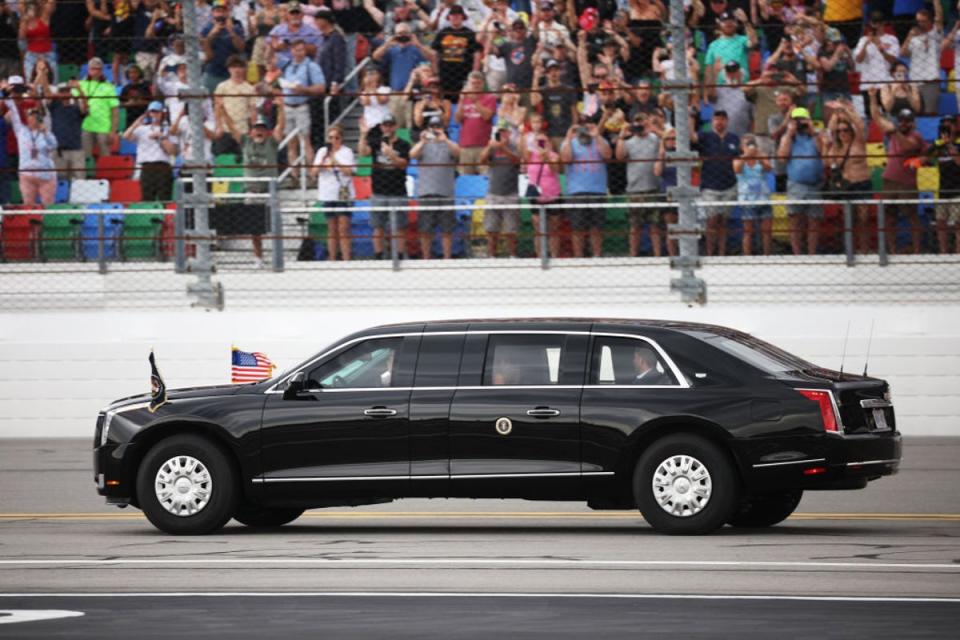
The pandemic was politically disruptive. Donald Trump’s leadership style during the last year of his presidency—the Ivermectin and the bleach, the assertion that we’d be packing the churches by Easter, his drive around in a limosine to wave at fans while being treated for COVID at Walter Reed—was horrifying. But establishment of the Big Lie and the January 6th Insurrection at the Capitol ripped the fabric of American politics more than the previous hundred years’ worth of wars and rebellions. For every person who felt relief at having Uncle Joe in the WH, passing useful legislation, rebuilding international relationships and remembering the dead, there was an angry voter who thought he’d stolen the presidency (and pissed off that he still had to wear a mask in the grocery store).

Which brings me back to the last days of 2024, where we—like the heedless citizens in “Don’t Look Up”—are standing on the tracks of democracy, facing an oncoming train, but feeling too hopeless to muster a response.

Susan Glasser, on the Musk/Bannon/Ramaswamy/Loomer blah-blah on Twitter:

Would it be too 2016 of me to suggest that this is absurd, embarrassing, worrisome stuff? As 2024 ends, the prevailing attitude toward the manic stylings and overheated threats of the once and future President, even among his diehard critics, seems to be more one of purposeful indifference than of explicit resistance; call it surrender or simply resignation to the political reality that Trump, despite it all, is twenty-five days away from returning to the Oval Office.

Or, as Paul Waldman suggests in a terrific piece, everything is just awful: You can date it back as far as you like, but the prime suspect is the covid pandemic, a trauma that still profoundly affects us. That’s true not just for those who lost family members or businesses, or whose kids basically lost a year of schooling, but for everyone, the way it blanketed the country in misery and left us at each other’s throats. One of the most revealing data points is that during the pandemic, pedestrian deaths skyrocketed. People were just driving angry.

Back in the early days of the pandemic, sitting here, lonely, at my computer, I imagined a dozen ways that surviving a global pandemic might lead to improvements in our habits and way of life. Read it—it’s embarrassing to imagine that I believed a country that chose Donald Trump over Hillary Clinton could turn the corner on a dozen issues and needs, courtesy of a pandemic that brought us together. We should all know better, now.

A couple of days ago, Dr. Vin Gupta (speaking of pandemic heroes) wrote this:  I’d recommend everyone regardless of medical risk bring a mask on your airplane journey, a disinfectant wipe to clean the seat you’re in and hand sanitizer. It’s going to be on you alone to protect your health. Warning signs are everywhere.

There you have it. It’s on you. Me, too.
Let’s work together.

Whiplash: Worst Teacher Movie Ever

If you’ve been paying attention to the DOGE Brothers—Elon-n-Vivek—lately, as they explain their personal theories around the failures of American parents to instill tenacity and a work ethic in our young citizens, you may have seen Ramaswamy’s rant on our deficit culture: A culture that venerates Cory from “Boy Meets World” or Zach & Slater over Screech in “Saved by the Bell” … will not produce the best engineers. More movies like “Whiplash,” fewer reruns of “Friends.”

Ramaswamy goes on at some length, all Tiger Dad, about the virtues of immigrant parenting vs. native-born slacker parenting. As a veteran teacher, and thus long-time observer of American parenting, I think he’s flat-out wrong. True, there are parents who simply want to make things easy for their kids. But there are also plenty of non-immigrant parents who run a tight ship, academically, pushing their kids toward competitive excellence, breathing down their necks. The idea of hard work leading to a better life is not exclusive to immigrants.

It’s tempting to ignore the DOGE boys’ blah-blah on Twitter, although our incoming President has anointed them fixers of the entire political economy. It’s hard to see how your average Trump voter will suddenly decide that it’s time to claw their way to STEM careers via choosing the right TV characters to admire, or deciding not to (Vivek’s words) venerate mediocrity any more.

But we’re not going to nurture talent and work toward genuine accomplishment via movies like Whiplash, which is possibly the worst movie about education ever produced.

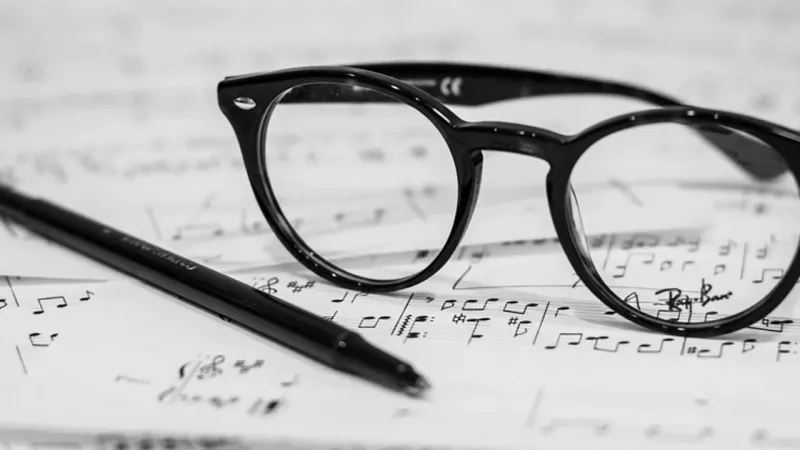
OK, maybe not the worst movie ever. But a stylish, seductive acting tour de force based on All the Wrong Stuff. An excellent showcase for two major talents–J.K. Simmons and Miles Teller–but with precisely the wrong message, for young people who want to excel in spite of setbacks, for educators, and for anyone who ever hoped making music was a rewarding, life-affirming pleasure instead of just another competition.

Several years ago, I had a very talented drummer–call him “Zach”– in one of my middle school bands. Zach was a natural–great innate rhythmic sense, great unforced stick technique and most important, a kind of fearlessness you don’t often see in an 8th grade percussionist. When something went wrong in the music-reading process he–perfectly illustrating the cliché– never missed a beat. Zach was what teachers call a “good kid,” to boot–polite, friendly, and willing to let other kids have the spotlight often, even though he knew he was a better drummer.

Zach’s mother was a physician, and at our first parent-teacher conference, she let me know that my ace drummer’s biological father (someone he now saw only sporadically, once or twice a year) was also a musician. She was clear: her son’s formal musical education would be ending with 8th grade; it was “too risky” to have Zach get involved in the high school band program, even though he was interested in doing so.

Zach was bound for better things than music, she said, adding a few bits of folk wisdom about how musicians aren’t trustworthy, goal-oriented or even rational, and make terrible husbands and fathers. It was her story, and she was sticking to it.

When I saw Whiplash I remembered that conversation with Zach’s mother. Because Whiplash is pretty much a dishonest conflation of myths (the only way to pursue excellence is through cut-throat competition) and truths (a lot of music teachers embrace that myth, the blood-and-thunder school of music teaching). The artist as anti-social and single-minded, driven stereotype.

When I watched J.K. Simmons, playing Fletcher, the tyrannical jazz band director, scream “MY tempo! MY tempo!” I flashed back to all the petty dictators I’ve seen on the conductor’s box, over 50 years of being a professional musician and school music teacher. I’ve witnessed at least a dozen school band directors say the exact same thing, transforming into little Napoleans, using their baton as weapon, “proving” that students must be prodded into worshipful obedience in order to play well.

Here’s the thing: you can be a superb, meticulous, demanding music teacher without being a hostile jerk. You can also be a driven, determined, even obsessed music student, bent on creative brilliance and perfection, without being inhuman or ruthless.

In a movie supposedly about “what it takes” to achieve true excellence in performance, we never saw Fletcher teach, or drummer Miles Teller’s ambitious character, Nieman, learn anything about music via guidance, example or instruction. Everything that was accomplished happened via psychological manipulation: Terror. Lies. Tricks. Bodily abuse. Even, God help us, suicide.

It was a movie designed to prove Zach’s mother right: music is a rough, vicious game, filled with people whose talent means more to them than family or human relationships. It’s about ego–and winning.

Except–it isn’t, really. Music is available to everyone, from the supremely talented to the amiable, out-of-tune amateur. It’s what we were meant to do as human beings–sing and play and express our own ideas.

Let’s not turn anyone away, Mr. Ramaswamy.

We Need Hygge Classrooms in America

The ubiquitous FB meme:

In Iceland, books are exchanged as Christmas Eve presents, then you spend the rest of the night in bed reading them and eating chocolate. The tradition is part of a season called Jolabokafload, the Christmas Book flood, because Iceland, which publishes more books per capita than any other country, sells most of its books between September and November, due to people preparing for the upcoming holiday.

Nobody ever responds: That sounds awful! My family prefers watching our individual TVs!

Generally, commenters reply wistfully, longing for a country where learning is valued and books are ideal gifts, where the dark and cold are counterbalanced by intellectual curiosity and conversation.

Thanks to the Jolabokaflod, books still matter in Iceland, they get read and talked about. Excitement fills the air. Every reading is crowded, every print-run is sold. Being a writer in Iceland you get rewarded all the time: People really do read our books, and they have opinions, they love them or they hate them. At the average Christmas party, people push politics and the Kardashians aside and discuss literature.

Perhaps because I live in a region that gets 135 inches of snow each winter, these cozy, fireside literary chats are enormously appealing to me. As is the Danish concept of hygge:

The Danish art of contentment, comfort, and connection…a practical way of creating sanctuary in the middle of very real life.”

Hygge (hoo-ga), which has no direct translation into English—surprise!—is many things to many people: Woolen socks. Candles and other gentle light. Board games. Comfortable couches and cozy quilts. Warm drinks.

Although hygge seems to have Scandinavian roots, it’s not exclusively a cold-climate thing, evidently. A rustic cottage on a lake, with its beat-up furniture, mildewed paperbacks from the 1950s and second-hand bathing suits is very hygge, according to Meik Wiking, author of “The Little Book of Hygge” and, not coincidentally, CEO of the Happiness Research Institute in Copenhagen. The mere fact that there is a Happiness Research Institute, somewhere in the world, makes me—well, happy.

The interesting thing about hygge and Jolabokafload is their inherent intentionality. Citizens in Iceland and Denmark take contentment, comfort and connection seriously, and pursue them with deliberation. Choosing the right book for someone means you know that person, and what they might enjoy reading. Playing games with your family means connecting with them, laughing and teamwork.

So why don’t we pursue this, here in the land of the free, home of the brave? What keeps us, a nation that often proclaims itself the best country in the world, or at least on its way to becoming “great” again, from choosing to embrace contentment and connection?

Perhaps Scandinavians are better able to appreciate the small, hygge things in life because they already have all the big ones nailed down: free university education, social security, universal health care, efficient infrastructure, paid family leave, and at least a month of vacation a year. With those necessities secured, according to Wiking, Danes are free to become “aware of the decoupling between wealth and wellbeing.”

That decoupling between wealth and wellbeing is well-reflected in this headline: Children Need Homes, Not Charter Schools or Standardized Tests, and Definitely Not Tax Cuts for the Wealthy.

That’s where our intentionality lies in the U.S., where we’re spending our hard-earned tax dollars—canned curricula designed to raise test scores and alternative school governance models, endless expensive tests—when over 100,000 New York City schoolchildren were homeless last year. According to former Senator Orin Hatch, we don’t even have money for poor children’s basic health care. As a nation, we have linked simple human well-being to wealth, and sealed it with the tamper-proof cap of low opportunity.

Many teachers try to add hygge touches to the classrooms where their high-poverty students meet and work every day—from beanbag chairs to classroom sets of snowpants for outdoor play, from little free libraries to Cocoa Day. If school can become a place of connectivity, warmth and safety, they reason, students will keep coming back.

Happy Hygge-days, Teacher in a Strange Land readers. Thanks for all you do for your students.

Billionaire Ideas: Andrew, Bill and Elon

So—it was just one of those re-posted memes: a chalkboard suggesting that the “old days”—when the very rich built and named hospitals, schools and libraries—were preferable to whatever the very rich are doing with their money today.

There are a lot of ways to argue against that tossed-off sentiment: We shouldn’t have to rely on the beneficence of the wealthy in order to have good public services, for starters. Some of that wealth was ill-gotten, and some philanthropists were Not Good People, as well. Why can’t everybody be like McKenzie Scott (formerly Bezos)?

On the other hand, I was born in a hospital named for a local benefactor. I was a card-carrying patron of a Carnegie Library and attended college where every damned building seemed to be funded by someone with lots more money than I’d ever have.

Furthermore, Forbes magazine reinforced my belief that the 21st century uber-rich aren’t very forthcoming any more with dough for public buildings and programs: How generous are the super-rich, really? Not very, according to Forbes’ research. The members of the 2023 Forbes 400 list have collectively given more than $250 billion to charity, by our count—less than 6% of their combined net worth.

Which gets to the point of why I originally posted the meme: The mega-affluent today are busy going up in space in rocket ships, abusing low-paid, NON-unionized employees, and controlling national elections with underhanded tactics.

I’d rather have the theatres, hospitals, academic buildings and libraries. Or—here’s a thought—what about someone with fabulous wealth funding a climate change initiative? Or ending poverty?

Andrew Carnegie funded the building of 2,509 “Carnegie Libraries” worldwide between 1883 and 1929. Of those, 1,795 were in the United States: 1,687 public and 108 academic libraries. Others are scattered throughout Europe, South Africa, Barbados, Australia, and New Zealand. He also funded museums, established an endowment for international peace, supported scientific research, and other civic initiatives, including the Carnegie Foundation for the Advancement of Teaching. He bought or upgraded pipe organs in over 7600 churches.

And, yup, Andrew Carnegie was a robber baron in the most derogative sense of the word, using violence and ruthlessness in controlling the ill-paid and exploited workers who built his fortune. He was also an immigrant, who came to America penniless, and you know how Americans love a rags-to-riches tale. Biographers suggest he had an attack of conscience as he aged, and spent more and more of his wealth on civic projects.

In posting the chalkboard meme, I drew a lot of commentary because I mentioned Carnegie and all those libraries. Surprisingly, a lot of the negative feedback came from librarians, who popped up with passionate responses about Carnegie’s insider trading, sending goons to beat up strikers and trying to suppress the uprisings of the great unwashed by building them libraries.

It occurred to me that those librarians were universally well-read and not about to blindly worship old, filthy rich, controlling white men. Although, you know, thanks for the library.

Still. Although nobody can exactly defend the Titans of the Gilded Age, they left a lot of architecture and institutions for us to use, more than a century later. What have our still-living titans done with their immense wealth?

Bill Gates has funded the building of computer science centers at four universities (including, ironically, Carnegie Mellon), and purchased 40 square miles in the AZ desert west of Phoenix to build his own city of 200K residents, among other projects. From Salon:

There’s a deep-seated belief in libertarian-rampant Silicon Valley that the government and our political processes are slow and messy; to that end, many techies, mad with power, have attempted to start their own partially or fully-privatized cities. Gates’ entire philanthropic visionexemplified by the Bill and Melinda Gates Foundation, is predicated on the idea that rich people and technocrats know best how to manage the levers of society, and the rest of us peons should sit back and let the rich techies run our lives. 

If you’re an educator, you will have felt the Gates Foundation’s impact, from Common Core standards to teacher assessments to breaking up big schools into smaller ones. Have money, will implement. Then declare many of these “promising” concepts failures. Maybe the teachers weren’t following the curriculum with fidelity?

Honestly? I’d rather have buildings and state-of-the-art equipment than Billionaire Ideas changing our fundamental institutions.

Which brings us to Elon Musk, who has promised his and Donald Trump’s  proposed economic policies could lead to “initial severe overreaction” and “temporary hardship” in the economy if Trump wins the election. Trump’s mass deportations and Musk’s $2 trillion cut to federal spending could disrupt industries, lead to labor shortages, and increase prices.

Hmmm. Couldn’t he just build us a nice hospital or school or library?

Carnegie Library in Howell, Michigan.

Gifts of Christmas Past

In a holiday-themed archetype of legislative overreach, Alabama passed an ethics law back in 2011, forbidding K-12 school teachers from accepting expensive presents.  Previous legislation set a $100 limit on individual gifts to public workers, but the 2011 law specified that gifts to teachers be limited to those of nominal value. The stated purpose: to reinforce ethical practices by state employees.

This was such a big deal that the AL Ethics Commission was receiving about 25 calls a day from parents who didn’t want to get their children’s teachers in trouble. The Ethics Commission released a detailed report, letting parents know that cookies, hand lotion and mugs are OK. What I found interesting was what was forbidden. Four examples: hams, turkeys, cash and “anything a teacher could re-sell.”

I was a classroom teacher for more than 30 years. I received hundreds of Christmas and end-of-year gifts over that time. And I never got a turkey or a ham. Maybe that’s an Alabama thing?

Nor did I ever get cash– and if I had been slipped a card with cash, I would have returned it immediately. In fact, I don’t know any teacher who would accept cash or an extravagant gift, especially if they thought the gift came with strings attached. The teachers I know have a whole shelf full of holiday mugs with “from Brittany, 1998″ written in Sharpie on the bottom.

Besides the obvious issues of unenforceability and heavy-handed mistrust of those charged with educating Alabama’s most precious resource, the whole brouhaha in Alabama had a kind of cheesy self-righteousness about it.

Does a $25 Starbucks gift card come with expectations built in? What if it’s given by a shy first grader who noticed his teacher often brings a Starbucks cup to school? When does the impulse to give a hard-working teacher a nice token of appreciation morph into a calculation of what special favors might be granted through a generous present?

Jim Sumner, director of the Alabama Ethics Commissionwas in favor of clamping down on all public workers. No gifts, period:

It takes away the sense of entitlement that people have built up over the years that people serving the public need gifts.

Sense of entitlement?

Several states have laws limiting the gifts that public employees can receive. About ten states have even tougher rules, not even allowing public employees to get a free cup of coffee. Research tells us public officials and employees are rarely influenced by a meal paid for by a lobbyist or by a gift. But states send a message with firm ethics laws and build confidence among the public that leaders can’t be bought.

Theoretically.

Here’s what I wish I could tell Jim Sumner: Teaching offers many very rewarding experiences, but it’s not and never has been about the great swag.

I’m not sure I ever had a “sense of entitlement” as a public worker– but then, I never came in contact with lobbyists and don’t think most people consider non-elected teachers “public officials.” I’m not sure I ever had anything–like a legislative vote–that could be bought.

Alabama Ethics Director Sumner: “if [a parent] said, ‘I don’t care what the new law is, I’m going to give them a cruise,” that’s a different case …”

A cruise? I can’t speak for legislators–who, after all, can change much more than a mere grade–but I’d be hard pressed to find a teacher who regularly went on international junkets, courtesy of Pearson, the way state education officials have. Don’t we have much bigger fish to fry, educationally speaking, than fretting about setting strict guidelines for what parents can spend on a present?

The whole dustup felt sad to me– part of the impulse to punish and control something that happens rather naturally everywhere: kids giving presents to their teachers. All presents from students are good presents.  They’re appreciated, but the sentiments around giving are what’s treasured.

Thinking back over all the gifts I got –there must be 50 music-themed Christmas tree ornaments– one stands out. I had a kid in my 6th hour jazz band, who came to class the day before winter vacation with what looked very much like a tightly wrapped bottle of wine. “My mom says don’t open it until you get home, and keep it in your drawer today,” he said, all innocence.

When I got home, I unwrapped it. It was a bottle of wine–a very nice bottle, in fact. I saw the boy’s mother in the grocery store over holiday break. “About the gift…” I said and she held up her hand. “You absolutely deserved it,” she said. “We won’t speak of it again.”

Help! I Can’t Read!

It started, frankly, back in July.

Like other Type A, rule-following teachers, I can’t just relax and retire. Reading is my favorite year-round way to spend free time, so you think I could just curl up and enjoy lots of books. But no. I have been setting reading goals and tracking the books I read, for the past 10 years.

I know. Get a life.

But I really like tracking what I read. First, it helps when you’re intermittently reading a series by the same author, and the titles are interchangeable. It’s a lot better than taking a book home from the library, and 10 pages in, when it’s starting to feel familiar, wishing you’d kept a list.

Then, there are the easily confused books. The Woman in the Window. Or the train. Or Cabin 10. Or just… The Women. (I’ve read ‘em all—can’t recommend any of them.)

For about 10 years, I’ve been trying to read 100 books a year, and for eight of those years, I’ve made the goal, and sometimes significantly exceeded it. It’s a nice round number. I give myself credit for physical books read as well as audio books (usually a small percentage of the total—they take more time). Fiction and non-fiction. And I only log the ones I finish.

But this year, I’m way behind. I blame Donald Trump.

The only other year that I didn’t make the goal was 2016 (and got off to a slow start in 2017, what with the Womans March and joining groups and deciding to run for office and knitting pink hats).

This year, I was about 8 books ahead of my goal in June. When Biden dropped out of the race, and Kamala Harris quickly became The One, I found that the long stretches of time dedicated to reading were transferred to activities centered around politics. Including a ridiculous amount of time spent where I am right now: in front of my computer.

It’s summer, I’d tell myself. Check a big fat beach read out of the library!
When I did, it would sit in my reading corner until I brought it back, a month later. A month filled with doom-scrolling, sign-delivering, attending debates, wading in hope, drowning in despair.

And in the last month? No books. Just endless commentary. Seventeen takes on the same depressing story (Matt Gaetz? Really?), each with its unique, snarky—and depressing—viewpoint.

Speaking as a person whose most-read column was a screed against the Pizza Hut Book-it Campaign, because it turned kids reading for pleasure into a competition where discounted pizza coupons were the prize, you’d think I could blow this off, and just be happy I read a lot of books.

It isn’t gone—the goals, the book discussion groups, the afternoons on the couch. I’m too much of an old-school reader to end up like the college students who can’t—or, rather, won’t—read.

Ever been in a reading slump? Got a title to bust through my ennui?

My reading corner, below.

Public Education: The Bully and the Dream

“You never change things by fighting the existing reality. To change something, build a new model that makes the existing model obsolete”   (R. Buckminster Fuller)

Buckminster Fuller’s well-known quote was a touchstone for me, in my 30-odd years—and some of them were really odd—of classroom teaching. Whenever things at school started feeling oppressive or dumb—there’s got to be a better way to do X—coming up with a new plan was always a better bet than complaining about the old way. Launch first, ask permission later.

I can pull dozens of examples out of memory here. One major shift I made, for example, as a result of disenchantment with competitive music-making, was dumping ‘chairs and challenges’ in seating my band students.  Nobody was doing it at the time. Here’s another: Starr Sackstein’s work on re-thinking grading in favor of different ways to assess student work.

Why fight back against typical practices, if you can devise a better way? School used to be the perfect place to institute new ideas. Let a thousand pilot projects bloom.

I was intrigued to see this, posted at Bluesky, from DeRay McKesson:

Our goal is not to switch places with the bully, but to end bullying. We focus on tactics—how do we beat the bully?—but don’t remember to prepare for the day when the bully is no more. If we don’t have a vision for our desired future, how can we plan to achieve it? When we confront the bully, we reclaim our imagination. 

If we confront the bully, we reclaim our imagination. We can create a vision for our desired future. Makes sense to me. Feels a lot like Buckminster Fuller: Come up with something better, then make it happen. Stop fighting.

Now– McKesson, a decade ago, was a Teach for America alum, a charter school supporter, and later, a school administrator. He seems to have left public education (and all its flaws) behind, focusing on activism, BLM, social media and podcasts. He wrote a book. He fought with people on Twitter. 

But– I think he’s right. If all we’re doing right now (guiltily raising hand) is re-posting that video clip of Linda McMahon getting body-slammed, we’re not helping preserve, let alone improve, public education. When our focus is on fighting bad policy, especially policy that hasn’t yet been enacted, we need to have better ideas—dreams, if you will—about what public education should look like in our back pocket.

I say this because the incoming administration has dreams:  

Donald Trump’s vision for education revolves around a single goal: to rid America’s schools of perceived “ wokeness ” and  “left-wing indoctrination.” The president-elect wants to forbid classroom lessons on gender identity and structural racism. He wants to abolish diversity and inclusion offices. He wants to keep transgender athletes out of girls’ sports.

A bible in every classroom. Not to mention vouchers—or whatever visionary scholarship name you want to give them–for all.

Trump’s first term was full of rhetoric and short on action, all Betsy DeVos and grizzly bears, when it came to education policy. Lots more anti-public education non-profits sprang up (and some died), and lots of charter schools also sprang up, using public funds, then failed. But the Department of Education chugged on, as usual, and 85% of kids were enrolled in a public school, a slow slide down from 90% a decade ago.

Educators I know are prone to being frustrated when national political discourse doesn’t include ideas about public education.  But that can actually be a bonus. States and local districts are where the policy-making rubber meets the road, when it comes to making public schools better. Policy that genuinely improves what’s happening in public schools looks like what Tim Walz was able to accomplish in Minnesota.

Trump, on the other hand, has a lot of ideas that are deeply unpopular: What Trump will certainly do is pick splashy fights that he can win through executive orders. 

So—returning to Buckminster Fuller or DeRay McKesson—what does OUR vision look like?

Here’s one take on that question, from Steve Nelson.

 All human learning is interconnected. Depriving children of rich, complex experiences in the service of dull training for standardized math and reading exams actually stunts their math and reading development. Ironic and dumb.

We’re still fighting the bullies who instituted mandatory standardized testing for 8-yr olds, and use the data gathered to harm children. We’re arguing with the idiots who destroyed public education in AZ,  in favor of paying for ski lessons and Lego kits for rich kids. We’re brawling with Christian nationalists over Bible-based curricula in Texas public schools.

Where has all this verbal combat gotten us?

Maybe it’s time to create that vision of what schooling could look like—for the same money, with the same workforce, in the same buildings. Imagining that future.

I have a few ideas about that. What does your vision for public education look like?  

Weaponizing Empathy and other Heritage Foundation Rhetoric for School Reform

When I first retired (from the classroom, not from working in education), I moved away from the school district where I had lived and taught. I’d been there for well over 30 years and had seen—up close and personal– the power of school boards to impact educational climate in a school district. I’d been watching through four decades of local policy-making— the good, the bad and the out-and-out malicious.

I’ve got stories.

And  I’ve written about the town where I lived and taught. In spite of its flaws, it was usually a good place to teach, if the definition of “good” is engaged parents, talented colleagues and kids who were encouraged at home to achieve.

The quality of school board leadership occasionally faltered over that time—with most of the squabbling over how to get by while spending a lot less—but there were long stretches where the school board served as a benign and supportive presence.

That was then. The Board now has morphed into something Christopher Rufo would be proud of. There was the podcast by Board members, sharing private information about student discipline. There was the “gender-affirming” bathroom policy. The anti-trans and anti-Pride policies. And so much more.

But I was dumbstruck on hearing this little clip from a recent meeting.

Board member says: This gets into the weaponization of empathy, where empathy is taught as the highest goal, the highest order. Do we teach empathy to the effect where students disregard parental authority—and accept anything and everything? Do we teach kids that any kind of judgment is bad?

Wait. What? Who is he accusing? And what is the weaponization of empathy?

Too much empathy leads to kids defying their parents, evidently. The moral ambiguity of school confuses students. That’s their big fear?

As a long-time classroom veteran who spent the beginning of every year working diligently to get kids to respect their peers, and care for other people’s feelings and property, this struck me as downright stupid.

Of course, empathy builds learning communities. It was right there in the (evidently outgrown) school mission statement:  “ …provide a positive environment for the development of productive and caring individuals of all ages.”

A social media convo developed around the clip, with commenters suggesting the end result of too much empathy was Doctors Without Borders or the Peace Corps.

Eventually somebody remarked:

It should come as no surprise that the Heritage Foundation has taken this term and used it as its own way of fighting against Social-Emotional Learning, and any other academic tools to help students.

If one of your school board members uses this term, they are in some way being educated by, or they are using talking points from the Heritage Foundation.

Then, the other shoe dropped. Aha. Weaponizing empathy is a Heritage Foundation thing, the concept of their plan, so to speak.

Click on this definition, from the Heritage Foundation’s own rhetoric.   It’s pretty vile.

EdWeek asks: Can Trump Force Schools to Change their Curricula? The Trump team’s best weapon for fulfilling this culture war campaign promise may be an under-the-radar office at the heart of the agency the once and future president has pledged to dismantle: The U.S. Department of Education’s office for civil rights, which enforces laws barring discrimination on the basis of sex, race, religion, and disability status.

That’s a lot of legal wrangling—and yes, I understand that bureaucracies can change, when their leadership changes.

But hey—if right-wingers get control of a school board, they can micro-manage a district, with thousands of students, turning it into a place where empathy—caring for and about their fellow students– is forbidden or scorned.

God help us all.

Who’s Afraid of Anne Frank?


Last week, in Howell, Michigan, the town where I used to live, a local youth theatre group was putting on a production of the play version of The Diary of Anne Frankprobably the same version put on in my high school, back in the 1960s, when that kind of drama-club effort was considered a worthy stretch.

This performance was happening at—of all places—the local American Legion Post. And a few veterans were hanging around outside when some  junior Nazis, masked and waving swastika flags, showed up. They called the cops, who arrived promptly, then escorted the flag wavers across the street.

The “Constitutional” County Sheriff (the same one who hosted Trump in his parking garage on the first day of school in Howell) remarked that because the protestors were ‘peaceful’ there was no need to request their identification. They were just, you know, expressing themselves, which they had the right to do.

There have been other hate marches in the county this year. Not going to link to articles, but the same group of masked dudes with Nazi gear and Trump flags have been showing up on the regular around town, on overpasses and at outdoor events in the summer, mixing a little terror and intimidation into life in a small, generally placid, Midwestern town. Among my local teacher friends, there have been quiet on-line conversations—some colleagues have had these young men in class and recognize them.

We’re in for trouble.

It was predictable, no matter which way the election went. All the disreputable talk and threats and violence have been set loose; the election just gave them a bump. The particular young men who were being babysat by the Sherriff’s men told bystanders that they were protecting “Pureville.”  Doesn’t get more explicit than that.

And public schools, the stage on which society builds their hopes for the future, will suffer.

Nobody reading this, I’m confident, now believes that what’s been set in motion will die down quickly. To wit:

  • There is the ongoing flood of racist texts to Black students, including middle schoolers, across multiple states. These anonymous texts tell them to report to the plantation. Some of the texts address the students by name.  
  • There’s the whole “Your Body/My Choice” assault:
    Over a 24-hour period following Trump’s election, there was a 4,600% increase in the usage of the phrase “your body, my choice” on X. The phrase has made its way offline as well, with young girls and parents across the country using social media to share instances of harassment involving it.

And they are undeniably in the just-getting-started phase.

Most of what I’ve been reading in Ed World over the past two weeks have been pieces on education policy. Will Trump close the Department of Education?  What about Head Start, Title I and IDEA? Will RFK Jr. be crossing the country to destroy vaccine mandates?

In practice, both horrifying and devastating. But I’m more interested in the daily lives of schools, right now. As policies, guardrails and traditional practices fall, it will take time to vacate safety codes and equity-supporting statutes.

But right now, this week, tomorrow, I am thinking about a sea change in school cultures. What Jan Resseger describes as:
 
Fueling the racist, xenophobic, and homophobic attacks on public school curricula, teachers and school librarians, and on Black, Hispanic, gay and transgender children who are now portrayed by Trump and his MAGA crowd as dangerous or threatening.

On the first page of the introduction to Project 2025:  America under the ruling and cultural elite … children suffer the toxic normalization of transgenderism with drag queens and pornography invading their school libraries.

These are things that the chronic public school critics and disaffected students can address now: Redefining pornography. Tormenting kids who are trying to understand their own sexuality. Bringing a gun to school or taking one downtown. Terrorizing Black and brown classmates, for fun. Bringing that slut who refuses to go out with you to heel.

None of these involves changing policy or shutting down the Department of Education.

But they’re already happening.