Are Schools the Problem?

I was somewhere between irritated and curious when I saw the headline: America’s Children Are Unwell. Are Schools Part of the Problem? The subhead: From A.D.H.D. to anxiety, disorders have risen as the expectations of childhood have changed.

Well, yeah. A.D.H.D. is now better defined and diagnosed. And I certainly believe that anxiety is on the rise with our youngest people—their world came crashing down five years ago with a global pandemic.

Although I don’t think the subhead writers were thinking of this, anxiety must be through the roof for children of the undocumented, attending school while praying that their mom will come home after work and that they will still be citizens after the Supreme Court gets another whack at the Fourteenth amendment.

But have our expectations of children really changed? And are schools at fault?

Annoying headline aside, there’s a lot of alarming data in the article:

‘One million more children were diagnosed with A.D.H.D. in 2022 than in 2016. The numbers on autism are so shocking that they are worth repeating. In the early 1980s, one in 2,500 children had an autism diagnosis. That figure is now one in 31. Nearly 32 percent of adolescents have been diagnosed at some point with anxiety; the median age of “onset” is 6 years old. More than one in 10 adolescents have experienced a major depressive disorder, according to some estimates.’

It’s actually an informative read. Diane Ravitch deftly reviewed the piece in a blog post entitled Our Pressure Cooker Schools Are Destroying Children and Childhood. In fact, people have been writing about the ever-growing pressure on kids to excel for decades (especially those in high schools where getting into the Ivies or considering a gap year is common).

A couple of decades ago, ironically, we were talking about high-pressure Asian schools and why Singapore topped the international test scores. Was that what our kids needed—a literal kick in the pants? More competition? And why wasn’t the school providing that?

Here’s the thing: Schools in general—more about that word in a minute—aren’t the cause of students’ mental health issues. Schools do what they can with what they’re given, and what they are directed to do, for the most part.

First, a “school” is not precisely defined. Let’s say a good school has competent teachers, capable and cooperative support staff, thoughtful administrators, a clean and safe facility and enough resources to serve the kids assigned there. Those features can all be undone by bad policies and the social factors surrounding the school.

When the halls are lined with buckets catching snowmelt, when there is no library or science equipment, when one of the children hid a gun in his backpackwhere do we place blame? On voters who turned down the school bond issue? On the beleaguered principal? The careless parents who set a bad example? State legislatures that take money away from high-poverty public schools and give it to those who can afford private schools?

To say that “schools” are responsible for an uptick in mental health issues for students is not only unfair—it’s not accurate. The world—especially in 2025—is a scary place. For many (not all, but many) kids, school is the safest place for them to be, and I include in that number children who live in nice houses and have plenty to eat.

Have our expectations for children changed? Yes, and often in damaging ways.

Just talk to teachers. They’ll tell you that kindergarten is the new first grade. They’ll share stories of kids whose behavior is driven by shame and frustration. They’ll tell you that 15 minutes of outdoor play is a benefit, not a waste of time better used on worksheets. They’ll testify that building a cooperative community is always the first step toward learning, in pre-school and in chemistry class. They can tell stories about seeing kids work through an academic roadblock, with patience and humor—not shaming and blaming.

Veteran teachers will also pinpoint the time at which screen time and access to inappropriate, even dangerous, content began to change the way kids talk to and about each other.

Maybe we start addressing mental health issues by understanding just what it is that is making children anxious and distracted, and putting our attention and resources there.

 Don’t misunderstand—I’m not saying that schools (in addition to all the other jobs they’re expected to do) can “fix” a child with failing mental health. But schools can be a significant factor in contributing to a child’s sense of security, belonging and worth.

Youth. For Christ? At School?

I should probably preface what I’m about to say by noting that I self-identify as a liberal Christian. Without getting too far into the theological weeds—or alienating those who are rightfully skeptical about some current Christian churches’ lack of commitment to feeding the poor, etc.—I have been a church member and/or employee for decades, off and on.

All the way back to the 5th grade, in fact, playing “Angels We Have Heard on High” on my flute and swapping out my little-kid animal ears for a white robe and tinsel halo in the church Christmas pageant. Good times.

Or maybe—not so good. I’ve dealt with the insertion of religious tunes into public school holiday programs for my entire career. It’s the evergreen issue for music teachers in December. Bottom line: Public schools need to tread lightly, when it comes to the separation of church and state, even at times when you are hearing angels on high in your local grocery store or used car lot.

I retired—for good—from my last church music director position after Easter, and have since had the pleasant experience of being asked to play in several local churches, which are always looking for free talent.

Last summer, I was surprised to play a service and see two dozen teenagers seated together. There was a junior trad-wife fashion sense for the girls, all with long, curled hair and cute summer dresses. The girls were mostly carrying Bibles; the boys, with their llama-head haircuts, were carrying phones (and scrolling on them during the sermon).

Later, I learned that they were a newly organized chapter of Youth for Christ, meeting with their leaders (an attractive, early-20s married couple), in their home for coffee and prayer before school. Several of them had been baptized by that couple in Lake Michigan, earlier that month.

The guy sitting next to me at the service whispered that he was hoping that these kids were associated with Charlie Kirk’s Turning Point USA, which claims over 1000 chapters in high schools across the country: ‘Turning Point USA is also getting an assist from Republican leaders. The U.S. Department of Education announced it was partnering with the organization, along with dozens of other conservative groups, to launch a coalition to produce educational programming for schools and universities in advance of America’s 250th birthday next year.’

Eek.

I can’t tell you, precisely, what made me most uneasy about seeing perhaps 25 teenagers attending a conservative church en masse. None of the small, rural churches in this county have dozens of HS-aged members, for starters—so their organizational point was obviously somewhere other than an actual church. And the occasional teenager who showed up at the church where I worked never came dressed like a candidate on Bama Rush or looking like a Department of Labor poster boy.

It turns out that the Youth for Christ leaders are salaried, and were posted here to start a chapter, a task they accomplished by volunteering at a local school district. They got some help from a friendly uncle (real estate here is sky-high), and found a place downtown to meet, then began recruiting the kids they met while volunteering as tutors and cafeteria supervisors.

And, miracle of miracles, parents in this conservative community didn’t like it. There were 78 non-consent forms, representing 109 minor children, filed with the Youth for Christ leaders and their organization, saying, essentially: Hands off our kids. If we want them to have religious experiences, we’re in charge of that.

It’s a small school—109 minor children represent a third of the school population. YFC is undeterred, planning to establish a ‘teen hangout’ in the tiny resort downtown, courtesy of Generous Uncle. And downtown merchants, perennially cramped for space, parking and business have turned this into a zoning issue. They might actually win—as I noted, this is a conservative, business-friendly town.

But I want to return to the Christianity—if that’s the right word—inherent in recruiting members for your religious club from a public school setting. When I think about all the angst about not referencing equity, inclusion or diversity in school curricula, and all the book-banning Moms 4 Censorship types showing up at school board meetings, shouldn’t there have been outrage over paid recruiters “volunteering” and proselytizing during lunch?

Not long after Charlie Kirk was killed, CA Governor Gavin Newsome remarked on his goal of organizing young men as effectively as the TPUSA model does. He asked why left-leaning young men have not collectively fought the ‘epidemic of loneliness’ with liberal activism. I don’t have an answer for that, but it’s a good question.

In the season where Jesus sneaks into the daily life of families and communities—Joy to the World!—I am in favor of parents’ careful attention to who’s recruiting their kids.

Absence Makes the Smart Go Wander

Recently, Bridge Magazine—a Michigan-focused news venue—ran a series of articles on the appalling numbers of absences that Michigan schoolchildren have been racking up since (and, let’s be honest, before) the pandemic.

Last year, more than a quarter of Michigan students, nearly 388,000, were considered “chronically absent,” which includes excused and unexcused absences — everything from sickness and appointments to skipping school without parents’ knowledge. Before the pandemic, there were 290,000 chronically absent students, or 19.7% of public school students. 

The definition of chronically absent? Ten percent of the school year, or 18 days. There’s a handy little infographic where you can see how your district ranks, and how their absence rate has fared in the past six years. I was happy to see that the suburban school where I taught for more than 30 years, and the district where I now live and volunteer have low absence rates, generally a mark of an economically secure community. Kind of like test scores.

Also—like test scores—high rates of absenteeism are something that outside observers (read: Bridge Magazine) seem to want to pin on school districts. Here’s a headline: Unlike Michigan, Indiana got tough on missing school. It’s already working. Bridge features a story about the low absence rate in Fremont, Indiana, just across the border, with a photo of a motherly kindergarten teacher and her (white) students.

‘New [Indiana] laws standardize school response to absences, threaten criminal action against students and families and create a reporting system that streams data daily from individual classrooms to state officials.

Fremont has fewer economically disadvantaged students (about 40%), which researchers tie to increased absenteeism, but district leaders say they also have stepped up effort to help get kids in school. Small buses pick up homeless students, schools offer telehealth and dentistry care and a countywide “teen court” serves as a first accountability step for some truant teens.’

Well, bully for Indiana—especially for picking up homeless kids and offering wraparound services for those who might be inclined to skip school because they can’t get there, or their clothes are dirty, or their tooth hurts. I’m guessing that if Michigan schools could lower their rate of disadvantaged students our absence rates would also drop. As for threatening criminal action—truancy has been a recurring issue since forever, and carrots work better than sticks in encouraging positive habits and behaviors.

In one of Bridge’s articles about the Shocking Absence Crisis, this interesting tidbit appeared:

‘Last year, 162 school districts — 59 traditional and 103 charters — faced potential financial penalties for school days when fewer than 75% of students showed up. In five districts, all charter schools, the 75% threshold wasn’t met at least 22 days, according to data provided to Bridge Michigan by the Michigan Department of Education.’ 

There are about 540 fully public (not charter) school districts in Michigan, and around 300 charter schools. Data is murky—but thumbnail math says that just over 10% of fully public school districts (which includes many large urban districts and small, remote rural schools) have serious attendance problems. Meanwhile, over a third of charter schools (which are smaller and more select) are struggling with absences—and the most egregious rates (the ones dragging down the statewide numbers) come from charter schools.

Bridge did not provide that analysis. Interesting.

When thinking about the results of so many kids missing school, Bridge naturally turns to test scores. I’m not even going to summarize, because it’s exactly what you’d expect: kids who don’t go to school very often get lower test scores and struggle to learn to read. But that doesn’t mean they’re dumb, or unworthy. It means we’re not digging into the real roots of the problem.

The more essential questions are why kids aren’t attending, and how to bring them back into the gotta-go-to-school fold. What people and programs might fill their needs, invite them into a safe community?

With elementary students, absences are tied to parent behaviors—so Fremont, Indiana has the right idea: buses, free health and dental care, after-school programs, etc. With older students, building communities—sports, clubs, co-ops, supervised hangouts—are lures, but in the end, teenagers come to school to learn, to let their minds wander. When that doesn’t happen, if there’s nobody dragging you out of bed in the morning, why bother?

Here’s a footnote to the discussion: Should Kids Miss School for Vacation? Parents Say Yes, Teachers Aren’t So Sure. Synopsis: Parents are defensive about getting better prices on a Disney or skiing vacation and pulling their kids from school for family fun. Teachers are resentful about being required to rustle up packets and other busy work while Kid misses classroom discussions and contributions to group projects. Grades become an issue.

Speaking personally, I’ve never flipped out over kids missing a few days, especially if you get advance warning and a request for work that comes back completed. Learning is never uniform and predictable, and learning (not filling boxes in the gradebook) is the ultimate goal. Right?

I’ve been asked to excuse a two-month absence for a boy traveling to Egypt with his energy engineer father, and dealt with a championship snowboarder who missed most of a marking period but came back with Olympic and career goals, and a fistful of medals.

The first boy was an A student. He couldn’t make up what he missed—but the life experience more than made up for that. The second boy read at a 2nd grade level, a fact reinforced by several teachers when his parents told us about the tour of events he’d entered. Finally, his mother said: So we shouldn’t let him do what he’s so great at—we should make him stay here and fail all his assignments? How does that help him?

I have thought about her many times. Partly about the privilege well-heeled white parents have in managing their children’s absences—but also in considering why students stop coming to school.

If kids aren’t showing up to school, maybe it’s not about better data streams or legal threats, or texting their parents at the right time.

Maybe they don’t want to stay in school and fail their assignments, convinced that nobody cares much. What should we be doing about that?

Who ARE these people? Part II

Earlier this year, I wrote a piece about people whose core political beliefs represented the sincere hope that the country would radically improve under the second Trump term. It was titled Who ARE These People?

It represented a sentiment I hear all the time: I can’t believe there are people who think Trump is the second coming. Who in their right mind could see him as a transformative leader? Who does not perceive the grifting, the rank incompetence, the prejudice, the lies—and the danger to a functioning democracy?

Companion questions: What percentage of the population understands and genuinely embraces Trump and the cadre of people surrounding him, currently disassembling our government? Who ARE the people who think it is Trump’s right to tear down the East Wing of the White House? Who ARE the people who believe that dangerous crime is surging, that food prices are dropping, that cutting SNAP benefits and Medicaid will teach those lazy slackers a lesson? Oh—and don’t use Tylenol!

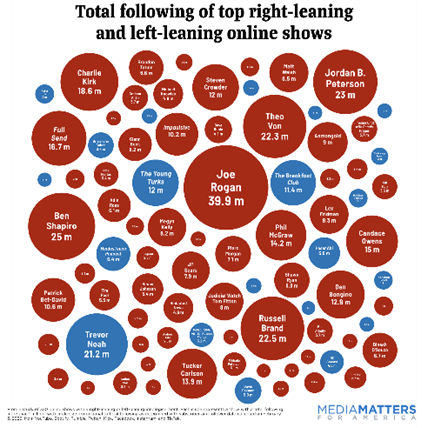
And—key point—where are those folks getting their information? How do we counter obvious lies? Including lies published on official government websites and broadcast in airports?

Yeah—I know. You read this stuff, too—eye-popping, outrageous stories—and ask the same questions.

Maybe you’re wondering if teachers—underpaid and overworked—could have done more to establish the habit of questioning authority, discerning which evidence and rhetoric are reliable. Examining biases, looking at turning points in history, and so on.

Where were the people that Lucian Truscott calls yabbos educated? Who suggested to them that racism, sexism, and deceit were OK, if they were means to an end?

It’s exhausting.

This week Jonathon Last wrote this on The Bulwark:

Some large portion of voters do not appear to understand elementary, objective aspects of reality. We have jobs and lives, too. If we can understand reality, then they should be able to as well.

It does seem as though the last Democratic administration focused like a laser on economic issues. It managed the economy well, avoiding a recession and achieving a soft landing. It passed major, bipartisan legislation around Kitchen Table Issues like infrastructure spending. It kept the economy strong, with historically low unemployment and real-wage growth. It did not try to ban assault weapons but instead passed a gun-reform bill so sensible that it received bipartisan support. It successfully negotiated the most hawkish immigration reform bill in American history, only to have it sabotaged at the last minute by Donald Trump. These are actual things that happened in the real world over the course of 48 months.

Yet somehow all of this activity was invisible to voters? While these same people were highly attuned to the number of times LGBTQ appeared in the Democratic platform?

Which is it? Are the voters oblivious? Or are they discerning? Or does it depend on the situation: Willfully blind to some facts, but hyper-attuned to others?

Another theory is that voters are largely incapable of discerning reality, so expressed policy preferences matter much less than atmospherics and vibes. This theory holds that voters will respond more to entertainment or projections of strength than to a policy-based focus on the Real Issues.’

Whew. But probably—yes. Incapable of distinguishing reality from wish fulfillment. Rumor from news. Fool me once, twice, keep on fooling me, but it’s easy to vote (if you vote at all) by habit, not by analysis:

In fact, research into voting patterns in America suggests that it honestly doesn’t matter that much who or what a candidate looks like. When people go into the voting booth, they vote Republican or Democrat. When push comes to the ballot box, that little R and D matter more than all the Bud Light in the world.’

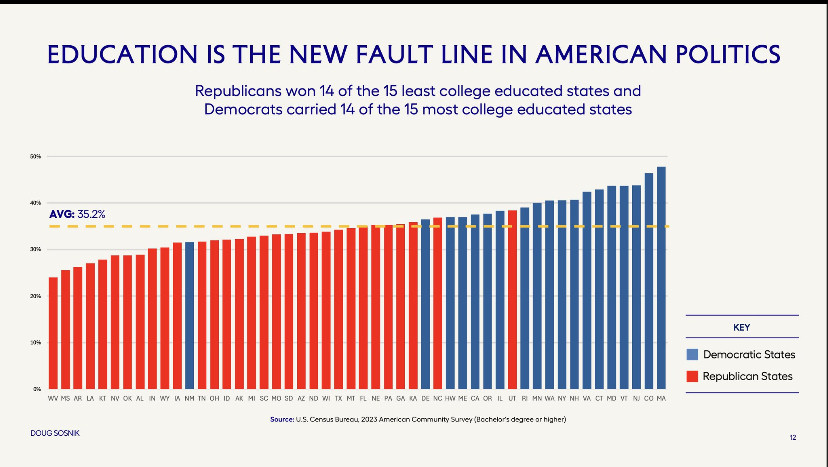
So. Here’s the real nub. If a third of American voters can’t tell fact from ugly fiction, or actually prefer to be governed by racists, quacks and the mentally diminished, if they are Republicans, what are we to do? Is this a permanent shift in American politics? Or are there ways to rebuild trust in our neighbors, our institutions, our national pride?

We can’t turn away if we want a just society. We can’t rely on the hope that seven million citizens singin’ songs and carryin’ signs will be enough. Because the destruction is too speeded up and too dangerous.  Rachel Bitecofer reminds us of a single line from a Warsaw Ghetto diary:

‘The writer had already lost his home, his livelihood, and most of his family. Rumors were spreading that deportations east meant death, and he wrote “We hear that being deported East means they are going to kill us, but there’s just no way the Germans would do that.”’

Lately, I have tried to focus on ways to reconnect with those who might regret their vote, or whose habitual partisan roots might finally seem like a bad habit. People who are becoming increasingly alarmed at seeing Bad Things happen, even though they remain safe and unharmed. Two thoughts:

(from Colorado organizer Pete Kolbenschlag):

‘This is the Ditch Principle: Your ditch neighbor may disagree with you about everything except keeping the water running —  so you start there. The neighbor who might pull you out of a snowbank doesn’t stop being your neighbor when you disagree about politics. Rural communities practice interdependence because isolation kills.’

(from Philosophy Professor Kate Manne):

‘How has Mamdani, an unapologetic socialist—and progressive Muslim and advocate for Palestinian rights—pulled off the feat of likely winning against the odds, against the tide, and against all early predictions? In part, I think, by calling forth the best from voters, rather than kowtowing to existing polling data.’

As a veteran educator, I hate saying this—but I don’t think this is something learned in required coursework, no matter how great your Civics curriculum is. Schools are a kind of stage, where society plays out its biases and beliefs, bad and good. Incorporating content standards into becoming a more responsible and caring human is something that can be modeled—but not tested and ranked.

There is no class syllabus that prescribes pulling your neighbor out of a snowbank—but if your dad pulls over on a snowy day to get a speeding classmate out of the ditch, you’ve learned an important lesson in interdependence. Likewise, there are teachers who call forth the best from students, by integrating facts and skills with compassion and curiosity.

I wish I had answers for these questions. What do YOU think?

“Progressive” Schools

I’m old enough to remember Ronald Reagan hosting General Electric Theater, on Sunday nights, when he would look sincerely into the camera and say “General Electric, where progress is our most important product.”

Presumably, progress was both inevitable and desirable—a mashup of American technologies and innovation, bringing (GE again) good things to life. On television, anyway.

Who would stand in the way of progress? Certainly not schools, who were educating rapidly increasing numbers of Boomer kids, using the modern look-see method of reading instruction, and embracing New Math.

According to family legend, my first grade teacher sent home a note asking my mother to stop letting me read to her, in case she said or did something wrong, impeding my literary progress with pre-approved books about Dick and Jane. She stopped immediately. Teacher knew best.

Stephen Bechloss, on this Indigenous Peoples Day, shared a fine essay on progress:

“Examples of progress are all around us. I carry in my pocket a computer that gives me access to almost all the existing knowledge in the world. That same device allows me to instantaneously connect with family and friends thousands of miles away. I can flip a switch and light my kitchen. If my heart gives out, I can get a new one. I can fly in the sky and travel almost anywhere on the planet. Nearly everywhere I may go, I will meet people who know how to read.

The world is a wonder. Let’s not doubt it. The creative power of humankind has yielded a modern world that is safer, richer, more connected, more mobile and full of opportunity for more people than our ancestors could have imagined.”

Where did all this progress come from? In addition to the inherent creative power of humankind, progress is nurtured by education, wherein creativity and curiosity turn knowledge into progressive action: Machines. Ideas. Institutions. Literature and art.

Maybe even better government. Countries, for example, where everyone has health care, and citizens embrace collective efforts to address global issues like climate change. Progress—if you define progress as moving forward to solve problems, bring good things to life.

Possibly you’re raising your hand right now, itching to tell me that there are multiple definitions of progress and progressivism, or that the opposite of conservative is not liberal, but progressive. I would suggest that what we’re seeing now—the movement to damage public education—is not conservative. It’s authoritarian vandalism. But let’s try to agree on a definition of what it means to be progressive.

Miriam-Webster: A left-leaning political philosophy and reform movement that seeks to advance the human condition through social reform. Adherents hold that progressivism has universal application and endeavor to spread this idea to human societies everywhere.

It was not surprising to read this, in a must-read piece by Megan O’Matz and Jennifer Smith Richards at ProPublica: “In a 2024 podcast, Noah Pollak, now a senior adviser in the Education Department, bemoaned what he sees as progressive control of schools, which he said has led to lessons he finds unacceptable, such as teaching fourth graders about systemic racism.”

Progressive control of schools? Seriously?

Speaking as a person who has spent decades working in public schools and with public school teachers across the country, schools are generally among the most conventional and cautious institutions on the planet, subject to pressures and opinions from a wide range of (often clueless) critics. And likely headed by someone who adamantly does not want to get phone calls from honked-off parents.

I also say this as a person who taught fourth graders about systemic racism, in a general music unit from our REQUIRED music textbook, a collection of songs (Follow the Drinking Gourd; Swing Low, Sweet Chariot; Bring Me Little Water, Silvie and others) plus some pretty neutral fourth grade-appropriate text about the African formal and rhythmic roots of American popular music.

We were sitting on the big, round rug and one of the fourth graders asked why so many African-American songs (again, songs in our traditional music series) were about God. If their lives were so bad, he asked, why did they believe in heaven? It was a good question and led to an equally good discussion about what happens when people are oppressed—how they maintain cultural traditions, and hope.

If progressivism is about advancing the human condition, who’s against it? Besides the handful of people running the fatally compromised US Department of Education? The very people to whom diversity, inclusion and equity—progressive values– are anathema.

Convincing people that public school educators are a) raging leftists and b) persuading their students to defy their parents and adopt outrageous worldviews, then calling that progressivism is a fool’s errand. And 70 percent of the people who have first-hand experience with that—parents—generally believe that their public schools are doing the job they want them to do.

But societal shifts happen when false and unsubstantiated statements are repeated so often they become common knowledge. So be prepared to hear a lot of blah-blah about “progressive” public schools in the near future.

How about a Pause on the Race to Embed AI in Schools?

I haven’t written much about AI and education, for several reasons.

First, there are already many people writing compellingly and with considerable expertise about the uses and misuses of AI in the classroom. Some of those people will show up in this blog. Follow them. Read what they write.

Also, some years ago I developed a reputation for being a cranky Luddite. I wrote pieces about the downside of the ubiquitous online gradebook, accessible to parents 24/7, and other uses of computer programs that added to teachers’ workloads and didn’t fit with the important content and skills I was teaching students (lots of students) the old-fashioned way. The real costs of “free” programs and apps, no matter how glittery and hip, seemed obvious to me. Why didn’t other educators see this?

This came to a head when I was invited to be part of an online panel on ed technologies. Presenters sent me the language they planned to use to introduce me—did I approve? I confirmed, and then they messaged back: the bio had been created by ChatGPT. Ha-ha.

Finally, I haven’t written much about AI because I just find it hard to conceptualize how it could be useful in the classroom. In other fields, perhaps—with a lot of caveats, oversight and suspicion—but it runs contrary to the essential purpose of teaching and learning. Doesn’t it?

It’s never seemed right to let machines do the ‘thinking’ or ‘creating’ that is better done, or at least attempted, daily, by children. In short, I don’t get it. Maybe that’s because I haven’t been enlightened? So—shut up already?

I think many, if not most, practicing educators are in the same boat: Unclear about what AI actually is, and what use could be made of AI tools in their vital mission to make children independent thinkers, evaluators and creators.

For starters, who’s cool with Big Data collecting info on our public school kiddos’ engagement with their products? NEPC Report on digital platforms:  

While educators may see platforms as neutral tools, they are in fact shaped by competing interests and hidden imperatives. Teachers, students, and administrators are only one market. The other market involves data on performance, usage patterns and engagement—data flowing to advertisers, data brokers and investors, often without users’ knowledge or consent.’ 

A pretty good synopsis of what AI is, from Josh Marshall, Talking Points Memo:

“AI is being built, even more than most of us realize, by consuming everyone else’s creative work with no compensation. It’s less ‘thought’ than more and more refined statistical associations between different words and word patterns.” He goes on to make the salient point that the AI “products” being produced that will be “privately owned and sold to us.”

Doesn’t sound like something that schools need to quickly embrace, what with all our other problems, like teaching kids to read, rising absence rates and budgets stripped of our ability to feed children a nutritious breakfast and lunch.

Add in the environmental concerns and rampant intellectual property theft to teachers’ uncertainty about dumping more new, unvetted toys into an already-crammed curriculum. So I was thoroughly surprised to see the AFT get on the “AI in the classroom!!” bandwagon.

Why not take a pause—let’s call it a shutdown—on the race to embed AI in our schools? Why not sort through those competing interests and hidden imperatives? We’ve been bamboozled by climbing on attractive but ultimately damaging educational bandwagons before. Just who wants us on this one?

Well, scammers. And the folks who turned DEI into something to be avoided. Clueless Tik-Toking middle schoolers could up their game with AI. And right-wing edu-site The 74 says educators can save six hours a week by using AI to make worksheets, tests and exit tickets. Really? That’s an awful lot of worksheets.

Wouldn’t it make more sense to approach this transformative technology with great caution, holding fast to the evergreen principle of teaching and learning being a social endeavor? To look at the available research before being bedazzled by something new?

‘Participants, mostly undergraduate and graduate students, who constructed essays with the assistance of ChatGPT exhibited less brain activity during the task than those participants who were asked to write on their own. The AI-users were much less likely to be able to recall what they had written and felt less ownership over their work. Independent evaluators who reviewed the essays found the AI-supported ones to be lacking in individuality and creativity.’

If you want to read better pieces on AI, many are hyperlinked in this blog. But here are a few folks whose words and thoughts come from places of deep knowledge and experience:

Audrey Watters, the best Ed-Tech thinker on the planet,
for my money.

Pete Buttigieg, who thinks ahead of trends. Stop worrying about when he’s going to run for President and start absorbing his ideas on politics and relevant policy. Including AI.

Lucian Truscott, who writes about many things and made me understand why AI may ultimately fail: The men who run the big AI companies would do well to think through what they are doing with all those big buildings and all that electricity they consume. The “answer,” such as it is, to what they are seeking to accomplish may not exist, or it may be simpler than they think.

Educator Alfie Kohn, who points out that those most receptive to this technology are the people who know the least about it. This piece made my skin crawl.

My friend Peter Greene does a better job of debunking AI crapola than anyone I know. I credit this to his decades of classroom experience, during which he Paid Attention to Things—things more important than launching new products and making the big bucks.

So why should anyone pay attention to what a tech skeptic writes about AI in schools?

Because we’ll all be lured into making photos come to life, or relying on a questionable AI answer to an important question, or laughing at Russ Vought as Grim Reaper. Sticky and fun, but ultimately shallow, inconsequential.  Not what school-based learning should be.

Earlier this year, on a day when I made a (delicious) strawberry pie, I clicked on a song-writing app. Give us some lyrics, and a musical style, and we’ll write a song for you.

Here is my song: Strawberry Pie. Sticky and fun, but not much effort on my part.

Moral Clarity in the Classroom

We need to make sure our coverage is rooted in enduring principles and values. We need to make sure we don’t “both sides” the issues when it comes to objective truths. We need to speak and deliver news with moral clarity.       (Ben Meiselas)

I would imagine that most sentient people—red- or blue-leaning—would agree with Meiselas, an activist attorney and founder of Meidas Touch news network. To be more specific—most teachers would acknowledge that there are objective truths, common values upon which we have built our most enduring institutions, including public schools.

Anyone who’s spent considerable time in front of a classroom knows that dispensing assigned content is only a small fraction of the job. The easiest part, in fact. It’s much harder to get students to care about that content and agree to practice useful skills that will serve them well as adults.

In addition, classrooms serve as involuntary communities, places where kids will spend somewhere between 180 and 1000 hours together over the course of a school year. And functional communities have common values.

Any teacher who’s ever posted her list of classroom rules (or, God forbid, the Ten Commandments) and then been surprised when her students blithely ignore them, understands this principle. It takes time to establish what you might call moral clarity in a classroom.

How do you build a classroom community with common values? Some teachers initially rely on threats, fear and punishments to get what they want: compliance. Sound familiar?

Threats and fear will work on some kids, especially younger ones, for a time. But they don’t establish trust or a genuine sense of belonging, two enduring values in a classroom where everyone feels safe enough to learn (or disagree—or even act out).

It’s also way more than civility, although that may be a starting place. Here’s Roxana Gay on Charlie Kirk and “civility:”

In the fantasy of civility, if we are polite about our disagreements, we are practicing politics the right way. If we are polite when we express bigotry, we are performing respectability for people whom we do not actually respect and who, in return, do not respect us. The performance is the only thing that matters.’

I like Gay’s word choice: respect. Classroom interactions built on respect will, over time, build communal trust, but only if the respect goes three ways: teacher to students, students to teacher, and students to students. Which means that every day, every lesson, is fraught with opportunities to build a functioning community that can actually absorb content, discuss Big Ideas and build skills.

Or tear it all down with a false remark, impulsive action or empty threat. Roxana Gay is right—if you don’t respect your students and what they bring to the table, don’t expect them to respect you or follow your rules, let alone learn what they’re supposed to be learning in your classroom.

What are the hallmarks of moral clarity in a public school classroom?

  • Mutual respect
  • Truth telling—kids are excellent lie detectors.
  • Purpose—Every teacher should be prepared to answer questions about why we’re doing this, and how it will be useful in the future. And that answer should never be “because it’s on the standardized test.”
  • Modeling behaviors that reflect intellectual curiosity, humility and forgiveness.

That last one? Admitting you don’t know everything and apologizing when you have wronged a student? Very humbling—and very important. I remember standing on the podium in front of 60 middle schoolers and apologizing for losing my temper the previous day and verbally castigating a couple of boys in the back row. I’m sorry, I said. This performance means a lot to me, but that’s no reason to jump all over somebody. I apologize.

There were several beats of shocked silence. I picked up my baton. And we proceeded to have an excellent, focused rehearsal. And after class, the two boys apologized to me.

Modeling.

In fact, if we were to sit down together over a cup of coffee, I could tell you dozens of stories from my teaching career that illustrate both moral clarity in my classroom, as well as times when I absolutely failed at establishing a trusting, collaborative ecology. It’s probably enough to say that I got way better at it, over 30+ years.

Moral clarity has been on my mind lately, as the country’s 250th birthday approaches, and the Department of Education launches its America 250 Civics Coalition with about 40 national and state organizations, including many conservative and religious groups, that will create curriculum for K-12 and university students in civics education.

Given the Trump administration’s trial balloon—the well-funded, highly partisan and error-filled 1776 Projectand the fact that they’ve ignored the federal proscription against creating any curriculum at the federal level, this does not bode well for actual civics education.

If there ever were a subject that requires moral clarity, truth-telling and purpose, it would be the study of our nation’s history, government and values.

Political Violence in the Classroom

In November of 2016, right after Donald Trump was elected for the first time, seventh graders at Royal Oak Middle School were captured on video shouting “Build that wall! Build that wall!”  in the school lunchroom. It drew immediate attention and media coverage, but like all once-shocking incidents, quickly faded from public view.

As events of the last week unfolded, it struck me that the blurry kids in the video would now be about the same age as Tyler Robinson, the man who shot Charlie Kirk. Were they now part of the cluster of young white men who spend all their time online, getting radicalized? Do they follow Nick Fuentes or hang out on 4Chan?

Or—best case scenario—had they merely been immature, clueless, early-adolescent jerks whose irresponsible, harmful “prank” of insulting and perhaps scaring classmates of color, was made clear to them by a community of teachers and parents? In one of the news clips from 2016, the Royal Oak Superintendent talks about how the perpetrators will be dealt with summarily, keeping in mind that youthful mistakes can be learning experiences.

Exactly.

Clueless early-adolescent jerks are a regular feature in middle school teachers’ clientele. Kids do dumb things. In between teaching students about the Bill of Rights and single-variable equations, teachers do double duty as both role models and arbitrators of appropriate behavior.

Because—despite the persistent myth that teachers should just spout content and inculcate skills, nothing more—learning happens in context. When some part of your class feels rejected, afraid or angry about being harassed in the cafeteria, nobody learns. Much of what we absorb in school are lessons about right and wrong. Civility and respect.

Things that weren’t on the lesson plan–no matter how old your students, or which subject you’re teaching. School is where students learn to deal with personal differences, taking turns and not always getting your way. And teachers—witness the illustration for this blog, just posted by a friend in a series of photos of her classroom—create materials, lessons and discussions to that effect, right out of the gate, even though it’s often considered not their job or, any more, none of their business.

We are at a point, this week, where teachers in twelve states have been fired or suspended for making remarks online about Charlie Kirk’s murder. In some states—you can guess which—state officials are inviting anonymous tips on teachers who may have said something in class that offended somebody, although the veracity of who said what, reported by students, then routed through parents, has to be uncertain at best.

Not to mention a giant waste of time at the beginning of the school year, as teachers are trying to build community and trust. Nor is any of this reducing the likelihood of the most politicized and terrifying violence in our classrooms: school shootings.

While teachers should absolutely keep their partisan loyalties to themselves, speaking about political violence is speaking about current events. As Brittany Page says:

“Political violence” isn’t just a conservative activist getting murdered.

Political violence is a Supreme Court that gives the green light for people to be stopped and detained based on their perceived race or ethnicity, what language they speak, where they work, and where they happen to be standing.

It is found in a society that tells you to start a GoFundMe to pay for your life-saving healthcare so your family doesn’t go bankrupt when you draw the short stick.

Click on the link. It’s a powerful piece, proof that we are all wading around in political violence every day, no matter how much they want us to shut up about it. It’s evil. To pretend it doesn’t exist makes it even more dangerous for all of us, including children.

How did we get here? Jonathan V. Last, at The Bulwark, said this:

Things have changed and it’s not hard to pinpoint the moment when the normalization of political violence re-emerged among our political elites. To pretend otherwise would be to hide our heads in the sand—to deny the plain political reality of the moment. But it doesn’t have to stay that way. Times change; people change.

The best part of that quote comes at the end. Times do change. People do change. And I would assert that changing people for the better happens in good schools, every day. Not all classrooms, not all playgrounds, not all teachers—but public schooling is an overall force for good, for a better, healthier nation.

In my time in the classroom, there have been regular encounters with politicized issues, from shootings to 9/11. In 1988, one of my students lost his father over Lockerbie Scotland, enroute to Detroit via Pan Am Flight 103, which was carrying a bomb planted by a Libyan citizen. Did we talk about that? Yes. I also know his pain was ultimately mitigated by the simple act of going to school each day.

Robert Reich:If you examine our history, you’ll see that the core of that identity has not been the whiteness of our skin, or the uniformity of our ethnicity, or agreement on religion, or like-mindedness about sexual preference or orientation.

The core of our national identity has been the ideals we share: our commitments to the rule of law, to democratic institutions of government, to truth, to tolerance of our differences, to equal political rights, and to equal opportunity.

Every clause in that last paragraph ought to be taught every day in every classroom in America. It’s the antidote to political violence.

What I Still Believe about Public Education

A few years back, I was facilitating a day-long workshop of self-identified teacher leaders in a western state. The topic: Blogging as a Tool for Change. It was a room chock-full of smart, feisty, articulate educators, eager to share their experiences, to let the world know how complicated and important their work was.

There were teachers whose students’ families were largely undocumented—they talked about student registration cards where there were no listed addresses or phone numbers. Some of them taught in districts where all the homes cost more than a million dollars; some of them taught on an Indian reservation. All of their stories were powerful.

Then a prospective blogger asked: Where will we get our ideas for what to blog about? How will we frame our experiences as part of a bigger picture? (I told you they were smart.)

It won’t be a problem, I assured them. Not if you follow the news, read education journalism, and think every day about the world our children will live in, what things you can teach them that they will use for their whole lives. I told them I kept an always-full folder on my desktop, where I dumped articles, quotes, links to reports, ideas to develop.

I told them there was plenty to write about. Start with provocative questions—something like Is this the end of public education? (hearty laughter around the room)

This was in the early days of the first Trump administration, when Betsy DeVos suggested that one reason guns were essential in schools was to shoot marauding grizzly bears on the playground. There are always lots of reasons to be snarky about or irritated by big-picture ed policy stories. But the demise of something as central to the United States’ stability and political dominance as public education felt like a bridge too far.

Besides, all teachers with a few years under their belts are familiar with the education pendulum. First, we “all” (OK, some) believe in one immutable pedagogical fundamental, then a new way comes along, and we shift (or are involuntarily shifted) to new practice. Until the Next Big Thing comes along.

Moral: Be wary of the silver bullet. And understand that every new administration brings its own bag of ideas designed to ‘fix’ all the existing problems.

Remember when personal devices were dubbed the Library of Congress in every HS student’s pocket—and now entire states are banning cell phones in the classroom? New Math? Grit? Americans seem to be susceptible to the latest and (frequently not) greatest. There are things of value in almost every trend or program. But no education trend is the One Best Way.

Five years later, I actually wrote a blog titled The Demise of Genuinely Public Education:
You might think I would be applying the evergreen ‘this too will pass’ theory to what’s happening today, confident that the pendulum will swing, the pandemic angst will fade, and we’ll be back to our highly imperfect normal: public education under siege, but still standing. It’s taken some time for me to come to this opinion, but I foresee the end of what we currently call public education.

That was a hard thing to write. I think public education is genuinely America’s best idea: a free, high-quality education for every child, no matter what they bring to the table.

One of my favorite education writers and thinkers, Jennifer Berkshire, recently posted this piece: Is Public Education Over? It’s a terrific, wide-ranging read that pulls no punches in listing a number of blockheaded, failed education reforms that we seem to have learned nothing from (sometimes, both ends of the pendulum are disasters):

Part of what’s so frustrating about our current moment is that by leaning into a deeply unpopular vision for public schools—test them, close them, make them compete—a certain brand of Democrat is essentially incentivizing parents to seek out test-free alternatives. Consider too that we’re in the midst of a fierce intraparty debate over what Democrats need to do to win. For the education reform wing of party, the answer to the question is to go hard at teachers’ unions and double down on school accountability, while also embracing school vouchers.

Berkshire mentions that major media outlets (not that they are bastions of truth and integrity anymore) are routinely posting op-ed content about the end of public schools as we knew them—despite the fact that upwards of 80% of all American kids still go to public schools.

Why would we abandon public schools’ infrastructure and experienced personnel? Crushing public education is not policy—it’s vandalism. It makes no sense.

Maybe the question is not: Is Public Education Over? Maybe the question is: What’s worth saving in public education?

Things to salvage from public education: Neighborhood schools. Honoring diversity. World-class universities. Scholarship and community. Music and art. I could list 100 things.

We have entered a whole new phase of threat to public education. Many things that seemed impossible—like quasi-military forces marching on Chicago-–are now daily news. Education funding is threatened (or yanked) and will remain iffy for some time.

Not a great way to start the 2025-26 school year. And yet—I was in a classroom last weekend, two days before school started, and there were all the names of kids in the new class, taped to their desks. By a teacher, getting ready.

I still believe that public education is the answer to the rising tide lifting all boats.

And I pray that it survives.

Photo: My grandmother, in front of her public school, 11-2-1900. She’s 4th from the right.

Is There Really a Decline in Pleasure Reading?

The mainstream media has been full of the bad news: new study shows that reading for pleasure has declined! Fewer people are reading for fun: From 2003 to 2023, the share of Americans who read for pleasure fell 40 percent, a sharp decline that is part of a continuing downward trend.

It’s easy to feel depressed about declining—what? literacy? —in the American citizenry. Just one more piece of evidence that schools are failing, blah, blah—nobody reads anymore!

But Anne Helen Peterson, in her substack, Culture Study, has a great piece dissecting the study that these scary headlines are based on. Maybe we’re not reading less; in fact, we may be taking in much more information and storytelling via means other than books.

Peterson posits six interesting theories about the way the study’s questions were framed and interpreted, and why we may need to re-evaluate what it means to be fully literate. She’s also a big-time book-reading enthusiast—not someone who sees the death of book-reading as inevitable in a digital world. Reading for pleasure is worth preserving, for all citizens. It broadens perspectives, makes us more interesting.

I immediately felt better after reading the piece. People aren’t reading less, necessarily; they’re reading differently. But I keep thinking about this story, told to me by a veteran teacher:

She started her career teaching in an elementary school, with reading blocks every day. She went back, as teachers sometimes do, to get a master’s degree in media and library science, then moved to a position in a middle school. A big part of her job there was managing young teenagers’ quests for information about whatever, using the internet as well as print resources.

After several years of staffing her school district’s seven libraries, the money ran out, libraries closed, and she was transferred back to a fourth grade. She said the most shocking thing about returning to a self-contained classroom was how much the kids hated reading.

It had been nearly two decades since she taught reading in an elementary classroom, and there was a palpable difference. Not just in the official reading program and instructional practice, but in the way students–both solid readers and those who struggled–responded to reading, in general. She was directed to follow daily scripts and a pacing chart, whether the students were ready to move on, or not.

She told me that—having already been involuntarily transferred away from a literacy-based job she loved and did well—she was no longer fearful of reprimands, and taught reading in ways that made sense to her fourth graders, including lengthy daily read-alouds that connected them to interesting stories. Their scores (and there are scores, in every story about reading) improved.

Headline today, from the right-leaning Detroit News: Michigan’s Reading Scores Continue to Slide for Youngest Students:

‘The results of the 2025 Michigan Student Test of Educational Progress, known as M-STEP, showed only 38.9% of third-graders and 42.4% of fourth-graders statewide scored proficient on the state’s English language arts (ELA) test, down from last year’s scores of 39.6% and 43.3%, respectively.

Eighth graders performed best in reading, with 65.3% proficient compared with 64.5% last year. Students in eighth grade take the PSAT, a precursor to the SAT, for math and English. Their social studies and science results come from the M-STEP.’

Read the data again. What do you notice? For starters—in every damned story about the so-called ‘reading crisis’—the undefined word ‘proficient’ appears. What does it mean? Everyone thinks they know. But ‘proficient’ (according to the Nation’s Report Card) does not mean ‘on grade level.’  It’s an indicator of advanced skills.

So there’s that. But did you notice that the worrisome ‘slide’ is .7% for third graders and .9% for fourth graders? Less than one percent? And that—miracle of miracles—Michigan 8th graders’ scores are a whopping 26.4% more proficient than Michigan 3rd graders?

There’s a lot to unpack here, but the Detroit News merrily goes on, blaming the fact that Michigan is coming late to legally mandated ‘Science of Reading,’ which kind of makes you wonder about what was wrong with the reading programs that produced success in two-thirds of the state’s 8th graders.

MI 8th graders took the PSAT, a national test, and the rest of Michigan’s kids took the statewide assessment, the M-STEP. Which is the most trustworthy? And why are scores so wildly different? These are questions the Detroit News does not address.

Nor does their reporting on reading scores factor in where the COVID pandemic impacted student instruction. In fact, I have seen op-ed commentary (NOT going to link) exclaim that because the pandemic is ‘over,’  reading scores should have ‘bounced back’—which reveals nothing more than a profound misunderstanding of education and public health data, mixed with contempt for public education.

Last year’s third and fourth graders were in pre-K and kindergarten during the worst years of the pandemic. The things they were coping with—fear and loss– as very young children, have left traces of damage, from school absenteeism to the very thing my friend mentioned: her fourth graders hated to read.

Why? Because learning to read had been a disrupted and difficult process, focused on improving scores, rather than developing an appreciation for an essential skill that would provide an enriched life, in multiple aspects? Including enjoyment—reading for pleasure?

Alfie Kohn:

‘The fact is that students’ days will be spent quite differently depending on whether the primary objective is to make them memorize what someone decided children of their age should know, on the one hand, or to help them “make fuller, deeper, and more accurate sense of their experiences,”on the other.’

I would call reading for pleasure a fuller, deeper and more accurate sense of our experiences—what it means to be a fully literate human being.