Woke/Not Woke

A few years back, in 2016, I read a blog post from a national teachers’ union leader, a white woman, proclaiming that she was now woke. I’ve met this woman a few times and have no doubt that she is sincere and well-meaning and totally on the right side of social justice issues, but the blog, about her aha moment, struck me as tone-deaf.

Most of the time, white educators who care about justice are working on opening their minds, at being better humans. Maybe the best white people can do is increase their understanding and awareness of all the injustices that are built into living in the home of the brave. Closer to woke, maybe, but always gazing at justice and equity from a layer of privilege. Doing their best until they can do better, etc. It’s not for us to decide, yup, we’re woke now.

When I read that blog, however, I never anticipated a US Governor would proclaim that his state is where “Woke goes to die.”  As a campaign strategy, no less—a campaign based on freeing people of privilege from any guilt about exercising their biases, discriminatory actions, and outright bigotry against everything from Gay Days at Disney World to telling high school students ugly truths about Black history.

And now, Florida lawmakers are moving full-speed ahead to push minors off social media. They’ve empowered schools to ban cell phones, remove books and limit history lessons, with more restrictions on the way.  Students interviewed in the linked article are incensed—they understand that it’s their learning that’s being limited, not their social lives. They don’t feel protected—they feel cheated.

How did we go from striving for more equity and inclusion as a nation–to proudly announcing that the last thing we want our children to feel is responsibility for the well-being of others? What was the turning point?

Spoiler alert: It’s no coincidence that the Governor who wanted to excise woke-ism thought that strategy would resonate with a particular group of American voters. Having stirred that Group4Liberty up, Desantis is now reaping the consequences, politically, in Florida. Bad ed policy will always catch up to you, with increasing teacher shortages and hollowed-out libraries. And so many headaches and complaints.

When you’re stirring the pot, to get political mileage out of parent anger, you’re doing a grave disservice to the foot soldiers who are teaching in your state, the ones who are trying to put together functioning classrooms full of diverse kids–and then teach them something worth learning.

And, as Peter Greene points out, succinctly: It’s a great thing to have an administrator who will have your back, who will stand between you and the latest flap (and for administrators, it’s a great thing to have a teacher who will take the steps needed to make defending them easier). But it’s a luxury that many teachers don’t have.

Stripping critical topics and materials out of the curriculum because they may be interpreted as ‘woke,’ makes that curriculum sterile and empty. Trying to keep students from accessing their own answers on the internet is futile. And attempting to control teacher behaviors via professional development is downright creepy.

Teachers who are experiencing all of these anti-woke procedures can feel isolated and angry, understanding that the very reason they chose to become teachers—building the next generation—has been abandoned by school leaders with feet of clay.

There are a lot of ways to interpret ‘woke’—but it’s a factor in every school building in America: Who accepts whom? Who is comfortable and able to learn? Who is expected to do well—and who is given short shrift? How do we get along, and respect each other’s differences?There are systems of oppression, however subtle, in every school, public and private.

Woke is defined by the DeSantis administration as “the belief there are systemic injustices in American society and the need to address them,” according to DeSantis’ general counsel, as reported by The Washington Post.

Denying that there is systemic injustice, instead substituting the systemic practice of avoiding unpleasant truths, ducking issues that cause conflict and barring critical thinking by students, is the worst possible basis for making education policy.  Instead, ed policy is now based on chasing test scores, cutting economic corners, and presenting a mendacious view of the world to our future leaders.

If anybody needs to pursue wokeness, it’s school leaders and education policymakers. Because—guess what—there ARE systemic injustices in American society. And one of the purposes of American public schools has traditionally been forming a more perfect union through education. Carol Burris:

In the beginning, the purpose was to create a literate American citizenry to be able to participate in democracy. Our founders realized that if they were going to give citizens the ability to actually shape government through elections, they had to have some knowledge base on which to make decisions.

Returning to the critical question here—how and why did wokeness become something to sneer at, to stamp out of school discussions and materials?

I keep thinking about the video shot at a middle school in Royal Oak, MI right after the 2016 election, with students chanting “Build that wall!” Or the lawsuit filed in 2022 against another Michigan middle school for suppressing the first amendment rights of students, by forcing them to take off their “Let’s Go Brandon” hoodies.

Add in a pandemic, which tilted many perspectives—equity, safety, privilege—and it’s easy to see how the past eight years have caused a political abyss to form. Teachers who forthrightly proclaim they are woke, in 2024, risk being fired.

It’s time for action. Step one: voting.

Ever Had a Student Like Taylor Swift?

Ever had a student like Taylor Swift?

The question I’m asking is not “Did you ever have a student who turned out like Taylor Swift after they were a full-grown adult—unbelievably well-known and well-off?”

It’s this: Did you ever have a student you felt was full of promise? A kid for whom you could foresee a big future—in any number of arenas, from business to politics to entertainment?

A kid who looked and acted like Taylor Swift in this video, when she was 16 and a sophomore at Hendersonville High School? You can see the talent, drive and ambition from a mile off, and you think the student will end up doing something remarkable with their one wild and precious life.

In the video, however, we see Taylor pledging allegiance, solving a math problem and sort-of mouthing off to her mom. Her comments on camera reveal an atypical mountain of 16-year-old self-confidence, something that can be annoying in a classroom. As it happens, the video was shot near the end of her time actually attending high school, as her career took off, and she finished high school via homeschooling. A practical solution. And, I have to say (quoting Paul Simon), her lack of education hasn’t hurt her none.

My follow-up question: What happened to your student like Taylor Swift—the ultimate prize-winning science geek, the creative senior whose novel you expected to buy in the future, the talented trumpeter headed off to Julliard? Did they rise to greatness? Fizzle? Run into a roadblock and blow all that talent and potential?

Speaking only for myself, I would say that of course some students show enormous promise, but nobody’s future is guaranteed—or even predictable. I have had many former students end up in positions of leadership and acclaim, even fame, in varying fields—just as their teachers expected. And others who made a wrong turn someplace, sometimes disastrously.

What’s more interesting to me is those students of whom little was predicted, who leapfrogged over a lackluster secondary school presence into a successful adulthood. I had a student in my 7th grade math class whose homework was perennially missing, and whose test scores were abysmal. We had tons of meetings around this kid with his beleaguered parents—how to get him to focus on schoolwork, benefit from extra tutoring, knuckle down and pass the seventh grade, etc. etc.

You know what’s next, right? By the time he was 21, Mr. Anti-math was a million-dollar real estate salesman, back when selling a million dollars’ worth of real estate meant something. His little headshot, with its cool haircut, appeared in every edition of the local news. Presumably, he had someone else doing his taxes, and drawing up contracts.

I also know that many of my middle school students’ future goals were centered on riches and fame. You don’t often meet a pre-teen who hopes to live their life humbly, in service to others. Self-effacement and altruism are difficult when you’re not really sure of who you are, to begin with. Besides, aiming high will please your parents and your teachers.

Celebrity, however, is not all that it’s cracked up to be:

When a celebrity is that prominent, they are always in danger of becoming the figurehead of cultural and societal frustrations. Which is one of the many reasons celebrities periodically recede from the public eye: no matter how many people love you, there comes a point when the structure of a star image cannot shoulder the weight of the star’s meaning and import. The history of celebrity is filled with examples of people who did not or could not protect themselves from this scenario — because of their youth, because of addiction, because of others’ greed, including our own as consumers and fans — and careers and lives that imploded because of it.

Taylor Swift’s ‘meaning and import,’ in 2024, have made her the target of a whole segment of American society:

She’s doing too much, except when she’s not doing enough, and she’s always doing it wrong… a pretty blonde dating a handsome football player should, at least for white people of a certain age, evoke all the simpler bygone vibes (Friday-night lights, milkshakes with two straws, letterman jackets) that conservatives could want. Except — oops! — the pretty blonde endorses Democrats. And Travis Kelce, the football hero, appears in commercials for vaccines (bad) and Bud Light (somehow worse).

And why does she hog the spotlight at his games? She’s Yoko Ono-ing him and jinxing his team, the Kansas City Chiefs, except when she misses a game — and is still, somehow, jinxing the team, which made it to the Super Bowl anyway, proof right there, somehow, of a vast left-wing conspiracy.

Taylor even gets people like the execrable Jesse Waters claiming she is a left-wing asset.  And worse.

Here’s the thing about Taylor Swift: she is a genuine talent, who writes her own material. As a life-long musician and music teacher, that fact alone elevates her above many, if not most, popular music superstars, to me. Of all the amazing things she’s accomplished, I most admire her reclaiming her own music by re-recording albums released when she was younger, and under the thumbs of record producers whose goals centered on promotion more than artistry and message.

That makes her a role model for all girls who want to speak with their own, authentic voice.

And that’s a goal that teachers can get behind, with all their students. Wealth and glory are often fleeting, but knowing who you are and what you stand for can be accomplished by all students.

The picture below was shot at the Musical Instrument Museum in Scottsdale, AZ, one of my favorite places on the planet, eight years ago this month. If you go on a weekday, you are likely to run into a field trip in progress. And even though there were Chinese drums to pound, and John Lennon’s Steinway (on which he composed “Imagine”) to reverently view, where were the students clustered? In front of Taylor Swift’s sparkly dress and banjo, mouthing the words to her songs.

Those kids are probably 20-something now. Let’s hope they’re claiming their own voices.

The Mental Energy of Teaching

Interesting tweet from @EdFuller_PSU:

The one thing non-teachers simply do not and cannot grasp is how MENTALLY EXHAUSTING IT IS TO TEACH ALL DAY. There are very, very few jobs that require the constant mental attention that teaching does. I’d love to see all the people criticizing teachers to teach for a week. (Caps are Fuller’s.)

There are over 750 responses, running about 30 to one some form of confirmation, most of which are from teachers or parents. The odd pushback (i.e., @Angrydocsx: Surgery, nursing, working on an oil rig, construction, being a lineman, etc… Teachers are great but get over yourself.) are either from people who feel their jobs are equally taxing, or your garden-variety anti-teacher/anti-union/you-suck-so-shut-up tweets.

Side note: I think surgery and nursing are also incredibly demanding and find @Angrydoc’s immediate shift to oil rigs and linemen in cherry pickers—dangerous, outdoor male-dominated jobs—telling.

Fuller (who, not coincidentally, was a HS teacher before moving into higher education) puts his finger on the thing that makes teaching exhausting—you’re on all the time, making decisions on the fly and—if you’re doing the job right—taking sincere responsibility for teaching…something, to students who may not particularly want to be taught.

He did not say teaching was the most mentally exhausting job in the world—there are others where you can’t take a break or turn your back—only that the need to constantly pay attention and adapt were factors that many folks did not perceive, when they thought about teaching. A number of the tweeted responses, in fact, were from people who thought they’d give teaching a try, but concluded that it wasn’t the job they thought it would be.

Larry Cuban recently compared teachers’ decision-making to playing jazz and rebounding in basketball—two complex skills that depend on prior learning and practice for automaticity. He includes two footnotes about the number of decisions teachers typically make:

*Researchers Hilda Borko and Richard Shavelson summarized studies that reported .7 decisions per minute during interactive teaching.

*Researcher Philip Jackson said that elementary teachers have 200 to 300 exchanges with students every hour (between 1200-1500 a day), most of which are unplanned and unpredictable calling for teacher decisions, if not judgments.

Cuban notes that those studies are older, and invites readers to share any newer research—but those figures ring absolutely true to me. Interactions, decisions, re-direction, pop-up questions, wait time, modeling, judgments. On and on and on. Teaching is all about an on-your-feet response to whatever crops up. It’s the essence of unpredictability, and every day is exhausting.

What Fuller’s tweet and the plethora of responses clearly illustrates: There is no such thing as successful scripted teaching or “effective” fidelity to pre-constructed lessons. Also: the more you teach, if you’re paying attention, the more fluid the decision-making becomes, and the more tools in your mental (and emotional) tool bag. Experience matters. Perception matters. Judgment matters.

When I had been teaching for more than 25 years, I took a two-year sabbatical to work at a national education non-profit. There was an opportunity to pursue an alternate career in our contract language, but even though I knew I could return to teaching, I was certain that this new job was my off-ramp.

At first, it was great. I had my own cubicle, with a computer and a phone and–get this–a secretary. We took an hour for lunch, occasionally going out to a restaurant (and, also occasionally, having a glass of wine). We could use the bathroom as often as we liked. I could pop into someone else’s office and have a long chat about some issue that had arisen. I could leave early to go to the dentist. We were doing a lot of conferences and workshops—on weekends, because our clients were educators—and if we were in another city for the weekend, we didn’t return to work until Wednesday or Thursday: comp time!

I found the workload easy and the pace relaxed. I liked the people I worked with. But after the first year, I started thinking about going back to teaching. It took a long time to work through the reasons. Teaching offered less money, less prestige and way more what might be called mandatory time on task.

What I finally concluded was this: When I left the school building at night, and walked across the parking lot, I could describe the good I had done that day, things students had learned, progress made. I didn’t get that daily confirmation at the non-profit (which was much-admired). Lots of days were focused on strengthening the business end of the non-profit’s work. I didn’t get to hang out with kids, either.

I taught a lot of subjects and varied grade levels during my career, speaking of mental exhaustion. I taught large middle school and high school band classes (65+ students), and 7th grade math in the first year of a new, “connected” curriculum that the old math teachers loathed. I taught vocal and instrumental music in every grade from pre-K to 12. By far the most mentally challenging class I ever taught was general music to a group of 12 Pre-K children, mostly four years old, in my last year in the classroom.

These kiddos were all over the place, maturity-wise. My biggest challenge at first was getting them all to sit, not sprawl or run around, on the circular rug in my classroom. I had them for 50 minutes, twice a week (yup—too long, I know, but that’s the way the schedule was set up), so the first time they came to my room, I prepared a lesson plan with seven different activities, from listening to marching. Seven!

They ran through that plan in about 20 minutes. I remember thinking: I’m supposed to be good at this! I hope nobody makes an unscheduled visit to my room.

Although I got much better at teaching very young children, thanks to the generous suggestions of my colleagues, it was a mental attention marathon, day in and day out. Did they understand that word? Why aren’t his hands coming together when he claps? How much time is left? Wait— is she actually spitting?

When we speak of teacher professionalism, we think of content knowledge, instructional expertise, being a respected contributor to a school learning community. But a big part of professionalism is accepting responsibility for what happens in your worksite, for expending the continuous mental energy to create a successful and skilled practice.

The last word about the way the public sees teacher professionalism, from Jose Vilson:

Over the last few decades, pundits and policymakers have derided the professionalism of teachers because “accountability” or whatever. No matter how many degrees and certificates they get, how many years of experience they accumulate, or student commendations they collect, American society looks at teachers and says “Oh, that’s nice!” but also, “How do you do it? Couldn’t be me!” “You and your union make the job easy, right?” and my personal favorite, “I couldn’t stand me when I was a child. How does that work out with 30 of them?!” In other words, even though many people think only a special set of people can do the job, they also think anyone can do it.

“My Research is Better than Your Research” Wars

When I retired from teaching (after 32+ years), I enrolled in a doctoral program in Education Policy. (Spoiler: I didn’t finish, although I completed the coursework.) In the first year, I took a required, doctoral-level course in Educational Research.

In every class, we read one to three pieces of research, then discussed the work’s validity and utility, usually in small, mixed groups. It was a big class, with two professors and candidates from all the doctoral programs in education—ed leadership, teacher education, administration, quantitative measurement and ed policy. Once people got over being intimidated, there was a lot of lively disagreement.

There were two HS math teachers in the class; both were enrolled in the graduate program in Administration—wannabe principals or superintendents. They brought in a paper they wrote for an earlier, masters-level class summarizing some action research they’d done in their school, using their own students, comparing two methods of teaching a particular concept.

The design was simple. They planned a unit, using two very different sets of learning activities and strategies (A and B) to be taught over the same amount of time. Each of them taught the A method to one class and the B method to another—four classes in all, two taught the A way and two the B way. All four classes were the same course (Geometry I) and the same general grade level. They gave the students identical pre- and post-tests, and recorded a lot of observed data.

There was a great deal of “teacher talk” in the summary of their results (i.e., factors that couldn’t be controlled—an often-disrupted last hour class, or a particularly talkative group—but also important variables like the kinds of questions students asked and misconceptions revealed in homework). Both teachers admitted that the research results surprised them—one method got significantly better post-test results and would be utilized in re-organizing the class for next year. They encouraged other teachers to do similar experiments.

These were experienced teachers, presenting what they found useful in a low-key research design. And the comments from their fellow students were brutal. For starters, the  teachers used the term ‘action research’ which set off the quantitative measurement folks, who called such work unsupportable, unreliable and worse.

There were questions about their sample pool, their “fidelity” in teaching methods, the fact that their numbers were small, and the results were not generalizable. Several people said that their findings were useless, and the work they did was not research. I was embarrassed for the teachers—many of the students in the course had never been teachers, and their criticisms were harsh and even arrogant.

At that point, I had read dozens of research reports, hundreds of pages filled with incomprehensible (to me) equations and complex theoretical frameworks. I had served as a research assistant doing data analysis on a multi-year grant designed to figure out which pre-packaged curriculum model yielded the best test results. I sat in endless policy seminars where researchers explicated wide-scale “gold standard” studies, wherein the only thing people found convincing were standardized test scores. Bringing up Daniel Koretz or Alfie Kohn or any of the other credible voices who found standardized testing data at least questionable would draw a sneer.

In our small groups, the prevailing opinion was that action research wasn’t really research, and the two teachers’ work was biased garbage. It was the first time I ever argued in my small group that a research study had validity and utility, at least to the researchers, and ought to be given consideration.

In the end, it came down to the fact that small, highly targeted research studies seldom got grants. And grants were the lifeblood of research (and notoriety of the good kind for universities and organizations that depend on grant funding). And we were there to learn how to do the kind of research that generated grants and recognition.

(For an excellent, easy-reading synopsis of “evidence-based” research, see this new piece from Peter Greene.)

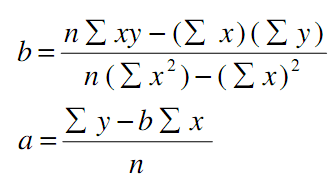
I’ve never been a fan of Rick Hess’s RHSU Edu-Scholar Public Influence Rankings, speaking of long, convoluted equations. It’s because of these mashed-up “influence” rankings that people who aren’t educators get spotlights (and money).

So I was surprised to see Hess proclaim that scholars aren’t studying the right research questions:

There are heated debates around gender, race, and politicized curricula. These tend to turn on a crucial empirical claim: Right-wingers insist that classrooms are rife with progressive politicking and left-wingers that such claims are nonsense. Who’s correct? We don’t know, and there’s no research to help sort fact from fiction. Again, I get the challenges. Obtaining access to schools for this kind of research is really difficult, and actually conducting it is even more daunting. Absent such information, though, the debate roars dumbly on, with all parties sure they’re right.

I could tell similar tales about reading instruction, school discipline, chronic absenteeism, and much more. In each case, policymakers or district leaders have repeatedly told me that researchers just aren’t providing them with much that’s helpful. Many in the research community are prone to lament that policymakers and practitioners don’t heed their expertise. But I’ve found that those in and around K–12 schools are hungry for practical insight into what’s actually happening and what to do about it. In other words, there’s a hearty appetite for wisdom, descriptive data, and applied knowledge.

The problem? That’s not the path to success in education research today. The academy tends to reward esoteric econometrics and critical-theory jeremiads. 

Bingo. Esoteric econometrics get grants.

Simple theoretical questions—like “which method produces greater student understanding of decomposing geometric shapes?”—have limited utility. They’re not sexy, and don’t get funding. Maybe what we need to do is stop ranking the most influential researchers in the country, and teach educators how to run small, valid and reliable studies to address important questions in their own practice, and to think more about the theoretical frameworks underlying their work in the classroom.

As Jose Vilson recently wrote:

Teachers ought to name what theories mobilize their work into practice, because more of the world needs to hear what goes into teaching. Treating teachers as automatons easily replaced by artificial intelligence belies the heart of the work. The best teachers I know may not have the words right now to explain why they do what they do, but they most certainly have more clarity about their actions and how they move about the classroom.

In case you were wondering why I became a PhD dropout, it had to do with my dissertation proposal. I had theories and questions around teachers who wanted to lead but didn’t want to leave the classroom. I was in possession of a large survey database from over 2000 self-identified teacher leaders (and permission to use the data).

None of the professors in Ed Policy thought this dissertation was a useful idea, however. The data was qualitative, and as one well-respected professor said– “Ya gotta have numbers!” There were no esoteric econometrics involved—only what teachers said about their efforts to lead–say, doing some action research to inform their own instruction–being shut down.

And so it goes.

My Twelve Best Blogs of 2023

Every December, sites and services that spend the year hoovering up personal information spit out a summary of users’ activity. Call it the year-end quantification-industrial complex. The trend isn’t new. But especially since Spotify hit word-of-mouth marketing gold with its shareable Spotify Wrapped feature, companies of all kinds have been delivering year-end nuggets of data to their users, whether personalized or in aggregate.                                                             Atlantic, December 23, 2023

The year-end quantification-industrial complex. I like that phrase. I really do like Ten Best columns and Biggest Stories and even the Time Person of the Year. There’s something gratifying about a year’s worth of anything, be it books, movies or (my personal favorite), Most Important Trends in Education.

It’s nice to think: Well, that was then, but now we have a clean slate, a fresh start. Even when we know, deep in our brains, that next year will be largely composed of the same old sh*t, plus some disconcerting new sh*t and perhaps the occasional good news. Which means that columns about education policy and practice are, if not evergreen, enduring.

Here are what I think are the best dozen education-related blogs I wrote in 2023. Not necessarily the most popular or most-read—but the ones deserving another look:

I Had a Dream about the First Day of School    actually was one of my most-read blogs. I was wading around in teachers’ August complaints about bad professional development, endless and pointless staff meetings and all the unpaid work involved in classroom re-organization and wrote the blog in about 20 minutes. It struck a nerve.

Sometimes, you know, going in, that a blog will sink like a stone. But you write it anyway. In the case of Girls. Period., the trigger was being asked by a friend, a school social worker, to donate pads and tampons for the middle school girls she served. Bad policy in Florida makes an appearance in this blog, as well. I’m sure some readers found it distasteful. But it applies to girls, half our population. Just saying.

Almost every edu-blogger wrote about book-banning this year, some with photos of empty shelves. My personal take explores the use of the word ‘pornography’ to describe books that have changed students’ lives, and my own first encounter with actual porn.  I Know It when I See It.

The Absolute Folly of Standardization:  ‘The trouble arises when we use the tools of school—instruction, curriculum, assessment—to compare the students in our care, to label them, to sort them into standardized categories when they are very young. To essentially assign their potential. To show contempt for the wide range of human talents.’

Here’s one about the school where I used to teach, after a student filed a lawsuit against school leaders for not protecting her from overtly racist speech and acts. Are Schools Responsible for the Racist Behaviors of Students? What do you think?

Speaking of racism, and charges of “CRT”—Who is Indoctrinating Whom? A reflection on the impact of teachers on our lives and beliefs, for better and worse.

How many times have we heard teachers grumble about education policy that should have been run by teachers—who could have disabused legislators of the notion that they knew something about the way schools work? This ‘teacher at the table’ idea isn’t new: Thinking about Teachers at the Table.

Where the Boys Aren’t: Why is Teaching Still a Female-Dominated Profession? A question that is endlessly fascinating to me, as a woman who embarked on a largely male sub-profession: band director. Blogs about women in education don’t usually draw lots of readers, but this one has statistics and receipts.

Most of the blogging I’ve seen on the (faux) Science of Reading feels like it was created by SOR bots, claiming that they never learned anything about phonics in their teacher training. (Seriously?) Some thoughts about media baloney re: reading instruction. Learning to Read in Middle School.  

I spent most of my career teaching middle school. And I have some thoughts about the rather amazing capabilities of middle school students: Middle Schoolers—the Myth and the Reality.

In a year when unions appear to be making a comeback, teacher unions are still straw-men bad-guys in the war on public ed: Teachers or Teacher Unions? Or Maybe Neither?  Some clear-eyed observations on why we still need teacher unions.

Here’s another heartfelt reflection that went nowhere, but that I think summarizes the heart of successful teaching: being committed to your students, and even fond of them. Almost All You Need is Love.

It’s my sincere hope that you’ll take a look at one or two of these. And if you really want to make my day, subscribe—it’s totally free and easy—to Teacher in a Strange Land.

Happy New Year!

The Problem with Jingle Bells

If you follow various chat groups and Facebook pages of music educators, this time of year is rife with the Great Christmas Literature Discussion, centered around whether to schedule a concert in December and, if so, what songs to play, while avoiding stepping on anyone’s cultural traditions.

I have written, often, about this conundrum—honoring the festive spirit of seasonal holidays (which is evident absolutely everywhere, in December, from the grocery store to TV ads) vs. avoiding any mention of Christmas at school, because it’s inappropriate to preference one religious celebration over others, in a public institution filled with diverse children.

From a professional education perspective, it’s thorny. You can play a Christmas-heavy concert, sending parents home in a rosy glow—some parents, anyway. You can try to recognize every winter/light holiday with a tune—or rely on “classical” pieces like Messiah transcriptions. You can try to take Jesus out of the equation, and end up with a lot of junk literature. Or you can avoid the whole thing and schedule your concert in January.

Increasingly, I’ve seen elementary music teachers bowing out of anything directly related to Christmas. They can articulate good reasons for this, distinguishing between music students are fortunate enough to experience at home and with their families, and what belongs in a solid music education curriculum. For teachers who are under pressure from administrators or parents to put on a holiday show, there are winter weather songs. Enter Jingle Bells.

A couple of weeks ago, Peter Greene reprinted his blog entitled The Jingle Bells Effect and the Canon. It’s a bit of brilliance comparing 30 different versions of Jingle Bells, 30 ways of taking a small collection of notes and rhythms and turning them into something unique and different.

It’s like literature, Greene says—there are multiple ways to teach a concept, theme or historical era through the same medium: the printed word. He makes the point that teachers should always be able to offer a cogent answer to the question: Why are we learning this? I agree.

And for many years, I found Jingle Bells a handy instructional tool. The chorus uses only five notes, so the tune appears in virtually every beginning band method book, just about the time kids are eager to play real songs. The lyrics are thoroughly secular—no mention of Christmas—so when kids are singing about a one-horse open sleigh, it’s kind of like the Little Deuce Coupe of its day.

It’s also one of those three-chord songs, simple to harmonize. Add some sleighbells and voila! First concert magic. For years, my middle school band (some 200 7th and 8th graders) played Jingle Bells in a local Fantasy of Lights parade. Because when you’re trying to get 200 young musicians to march and play at the same time, you need something easy.

As awareness of the racist roots and language in some of our most beloved folk and composed songs began to grow, in recent decades, elementary and secondary music teachers rightfully started pulling certain songs out of their teaching repertoire. Scarcely a week goes by without an argument about this trend, on music-ed social media sites. Do songs that sprang from minstrelsy, performed in a different era, for example, have a racially negative impact today? Or are they just tunes? A valid and important question.

I find these skirmishes encouraging, an example of teachers discussing–with some conviction–the beliefs that shape their own professional work. And sometimes, seeing things in a new light. As Maya Angelou said:Do the best you can until you know better. Then when you know better, do better.’

I’ve read dozens of these “is this racist?” discussions on-line. And music teachers, given the chance to re-think the cultural value–or lack therof—in certain pieces of music, often are willing to choose something else, or share the origins of the work, the outmoded and biased thinking reflected in the lyrics, as an opportunity to teach cultural history associated with music. People will adapt.

Except when it comes to Jingle Bells.

Back in 2017, a professor at Boston University , Kyna Hamill, published a research paper, suggesting that Jingle Bells was first sung in minstrel shows. Research papers are not generally the subject of teachers’ lounge chat, but this one caught fire, and pretty soon, there were teachers arguing that the composer of the piece, James Lord Pierpont, was a fervent Confederate, and therefore a supporter of slavery. Out with Jingle Bells!

Pierpont was not a household name, in his own time. He was a struggling composer, organist and teacher. His father was an ardent abolitionist and Unitarian minister, as were his two brothers, all in Massachusetts. But Pierpont took a position as organist in a Unitarian church in Georgia and was there when the Civil War broke out. He wrote music and sold it to support his family—including songs that supported the Southern war effort.

He also enlisted in the Confederate Army and served as a clerk. His father, the Reverend John Pierpont, was a Chaplain in the Union Army—one of those families split by a tragic war. There are plenty of families in the same situation right now, in this country—split by politics, influenced by cultural context. Something to think about, as we evaluate and banish Pierpont, 150 years after he wrote his most famous sleighing ditty.

Even Kyna Hamill, arguably the genesis of the anti-Jingle Bells movement now says this:
My article tried to tell the story of the first performance of the song. I do not connect this to the popular Christmas tradition of singing the song now. “The very fact of (“Jingle Bells’”) popularity has to do with the very catchy melody of the song, and not to be only understood in terms of its origins in the minstrel tradition. … I would say it should very much be sung and enjoyed, and perhaps discussed.”

There are teachers and schools that have taken Jingle Bells out of the curricular mix—and good on them for having that thoughtful discussion in the first place. And there are teachers who have decided they have bigger curricular fish to fry than banishing the bells on bobtails—they’ll save their firepower for songs with overtly racist lyrics and intentions.

Again– these are valid and important questions. The trick is to keep the conversation going, and refrain from condemnation of well-meaning peers.

Are those sleighbells I hear?

Dark Headspace—and Teaching

From a great column, by Darrell Ehrlick, on paying attention to the news, in the Michigan Advance:

 I understand the dark headspace a person can occupy after consuming a steady diet of news that seems to indicate a growing danger of authoritarianism; of a broken political system that continues to perpetuate dysfunction instead of listening to a public hungry for cooperation and solutions; of one global crisis after another; and of a global climate catastrophe so profound it threatens the very existence of the human species.

Yeah. That dark headspace.

For several years, since retiring, we have temporarily escaped harsh Michigan winters, spending the month of February in Airbnbs in Arizona. None of them had cable TV packages, so news-watching was limited to MSM, and sometimes, not even that. And eventually, we began to notice how agreeable it was to avoid what was happening in the Trump administration, dodge endless outrage over the January 6th insurrection, and reduce the non-stop anxiety of COVID spikes and variants.

No news, apparently, is good news.

Ehrlick’s point was—as you may have guessed—that it’s now incumbent upon all comfortable Americans to pull their heads out of their sulky discontent over restaurant wait times and gas prices and re-engage with civic responsibility. A republic, if you can keep it, and all that. The title of the piece is: Democracy is on fire. Consider this your wake-up call.

We’re seeing this wake up! language everywhere, lately, and not just in rabid, perennially anti-Trump commentary. As we round the corner into 2024, and the Election Where Nobody Wins gets closer, our obligation to choose wisely looms. Ehrlick is right—when the former leader of the free world is calling his enemies “vermin,” and pre-planning his political revenge tour, and the Speaker of the House can’t distinguish between facts and lies,  we’re in a bad headspace, indeed.

What was once considered hype, rhetorical overkill, playing the fascism card, etc. etc. is beginning to feel important and very credible. To political writers and news analysts, like Darrell Ehrlick—but also to invested citizens, like me. The old saw about being condemned to repeat a past one can’t remember is newly fresh and relevant—and omnipresent in the media.

And—surprise!—our older students are impacted by the same real and important political instability, as well. I think a whole lot of the ugly blah-blah promulgated by Moms for Liberty types is generated by parents’ wishes to keep their children from experiencing that dark and questioning headspace. There are plenty of “cultural chaos agents” ready and willing to help helicopter moms with that goal, then cash in after the election. It also helps to explain why the most zealous M4L acolytes are those with the most to lose by pursuit of diversity and equity. Keeping calm and carrying on while trying to solve problems that impact us all is not a way to preserve privilege.

All they have to do is convince anxious parents that the K-12 sky is falling. That their kids can’t read competitively by age eight, because their instructors are incompetent. That environmental science is promoting clean energy, undercutting the fossil fuel industry. That elementary school teachers are urging first graders to reconsider their gender, when the curriculum actually prescribes a foundation of respect and understanding for other people. That it might be a good idea to totally defund public education, and throw in public libraries and museums as well.

So many manufactured crises. So much to lose.

And although teachers are my favorite people on the planet, I have to admit that a lot of us are also inclined to—cliché alert—close our doors and teach, as policy and negative media opinion swirl around us. I get it. I am intimately familiar with the most pressing concern for teachers, especially novice teachers: What am I going to do tomorrow? And how will it prepare my students for their diverse futures while keeping their standardized test scores up?

Mostly, this is a matter of limited human time and energy. We are firefighters, dealing first with the urgent, and later with the important and long-term issues. Studying worst-case news and opinion—the dark headspace in education—can lead to a kind of paralysis for educators.

Things like choosing the perfect books to expand students’ minds and imaginations– see Mandy Manning’s photo illustration, a mélange of horror books, light and love–become minefields. If we’re not letting our students safely wrestle with the idea of a dark headspace through literature, history, drama and current events, how will they learn to cope?

Shortly after No Child Left Behind (the law to permanently fix all our public schools) was passed, I took a sabbatical—a perk in our local contract—to work for a national non-profit. While there, I spent a lot of time dissecting the new law, and its impact on highly qualified teachers, both the ones who were labeled highly qualified under the law, and the teachers who actually were exemplary, according to their school leaders, parents and students. I went to D.C. and spoke with folks in the Education Department, who were trying to figure out the laws’ outcomes, as well.

When I returned to the school where I taught, I was in a union meeting where the local Communications VP was cluing members in on the new legislation, which he called the ‘Adequate Progress’ law. But don’t worry, he said. Our contract prevents administrators from transferring us because we don’t have the right credentials. I raised my hand and gave my colleagues a quick summary of NCLB—the HQ teacher part, the adequate yearly progress part, the testing part, and more.

Our good contract won’t protect us from requirements of federal law, I explained. There was silence in the room. The idea of federal law mandating testing as early as 3rd grade, of tests determining a teacher’s value, of a district losing control over who is best positioned to teach a grade or subject, of national curricular standards—those were new and terrifying ideas.

Ideas, I might add, that teachers have pretty much absorbed in the intervening 20-odd years. Which ought to be a cautionary tale.

Living in a dark headspace is a call to action.

Do Parents Really Want Control over What Students Learn?

Essentially, nothing has changed since this was first printed, June 2022:

What’s driving the screaming matches at local school board meetings—the ones where organized parent groups show up to have their say about everything from critical race theory to bulletproof doors?

There are a lot of overlapping factors: A nation that’s bitterly divided. The pandemic we’re still dealing with, and its impact on children. Racism, sexism and the fear of losing “rights.” Gun violence. The political upheaval resulting in an insurrection, which played out live, on national TV.

And, of course, money and support from outside sources and organizations, which perceive these ongoing crises as an opportunity to chip away at public education.

I’m no stranger to parent-led fireworks at Board meetings. I’ve witnessed verbal storms over sex education and teacher strikes and girls who wanted to lift weights with the wrestling team.

During my second year of teaching, in October, the School Board decided to lay off 20 teachers (including me) who signed annual contracts in the spring, because an August millage election had failed. They made cuts to programs across the board, and established a pay-to-play model for all HS sports. There was a huge board meeting that went on until the wee hours. And what were the parents upset about? Eliminating foreign languages—or elementary art and music?

No. It was about the football team.

One mom was outraged at being asked to fund her son’s final year on the team. “This is his time to shine! Teachers can always find another job—but my son has only one chance to play football in his senior year!” There were perhaps a hundred teachers at this meeting. You can imagine how that remark went down with them.

My point is this: when parents are angry enough to publicly spout off at a school board meeting, it’s seldom centered around informed disapproval of established curriculum, instruction or even assessments (unless someone has lied to them about what’s going on in their children’s classrooms). Even book banning—a chronic hotspot for school leaders—seldom flares up because a parent carefully read their child’s assigned book and was shocked into action.

What we’re seeing now is something else: an orchestrated and funded effort to demean public education and the people who work in public schools. It’s about power and control. It’s about ginning up fear, using dishonesty as a tool. As John Merrow notes:

Many of the adults who have been disrupting local school board meetings not only do not have children enrolled in those schools; they are classic outside agitators, perhaps even from neighboring states. 

The foundation of recent wrangling over control—parents’ rights, if you will—is thoroughly political and got a big boost when now-Governor Glenn Youngkin promised to strip culturally responsive instruction from schools in VA.

Parents have always had rights—including the right to see what their children are learning, access to instructional materials, the option of observing their child in his classroom, and the opportunity to talk to his teachers about any of these.

Teachers have the responsibility to know the curriculum well, to be able to tell parents why certain materials and teaching strategies were selected.  And—should parents be genuinely concerned about any of these things—the responsibility to justify the value of a particular technique or content, to adapt or offer alternatives.

That, in a nutshell, is good teaching–based on trusting relationships and understanding. Every veteran teacher and school leader reading this has had difficult conversations with parents about what and how their children are learning. It’s part of the job. Always has been.

It’s also one of the reasons many teachers pushed back against the Common Core: the standards didn’t fit the students they were teaching. Driving responsibility for determining standards, curriculum and assessment upwards means that teachers are left with explanation that they’re teaching something because it’s on the state test, even though it may be inappropriate or irrelevant for a particular child.

It’s not just parents who want to strip control from schools. From Education Week:

States have a limited amount of power over what materials teachers use in the classroom. A new report shows how some of them are trying—and succeeding—to wield influence anyway. In the majority of the country, districts operate under local control, meaning that school systems, or sometimes individual schools or teachers, have the ultimate authority in deciding what curriculum is taught.

That means that if states want to influence what teachers are using, they have to get creative about what levers to pull. A new report from the RAND Corporation suggests that some states have managed to do just that.

Look for the phrase ‘High-Quality Instructional Materials’ accompanied by some disdainful blah-blah about how clueless teachers design lessons based on what they see on Pinterest, so professional curriculum deciders need to step in and choose better materials. Well-paid deciders, naturally.

Earlier this year, Jennifer Berkshire found reason for hope:

I’ve spent the last few days talking to voters and candidates in New Hampshire who powered record turnout, resounding wins for public school advocates. One theme keeps coming up. Voters were REPELLED by the extremism of “parents’ rights” groups. This was a backlash to the backlash.

In the meantime, all the shoutin’ has left educators limp and discouraged. From Connecticut teacher Barth Keck:

Nationwide accusations of schools teaching “critical race theory” found their way into Connecticut despite any evidence of its existence or even any accurate explanation of what CRT really means from the critics. Superintendent Freeman “cited letters to the editor and social media posts regarding the school’s teaching and equity policies which imply that ‘parents shouldn’t be trusting the teachers and school administrators who are shaping the experience for their children in Guilford.’” 

I have not felt such pressure personally, aside from comments on social media from those calling me a “groomer” and “brainwasher” of children. Granted, I don’t know these people personally, and the only thing they know about me is that I’m a teacher. But that’s the point: Strategic political posturing has convinced scores of people that, rather than a noble and essential profession, teaching is an insidious endeavor whose primary purpose is to push a far-left agenda.

It’s not about the things parents already have a say in—their children’s learning.

It’s about raising a public ruckus.

Teaching Music in the Digital Age

Story from my band room, a couple of decades ago:

I am discussing auto-tune, a relatively new invention, with one of my students, an uber-smart trombone player. I have serious doubts about whether auto-tune is a good thing for recorded music, as a concept. It means, I tell him, that the focus on all kinds of music will shift from genuine musical talent to production values. Singers who have limited range and vocal appeal, but look hot, can be made to sound hot, too, even when a raw recording of their voice reveals pitch problems and dubious vocal quality.

But, he says—aren’t you always pushing us toward perfection, in band rehearsal? We use machines to improve our tuning. We use machines to regulate tempos. And our entire goal is to sound flawless—the pursuit of excellence and so on. (That’s actually a thing I say, pretty often, in rehearsal.) Why wouldn’t it be OK for record producers to use technology to achieve the same ends?

I told you he was smart.

There are other reasons to make music, I reply. What about the joy of playing with others, like our community of kids here, who find great satisfaction in playing Russian Christmas Music, even spending lots of time tuning the unison brass opening, because nobody can fail to be moved by the solemnity and glory of the music? Even the beginners who can only play six notes experience immense pleasure in playing that first concert, despite being out of tune and rhythmically inaccurate. And their parents love it, too.

He wrinkles his nose. Maybe they’re just pretending to like it, he says.

My career as a music teacher was varied. I taught secondary band and choir, and elementary music. I taught some other stuff, too—seventh grade math, and a dumping ground class that gave me kids who didn’t speak English well enough to know how to do their homework—but I taught music across the K-12 spectrum, vocal and instrumental, in five different decades.

Although the world of recorded music, available to everyone on the planet, pretty much, changed radically in that span from the 1970s to the 2020s, music education looked much the same: elementary schoolchildren singing and moving to the beat, and selected secondary students peeling off into performance ensembles—bands, orchestras and choral groups. Competition remains popular with secondary teachers. The tyrannical band director is still a thing—and often admired.

Now, and perennially since the rise of musical performing groups in schools early in the last century, music programs are often considered expendable, subject to funding vagaries. There are lots of school band programs that depend on fund-raising and Boosters organizations. I myself was a poster child for funding your own program. Which means that parents and teachers believe so strongly in the power of school music programs they’re not willing to let them go.

There’s even talk about the ability of music and other arts to bring divergent perspectives together. There’s research about how music develops executive function, the “CEO” of the brain.  Music builds communities—in schools, and after formal education is over.

So why would any school think that music is an add-on, nice but not central to their mission of (here it comes) creating 21st century citizens? The New York Times takes a stab at this with an article entitled We’re Teaching Music to Kids All Wrong.

Not a promising headline but the author, Sammy Miller, a Grammy-nominated drummer who started a music education company, actually gets this mostly right:

We need to start by rethinking how we teach music from the ground up, both at home and in the classroom. The onus is on parents and educators to raise the next generation of lifelong musicians — not just for music’s sake but to build richer, more vibrant inner personal lives for our children and a more beautiful and expressive world.

Miller notes that about 80% of all kids quit singing and playing in formal ensembles before they graduate. He points to the way we currently teach music—as a fully definable skill with pre-organized, grade-able steps to learning—as the reason for that:

A class that by definition is meant to be a creative endeavor winds up emphasizing rigid reading and rote memorization, in service of a single performance. We need to abandon that approach and bring play back into the classroom by instructing students how to hear a melody on the radio and learn to play it back by ear. Start with just one chord, a funky beat and let it rip — and, voilà, you’re making music.

I fully agree with Miller here—many music programs give up on creativity somewhere around the 5th grade–but I can see large ensemble teachers across the country wincing. Those of us who are teaching music are dependent on uniformity because when there are 50 students holding noisemakers in front of you, the last thing you want is experimentation, especially with a funky beat.

Besides, we’re always under the gun to develop programs that the “community can be proud of” and showcase continuous skill-building in our students. In doing so, we stick to the tried-and-true instruments, techniques and literature. The world of popular and commercial music, in which our students are marinating every day, is ignored, unless the band plays a Top Ten tune in a football show. And the pursuit of excellence in all aspects of performance is the core value. 

But Miller says:

We need to let kids be terrible. In fact, we should encourage it. They’ll be plenty terrible on their own — at first. But too often kids associate music in school with a difficult undertaking they can’t hope to master, which leads them to give up. Music does not have to be, and in fact, shouldn’t be, about the pursuit of perfection. Great musicians have plenty of lessons to teach students about the usefulness of failure.

Like every curricular/instructional issue in K-12 education in 2023, talk of failure, learning from our mistakes, is somewhere between frightening and verboten. All of us are judged, stacked up against auto-tuned perfection, when perfection can be achieved digitally if you have the money and the tools.

Motivating children and teenagers is something else entirely.

A Passionate Education Conference

Thirty-five(ish) years in public education—you’d think I would have attended dozens of professional conferences, coming home with a branded tote bag and a ream of stapled, shovel-ready ideas for my classroom. That’s the way principals in my experience used to frame attendance at a conference: If we choose to give you a $300 stipend to attend a conference, you’d better bring back materials and lessons for your colleagues. Because that’s why we have conferences: to give teachers new tips and tricks.

Teachers know this, but education-related conferences are almost always done on the cheap. Teachers–even teachers who are conference presenters–often pay part or all of their own expenses, get a rollaway bed so three of them can share a hotel room, split up and attend different sessions to absorb the maximum number of ideas, then maybe pop for a margarita before calling home at bedtime. The high life.

In my 30+ years as a school music teacher, my request to get a day off to attend a conference was turned down repeatedly. The reason was usually because I was the only music teacher in the building, so anything I learned would not be shared beyond the band room. There was very limited money in the budget for conferences (or, for that matter, professional memberships or subscriptions) so STEM or Reading Recovery events were prioritized, as being more likely to impact kids scores.

Administrators also go to conferences, leaving their favorite teacher in charge; presumably they’re expected to bring back “results,” as well. Still—going to a conference, even if you are paying your own mileage, lodging, meals and registration fee, is a perk for teachers.

And not for the new materials or lesson plans.

The value of conferences for educators—as with any gathering of professionals—is in structured opportunities to mingle, to learn, to have long, uninterrupted conversations, to build networks of colleagues with similar values. The purpose of any conference is (or should be) inspiration. The big picture. Hanging with a bunch of people who care as much as you do.

In the age of the internet—where most of us can examine materials and swap lesson plans fluidly—the absolute advantage of a face-to-face conference is the talking and listening, in person. Three decades of communicating on-line (and one godawful pandemic), plus all the tech-bro videos and social platforms—and what have we learned? That you miss something when the person you’re talking with isn’t in the room.

I thought about all of these things while attending the Network for Public Education’s 10th anniversary conference in Washington D.C. last weekend. It was a gorgeous fall weekend—the kind of walking weather where a stroll down to the White House might feel preferable to sitting in sessions centered on countering rabid school board races or hostile state takeovers of ‘failing’ schools.

But no. Every one of the six sessions and five keynotes I attended was both stimulating and encouraging. I heard the inimitable Gloria Ladson-Billings speak, and was stunned by what is happening in Florida and Arizona. I got some tips on running for school board in my local district (#2024Goals) and heard stories of redemption, as well as hideous state-based power plays. What reformers used to call ‘disruption’ now feels like intentional destruction, driven by a single, grasping political party. All over the country.

In the 10 years NPE has been meeting, the tenor of this annual conversation has shifted from the corrosive impact of excessive testing and charter school scandals—So. Many. Scandals.— to outright, in-plain-sight privatization of our best national idea: a free, high-quality public education for every child.

The absolute folly of vouchers—check out Josh Cowen’s work—and the political willingness to blur the lines between church and state are terrifying, all right. So why was I feeling encouraged?

For starters, the fact that the NPE is still meeting, 10 years after its founding, funded largely by individual donations and relatively modest foundational contributions, is reassuring. Many of the conference attendees were still paying their own way—or were attending on the dime of another organization created to defend public education. Money is still how things get done, laws get passed, and ideas take root. Knowing that there are articulate and passionate spokespersonsorganizing to protect public education is heartening.

The second thing I noticed was the number of sessions led by women and people of color. The foot soldiers in the war on public education are teachers, nearly 80% of whom are women. I have been to too many education conferences and symposia where the talking heads were white men with terminal degrees (who were not paying for their own registration fees and babysitters).

Don’t misunderstand—some of my most impressive edu-friends are smart and outspoken white men. But education has long been seen as women’s work, and when I look at the dangers looming—vouchers, religious charter schools, well-funded campaigns against “CRT” and sexual and reproductive autonomy—I see white men, clinging to money and power.  If we’re going to stabilize and enhance public education, women need to be at the forefront. One of the most impressive keynotes at the conference: Diane Ravitch moderating a discussion with the two of the most influential labor leaders in the nation—Randi Weingarten of the AFT and Becky Pringle of the NEA (who preached a blistering sermon on those who would deny the value of a public education for all our children).

We built some sight-seeing (and crab-cake eating) into the D.C. journey, including a visit to the Holocaust Museum before heading to the airport. I last visited the Museum shortly after it opened, but its power has not faded. What I found interesting, in 2023, was the three-deep crowds at the display around the Nazi rise to power in the 1930s in Germany.

Twenty-five years ago, that display addressed the eternal question of how so many good German citizens were drawn into a horrendous scheme to conquer their national neighbors and eliminate “undesirables.” It seemed like a temporary madness, driven by economic instability and inherent German nationalism, not to mention a charismatic leader who appealed to a third of the population.

Now, the photos, speeches and commentary feel like a warning.

Public education is not the only thing endangered. It will take hard work and passion to keep the idea of public goods alive and thriving.

{“cameraType”:”Dual”,”macroEnabled”:false,”qualityMode”:2,”deviceTilt”:0.0073067386958260983,”customExposureMode”:0,”extendedExposure”:false,”whiteBalanceProgram”:0,”cameraPosition”:1,”focusMode”:0}