Five Things Your Child’s Teacher Accomplished Last Week

When I first heard about Elon Musk’s email blast to over two million federal employees directing them to submit approximately five bullet points of what they accomplished in the previous week, I was reminded of a couple of school administrators from my past.

Eugene Robinson called Musk’s scheme “an exercise in contempt”—also a great description of some of the so-called professional development teachers routinely endure. When a principal doesn’t trust their professional staff to know what they’d like to do with time available for their own learning or planning, you end up with meaningless exercises like “five things I did last week.”

Ultimately, it’s about control.

Eugene Robinson, again: Thus begins the inevitable power struggle at the court of Mad King Donald, between his various ministers of state and his billionaire Lord High Executioner.

No word yet on whether the soon-to-be defunct Department of Education will demand five bullet points of the 3.8 million public school teachers in the U.S., given that 13.7% of the funding for public schools comes from the feds, give or take.

But there’s no need to put teachers through that particular, umm, wood chipper. I can supply the federal government with five bullet points that apply to all teachers, summarizing their most recent contribution to the education of America’s youth.

Here are five things that all teachers accomplished last week:

  • They showed up. They showed up when the driving was treacherous, even when their own homes were threatened by floods. They showed up when they were sick or hadn’t slept, because it’s easier to teach with a cold than find a sub. They showed up because it was test day, or the field trip, or opening night of the school play, or because a particular student didn’t do well with strangers at the head of the classroom. They showed up, because thanks to a global pandemic, we now know that virtual school is not the solution to cheap and easy public education. Personal relationships matter.
  • They planned a learning experience that failed. That’s par for the course, by the way. Most lesson plans fail to accomplish their goals, 100% and immediately. That’s because kids learn differently, through different means and at different rates. The slam-dunk lesson plan that teaches everyone all they need to know, challenging the brightest and scooping up the laggards, doesn’t exist. What happens when a lesson goes sideways today? Experienced teachers adapt and adjust–and reinforce tomorrow.
  • They dealt with diversity, equity and inclusion, even the AP teachers with classes of 12 well-behaved senior calculus students. D, E and I are endemic in K-12 education—not the fake shorthand of “woke,” but the bedrock truth-in-practice of embracing student differences, playing fair as a teacher, and building a learning community where everyone is valued.
  • They exposed themselves to the viral miasma of 30 small, touchy-feely children, or perhaps 150 sniffly teenagers, in their role as caretaker. Let me repeat that: they acted as caretakers, with the school being a safe and (key word) free place for children of all ages to spend their weekdays. The lack of affordable childcare across the country makes schools a first line of defense in an economy where parents need to be in the workplace.  And parents send their kids to school when they’re sick. #Truth                       
  • They did the intellectual heavy lifting of observation, instruction, assessment and accompanying record-keeping on the learning of a large number of children. This, of course, is a teacher’s actual job, and it’s harder than it looks to the casual observer. Teachers take their work home—not just grading and lesson plans but worries and concerns. Keeping tabs on the students in their charge—so they could learn.

Here are some things your child’s teachers did NOT do last week:

  • Go out for lunch at a nice restaurant and indulge in a glass of wine.
  • Use the bathroom whenever the urge arose.
  • Spend most of their day in an office or cubicle, blessedly alone with their thoughts and their work.
  • Talk to other adults for an extended time–on the phone, or in casual conversation.
  • Duck out for a medical appointment that had to be scheduled during the workday.
  • Decide to knock off early, and get in a round of golf.

So—should the Billionaire Lord High Executioner come after public school educators, further annihilating America’s once-proud, once-functional institutions, keep your heads down and just say no to the five bullets.

Who is in Favor of Authoritarianism? Are Schools Authoritarian?

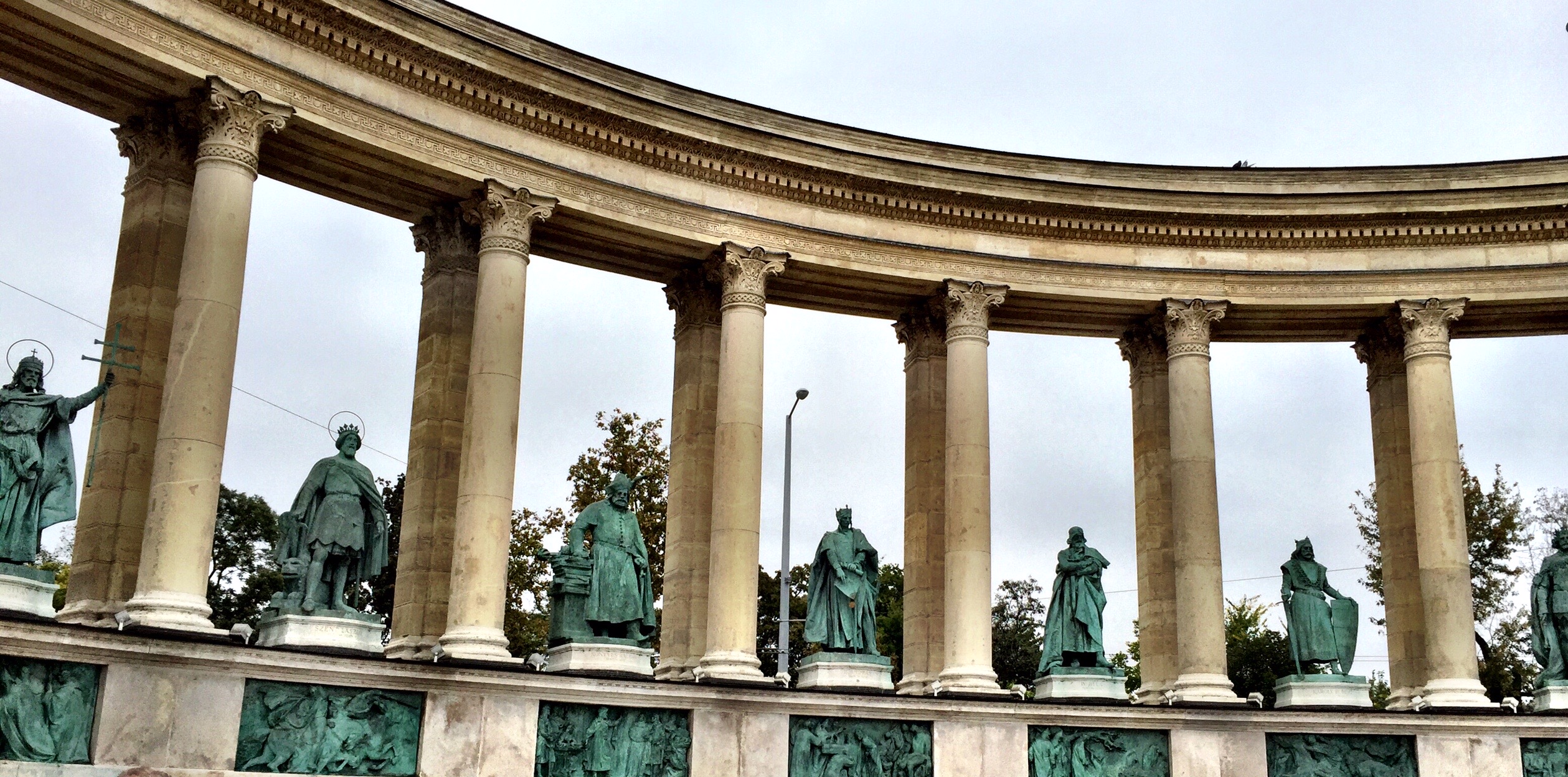
In 2014, we went on a much-anticipated two week cruise—the Grand European, from Budapest to Amsterdam. On the first day, we took a day-long tour of Budapest, with a charming and articulate guide. First stop: Heroes Square.

Our guide was a proud and patriotic Hungarian, well-versed in her nation’s history, all the way back to Atilla the Hun. I am embarrassed to say I knew very little about modern-day Hungary, except for the fact that Hungarian citizens are universally musically literate, because of Zoltan Kodaly, whose method of teaching music to children is internationally renowned.

As the distracted touring group wandered around snapping pictures of the impressive statuary, our guide completed her thumbnail history and then, very quietly, said that Hungarians—so brave and bold—were losing their democratic independence to their authoritarian Prime Minister, Viktor Orban.

Glancing around, she spoke for perhaps two minutes about how he was suppressing freedoms and dismissing the courts, stealing money and power from the people. It was clear that she was nervous, and that this was not part of her assigned guide-spiel. Most of the Americans in this heavily American group were not paying attention to her final, whispered words: You Americans are lucky.

That was 10 years ago. Today, from a piece entitled The Path to American Authoritarianism:

Democracy is in greater peril today than at any time in modern U.S. history. America has been backsliding for a decade: between 2014 and 2021, Freedom House’s annual global freedom index, which scores all countries on a scale of zero to 100, downgraded the United States from 92 (tied with France) to 83 (below Argentina and tied with Panama and Romania), where it remains.

The country’s vaunted constitutional checks are failing. Trump violated the cardinal rule of democracy when he attempted to overturn the results of an election and block a peaceful transfer of power. Yet neither Congress nor the judiciary held him accountable, and the Republican Party—coup attempt notwithstanding—renominated him for president. Trump ran an openly authoritarian campaign in 2024, pledging to prosecute his rivals, punish critical media, and deploy the army to repress protest. He won, and thanks to an extraordinary Supreme Court decision, he will enjoy broad presidential immunity during his second term.

While this is a powerful statement, it is not difficult to find a dozen pieces, by credible authors, in credible publications, saying pretty much the same thing, over the last three weeks. We are headed toward Hungary (Global Freedom Score: 65) or perhaps Saudi Arabia (GFS: 8), where our President is now going to sell out Ukraine (GFS: 49).

It’s clear we are not the land of the free anymore. Nor are we the home the brave. We’re the home of the partisan cowardly and the feckless appeasers.

It is easy to point fingers at the clueless voters who wanted cheaper eggs (and, one hopes, a corresponding end to galloping and threatening bird flu). It’s a short distance from there to wondering why schools are turning out more and more dumb people. If people understood the importance of preserving our liberties, we wouldn’t find ourselves with a completely incompetent president. Again.

This—the ‘let’s blame schools’ rationale—is always popular when things are shaky politically. Richard Nixon blamed ‘bums blowing up campusesfor political unrest, rather than his own disastrous foreign policy. Academic and political scholars spent decades comparing Johnny and Ivan, invariably coming to the same conclusion: our schools suck, when it comes to preparing upstanding and industrious citizens. That we are now preparing to aid Russia in its criminal intent to capture some or all of a struggling democracy, Ukraine, is the ultimate irony.

Schooling is actually one of those public institutions where a kind of benign authoritarianism—because I said so—is commonplace, even approved. When Alabama Senator Tommy Tuberville suggested that kids who have ADHD don’t need medication—they need to be whipped with a belt—there were plenty of MAGA types nodding in agreement.

The rise in book-banning, the faux outrage over the fewer than 10 trans athletes (out of a half-million) in college sports, the equally faux outrage over “CRT” and “DEI” (both of which should require scare quotes)—these are happening because public education is funded and controlled by the government (as accountability requires).

There’s a reason why the Department of Education is being so quickly dismantled. It’s not a business (as everyone is fond of saying). It doesn’t make money. It’s entirely dependent on a mixture of public funding streams. There are accountability strings (state and federal) on nearly every aspect of the way public education runs, from where the money goes, qualifications for workers, rules for instructional materials and practices, punishments for low test scores, how to get kids to school, even when they prefer not to go.

For the current administration, bent on “saving” federal dollars for their own preferences, breaking up this monolith will be a giant display of power that impacts some 50 million students and their families. Think you’re in charge of your local school, your classroom? Think again. Easy peasy.

No, the federal government–and supporting Republicans and conservative courts–say. No, we don’t want your media literacy classes. No, we don’t want kids nosing around in issues like fairness and equity in our recent history. No speaking Spanish. No arts classes or events to help students make sense of the world they live in. No vaccines to protect them, or accurate health information.

No, we don’t want you out there teaching kids to ferret out the truth.

I think about our Hungarian guide all the time, especially recently, watching Tucker Carlson gush about what an amazing, transformative job Viktor Orban has done. At the time, she seemed a little desperate, sharing her political beliefs with American strangers.

Now, she seems like a prophet. Guard what you have. You never know when you’re going to elect a despot. Before our schools crumble, I hope every teacher will gather up their courage and speak truth to power, even to first graders.

As Steven Bechloss wrote: Despite this onslaught of gaslighting, aggression and attacks on facts, don’t assume we are powerless to respond. This is our duty to the future and the truth.

TIASL Best Blogs of 2024

I used to blog for Education Week—for nine years, in fact. And at the end of each year, the teacher bloggers were asked to choose our ten best blogs and post a piece about them. We were given viewership statistics (for our personal blog only), so we’d know which ones got the most eyeballs. And invariably, the most popular ones—the winners–were my least favorite pieces.

I’m writing for myself and like-minded readers these days, so I’m not sharing the most-read 2024 columns from Teacher in a Strange Land. I’m sharing eight blogs that I think best reflect the, well, Strange Land we find ourselves in, educationally speaking.

Before I list them, I’d suggest you read two recent—important– blog posts from Peter Greene. The first informs his regular readers (I’m among them): If you have ever had an urge to send money my way, I ask that you transfer that urge to someone whose work you appreciate and who has, however shyly or boldly, held their hat out. Plunk down some bucks for the work that you value and that you want to see staying in the world.

You’ve probably noticed that the most famous people who write about education are often not educators. The best—most accurate, most creative, most humane—writing about schools and learning comes from people (like Peter) who’ve done the work and have first-hand observations about doing right by children. In 2024 alone, I have subscribed to seven newsletters, paying a modest fee and developing an informed reading habit on screens, rather than newspapers and magazines. Some of those writers have interactive publishing modes and write back.

I have favorite ed writers—and it is those writers who introduce me to other ed writers. Which is Peter Greene’s second point: Share the good stuff. If you’re wondering who to read, click here. There are dozens of suggestions, curated by Greene. But first, subscribe to his blog, because his work is terrific, soaked in reality. And free.

Here are my eight picks:

Do Core Democratic Values Belong in Schools? Some Say No.
When looking at curricular change over the past five years—immediately preceding the onset of the COVID pandemic—it’s easy to see that there were plenty of precursors to the anti-wokebook-banningteacher-punishing mess we find ourselves in as we slowly recover from that major shock to the public education system.

The scariest thing to me about the abuse teachers are taking, across the country, is its impact on curriculum. Here’s the thing: you really can’t outsource teacher judgment. You can prescribe and script and attempt to control everything that happens in the classroom, but it doesn’t work that way.

My Research is Better Than Your Research:

Simple theoretical questions—like “which method produces greater student understanding of decomposing geometric shapes?”—have limited utility. They’re not sexy, and don’t get funding. Maybe what we need to do is stop ranking the most influential researchers in the country, and teach educators how to run small, valid and reliable studies to address important questions in their own practice, and to think more about the theoretical frameworks underlying their work in the classroom.

Ignoring the Real World in the Classroom:

What happens when teachers can’t take questions about the daily news? It makes us look like idiots, for starters. Uninformed content-dispensers, unable to connect facts to causes or outcomes. What have our students learned from our unwillingness to discuss national crises, like 9/11?

Weaponizing Empathy and other Heritage Foundation Rhetoric for School Reform:

I was dumbstruck on hearing this little clip from a recent school board meeting.

Board member says: “This gets into the weaponization of empathy, where empathy is taught as the highest goal, the highest order. Do we teach empathy to the effect where students disregard parental authority—and accept anything and everything? Do we teach kids that any kind of judgment is bad?”

Wait. What? Who is he accusing? And what is the weaponization of empathy?

Too much empathy leads to kids defying their parents, evidently. The moral ambiguity of school confuses students. That’s their big fear?

DIS-Information in Schools:

There are, indeed, public schools where media literacy is a formal part of the curriculum. There are outstanding digital literacy resources for students, supported by high-quality research. What’s missing is the will and the urgency of the need to educate kids about distinguishing between truth and whatever it is they’re getting on TikTok.

Or, unfortunately, at their kitchen tables or their church or on the bus. Misinformation—can you remember Things You Used to Believe?—has always been a factor in growing up and becoming educated. Disinformation is a darker thing altogether. Especially when it comes from people who should, theoretically, represent integrity. Legislators, for example.

What do parents know about public education:

Adults’ perceptions of what’s happening in public schools mainly come from their own personal experiences (and this includes people with no K-12 children in the home). The percentage of people who read books or articles, watch cable news or videos, or listen to podcasts about education is small. People who get their education news from newspapers? Fifteen percent. Second highest source of ed news? Social media.

That’s a lot of guesswork, memes and faulty memories.

Man with Sixteen College Degrees Can’t Read:  

Things that ARE apparent in this article:

  • Third grade is WAY too early to label ANY child a non-reader (or punish them by retaining them). It’s too early for labels, period.
  • When it comes to effective learning (the kind that sticks, and can be applied), experiences trump worksheets.
  • Continuously reading to your children, even when they are supposedly “reading to learn” at age eight, is absolutely the right thing to do.
  • Visual interpretation of text symbols is not more efficient or of higher value than hearing that text read aloud.
  • Many, many children are “bright but different.”

The Return of the Trad Teacher:

It strikes me that tradwives are just another glitzy, social media-driven facet of a larger wave of backlash against a whole lot of un-trad trends in American society: Full-blown reproductive freedom. The continued shrinkage of mainline religions. Honoring personal sex/gender choices. Women running for office and corner offices–and winning. And so on.

I also see lots of pushback against untraditional teaching, curriculum and school organization models. The whole “Science of Reading” battle rings very familiar to those of us who started teaching in the 1970s, when teachers were pushing back against the “Why Johnny Can’t Read” –because teachers theoretically weren’t teaching phonics–crusade in the late 50s.

Thanks for reading. Remember: Share the good stuff.

The Amazing Power of Snowpants

It started out as a simple Facebook dispatch from Detroit Public Schools teacher Ann Turner (now retired), an early childhood educator, on the day after southeast Michigan’s first real snowstorm.

We were not able to go out and enjoy the REAL stuff today as only two of my students have snow pants and boots. I would love to gather enough so that all 16 of my students can enjoy and love Michigan winters and snow as much as I do. I have four pairs of snow pants that my own girls have outgrown and two that I picked up at a resale shop. If your child has outgrown last year’s snow pants and/or boots and you would like to donate them to my winter closet, I would be so appreciative. Thanks!

Within two hours, there were 25 responders–fellow teachers and friends, sharing information about sizes, bargain sales and where to drop off donations and purchases. Ann promised to pass any extras on to the other teachers in the building, all of whom have “winter closets”–and know about the restorative power of recess in a Michigan winter. Ann’s next post, the Monday following:

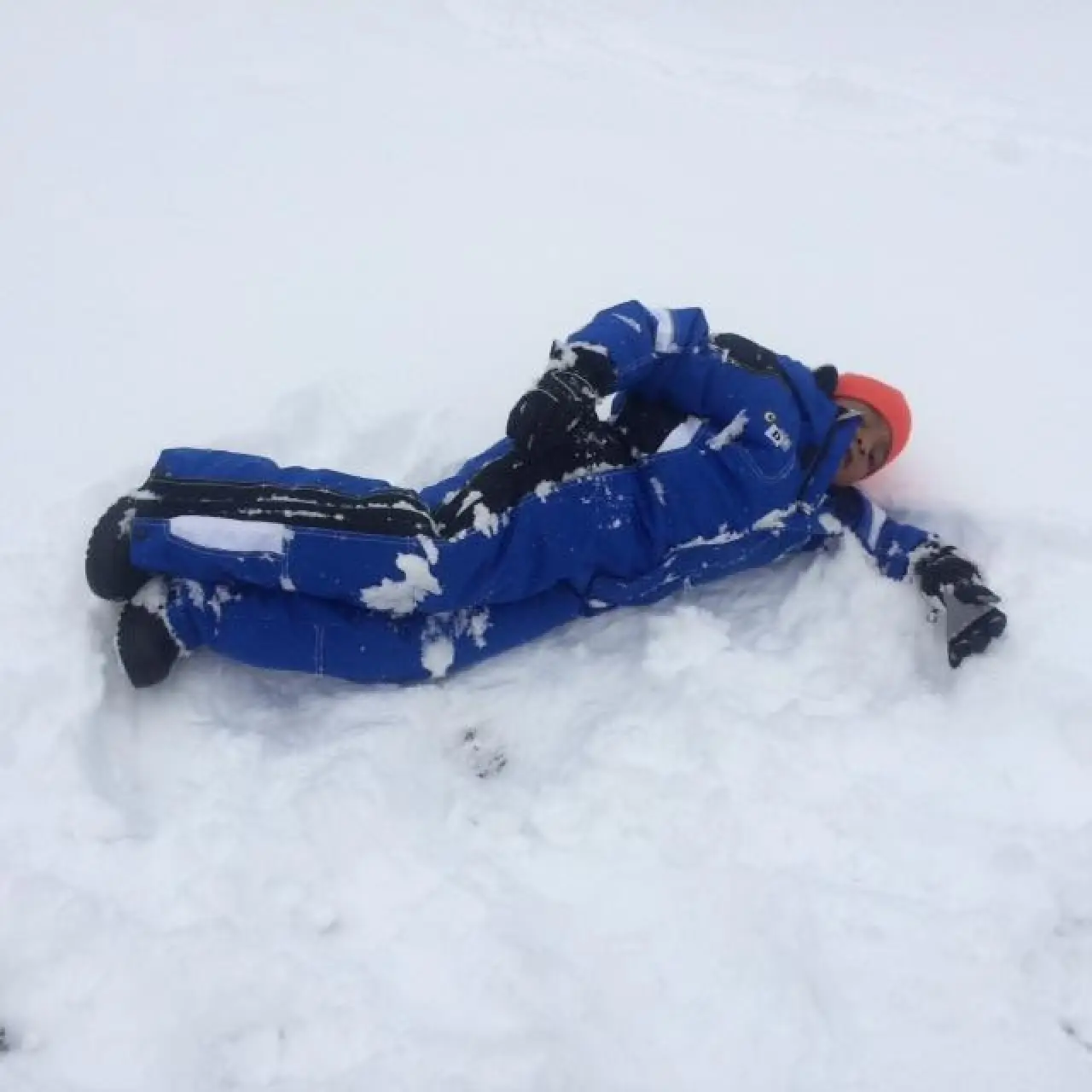
I was SOOOO excited to get to school today because I knew that this would be our first GREAT snow day with all of our new gear! I am not sure who was more excited–me or the kiddos!! After everyone got suited up (that was exhausting), we headed out and we played and we played and we played some more. Some of the kids were amazed at how they could roll around in the snow without getting wet or cold. We made snow cakes, we walked in sled tracks, we made snow angels, we threw the snow, we laughed and we played some more.

When everyone was good and tuckered out, we went in and made hot chocolate. Isn’t that just the perfect day? The first thing they told their parents at pick-up? All about their adventure–and the last thing they said to me is “Are we going out tomorrow?” Thank you ALL for making a difference in the lives of children! Thanking everyone is difficult because some of you were the messengers or middlemen. I hope that you will be able to convey our gratitude to those who assisted in getting these babes suited up!

There’s more–photos and stories–and then, the collecting of snow gear morphed into a full-scale Girl Scout troop project, with the girls shopping the post-Christmas sales with their cookie money.

It’s important, however, to look past the do-good/feel-good aspects of this heartwarming story.

  • Only two of Turner’s students had appropriate clothing for winter–and, trust me, snowpants are vital for kids in a Michigan winter. What other essentials are missing in their lives and learning? How do these missing elements contribute to the media-fed narrative of “failing” schools?
  • Children in Finland play outside for 15 minutes after every 45-minute lesson. Because the Finns structure their school day using research demonstrating the necessity of invigorating free play for young children. While Turner goes outside to monitor and play with her students, teachers in Finland take coffee and chat breaks with their colleagues. Pauses, movement and conversation consolidate learning and make it stick–anyone who’s ever tried to gather up participants to return to a workshop PowerPoint after a break recognizes this.
  • Playing outside in warm clothing, using sleds and snow toys–with follow-up hot chocolate– represented a special treat to the children at Palmer Park Academy in Detroit, courtesy of a dedicated teacher and her kind-hearted friends and colleagues. Kudos to Turner. But–the children in her class deserve free play and a refreshing drink every day, year-round, as part of best pedagogical practice for very young children. The research on this is iron-clad.
  • Inevitably, there were questions about whether Turner’s foray to the playground was approved by administrators as an “educational” activity. Since Michigan’s former governor once proposed pre-kindergarten testing as a means of determining whether Michigan was getting a bang for its pre-school funding bucks, this is a legitimate worry for early childhood teachers. Will this healthy exercise reduce test scores–is it more important to stay inside and do some more worksheets?

Anyone who looked at Turner’s photos would have an answer for that. But people making policy around early childhood education aren’t necessarily paying attention to snow angels, rosy cheeks and face-splitting grins.

In Praise of Social Studies

In my long and checkered career as a classroom teacher, I taught instrumental and vocal music, mathematics, ESL and the occasional oddball middle school class necessitated by the fact that, as a (qualified) music teacher, my music classes could contractually be huge—so I could be assigned a class of kids left over in the scheduling process by putting 75 students in one beginning band class.

I learned a great deal while teaching things I wasn’t technically qualified to teach. But I never got to teach my favorite non-music subject: Social Studies. (Notice that I didn’t call this subject History or Economics, two narrowly defined class titles that are approved by the anti-public school mafia.)

I think that poor, maligned Social Studies, the last outpost of mostly-untested subjects, is probably the most critical academic field for K-12 students to explore, if we want them to become good neighbors and engaged citizens. It’s where they learn (theoretically), what it means to be an American.

But ask any third grade teacher what gets short shrift in their daily lessons. Or ask which secondary curricula is the most scrutinized by people who haven’t been in a classroom in decades.

When you hear people talk about how we need more Civics education in this nation, what they want is a range of social knowledge: history, of course, but also government, geography, sociology, political science and early-elementary trips to the fire house and the public library.

What it means to be an American. How we got to where we are—arguably, the most powerful nation on earth. What values we claim to embrace. How physical and historical features, and population migrations, shaped our culture.

Isn’t that critical, essential stuff? Not to mention engaging—when taught with the mindset that this is the content that one needs to know, to become a fully functional adult in the United States?

Today, which used to be the day we honored Christopher Columbus for a bunch of shady reasons, might be a good time to ask some questions about social studies, and their current place in the school curriculum.

My fear is that Social Studies, an incredibly rich and applicable field of interrelated content, will be further squeezed out of the curriculum, or become a dry, testable, bunch-of-facts sequence, none of which bears relevance to the diverse, often catastrophic world our students live in. What Hess calls catastrophism might just describe how passion has always shaped our politics.

And politics, civil or not, is just the means to get the world we want.

A couple of years ago, the Michigan Democrats posted a statement on their Facebook page:

The purpose of public education in a public school is not to teach students what parents want them to be taught. It is to teach them what society needs them to know. The client of the public school is not the parent, but the entire community, the public.”

The statement was quickly criticized—Parents’ Rights!—and walked back, but I think there’s some truth there. Parents want their children to be literate, and numerate, for sure. But when it comes to understanding what science tells us about climate change, or encouraging 18-year olds to become informed voters, should a subset of parents be able to shut that whole thing down?

Here’s a toast to social studies teachers everywhere, as we approach November 5. You go.

How People Vote. How People Choose a “Good” School. Is it Common Sense?

When my son—a Korean adoptee—was in 5th grade, he had a student teacher who was Korean-American. Alex idolized Mr. Thacker, one of the very few Asian faces in our 96% white community. Mr. Thacker took him fishing. When the district hired Mr. Thacker to teach 6th grade, I requested that Alex be placed in Mr. Thacker’s class the following year.

Alex’s 5th grade teacher caught me in the hallway after school, at the end of the year. You know Mr. Thacker is a newbie teacher, she said—and there are some excellent choices among the 6th grade veterans. This will be his first year of teaching. Someday, he’s going to be a great teacher, but…

I’d already had that conversation in my head—and gone with my heart. What mattered most to me was having a great role model. Even if that role model was still filling his instructional toolkit and mastering the curriculum. Kids learn more when they’re seen, acknowledged for who they are.

I think that’s how people vote, as well. When the candidate—for County Commission, Township Supervisor or President—acknowledges YOU and your beliefs, rings your chimes, you’re going to vote for them. Even if they’re racist, traitorous and don’t make a lot of sense.

Some of this is partisan, some mere habit. But driving downstate, along the western Michigan coastline last week, through largely white, economically stressed communities, I was stunned by the number of Trump signs. These are the people who think they were better off when their loved ones were dying from COVID but gas, which OPEC couldn’t get rid of, was $2 a gallon.

A couple days after Trump was elected, in 2016, there was a dust-up in a middle school cafeteria in Royal Oak, Michigan, with kids shouting “Build That Wall.”  It was handled quickly by school personnel, but a video surfaced, and was widely shared by teachers.

Here it comes, we said to each other. Chaos and racism have been set loose.

For anyone who has spent lots of time in a classroom, it’s clear that the attitudes and speech and actions of the wider world (and especially parents) show up– quickly– in the things their children do and say in school.

The campaign to demean public schools and teachers, ongoing since 2016 (and put on steroids in the pages of Project 2025), is reflected in the despicable remarks of the right-wing commentariat. Despicable remarks about Gus Walz and Ella Emhoff—not going to link to those—and top-of-ticket candidates will draw some voters in.  And those remarks will harm kids. Kids in our schools.

It’s easy to label them low-information voters—they are, in fact. But they’re also responding to old beliefs and stereotypes. They’ve been explicitly taught to reject mainstream media and fact-checking. They go with their gut and “their own research,” such as it is.

From a great piece in New Yorker:

Scott, who works in private equity, stuck by his guns… “I think Monica goes directly to sources of information.” This, he suggested, was not the right approach. “Use common sense,” he went on. “Food is much higher now. There’s so many things against restaurants right now.” The Biden-Harris Administration was at fault, he concluded. “They created this.” 

Maybe “common sense” isn’t all that it’s cracked up to be. Or easy to define.

Maybe “common sense” lies in a PR firm’s ability to give people license to embrace their biases, as well as their fantasies: Morning in America.  Boots, not flip-flops.  Make America Great Again.

With the wave of education ‘reform’ that started when Boots-not-Flipflops took office, and tried to recreate the Faux Texas Miracle nationally, lots of people who should have known better got on board. Tests! That’s the ticket! Now we’ll know how to identify a good school—data!

School choice orgs and spokespersons revved up the charters/vouchers machine. Every child deserves a good school—who could disagree? Not me, certainly.

But as the whole NCLB juggernaut lurched along, many of those reformers were dismayed to notice what choices untrained, garden-variety parents valued: Winning sports teams. Transportation. After-school childcare.  Programming for their kids that didn’t necessarily result in higher test scores, like an orchestra, drama club or robotics.

Maybe people choose schools—or teachers—the same way they vote. With their gut.

I taught school with guys like Tim Walz for more than three decades—the coach who taught Social Studies. Walz, as Jan Ressenger notes in this fine piece, is an unabashed apologist for public education:

What does it mean that after two decades of attacks—first with No Child Left Behind’s branding schools by their test scores as “failing,” and now since 2019, with blaming schools and teachers for school closures during COVID—someone running for Vice President of the United States just casually drops a comment celebrating public schools as America’s great contribution?

My favorite Tim Walz meme, making the rounds right now: This is a real thing that happened: Tim Walz was inducted into the West Mankato HS Sports Hall of Fame. He stuck around after the ceremony to help put the chairs away.

As I said—I know this guy. And thousands like him. The kind of teacher and coach who draws families to the local school, so their kids can have a role model. Someone who sees their kids and acknowledges them for who they are.

For those who think this is low-information, sentimental baloney: Walz, a former public school teacher and football coach in Mankato, Minnesota, draws on his experience as an educator to inform his political persona and policy beliefs, saying in a 2007 interview with Education Week—after he was elected to Congress—that teachers are “more grounded in what people really care about.”

As governor of Minnesota, he acted on that philosophy of caring by pushing for and signing into law a $72 billion state budget in May 2023 that significantly increased funding for the state’s public schools, provided for a new $1,750-per-child tax creditfree college tuition for families earning less than $80,000 per year, funding for free school meals for K-12 students statewide, and paid sick leave for workers, as well as a paid family and medical leave.

So there’s your policy.

As for Mr. Thacker? Still teaching. Still taking kids fishing. Still the kind of guy who hangs around and helps put the chairs away.

Ten Non-Standard Ideas for the Beginning of the School Year

I had a colleague, a long-time third grade teacher, who spent most of August sorting books into leveled baskets, going steady with the laminating machine, and running up colorful curtains for the door to her classroom. Her husband, a secondary social studies teacher, would mark the beginning of the school year by wandering around the house, trying to find his thermos. This was immensely irritating to her, of course. But it’s hard to say who was the better teacher.

I had more than 30 first days of school as a teacher. Here’s my—very non-standard—advice for teachers, on gearing up for the new year.

1. Don’t work too hard at unimportant things, like fancy bulletin boards. The most important thing you can do before school starts is think about the curriculum and the kids you’re teaching. You’re not likely to achieve a high-functioning, intellectually cooking Day One, anyway. You’re aiming for Day Four or maybe Day Eleven, once you have a sense of who’s sitting in the desks (or on the floor), and how to get them to work together.

This is not a half-baked “make it up as you go along” theory of instruction, by the way. I know that curriculum has never been less open to creativity—and Important Metrics are looming. You’ve got a big job to do. But—as the salesman says, in The Music Man—you gotta know the territory.

2. Walk around the building and say hello to all of your colleagues. Even if the interaction lasts 30 seconds, and you’re not particularly fond of the teacher / aide / principal / secretary / custodian in question. There is nothing more effective than a school building where adults get along, respect each other and have the same goals. I am always amazed when teachers bitterly complain about the kids bickering in their classrooms, then proceed to ignore or castigate their fellow staff members. Build a few relationships. Welcome newbies. Thank the custodians for the shiny floors.

3. When it comes to advance planning, keep your options open. Don’t write detailed lesson plans for a semester. Plan for a week, maybe, just to ensure you have enough rabbits to pull out of your stovepipe and keep the kiddies busy. Set overarching goals, for sure. But it’s folly to think you have the flow of instruction and learning for the next six weeks under your control. The watchword: learn as you go.

4. Corollary: For now, plan grandly, not precisely. Think about the things students need to know for the next decade, not the next standardized test or unit quiz. Not even the end-of-course or college admissions exams. Focus on things they need to master and understand before adulthood.

Very soon, you will be dealing with the ordinary grind: daily lesson plans—plus assemblies, field trips, plays, the school newspaper, the spelling bee, the science fair, yada yada. Those are the trees. Think about the forest. What do you want your students to take away, forever, from your teaching? Which big ideas? What critical skills? It’s easy to forget the grand picture, once the year gets rolling. Take the time to do it now. Dream.

5. Make your classroom a pleasant place for you, too. In addition to being a place where students learn, it’s the place where you work, both with and without kids. (And, yes, I spent a year on a cart, so I know this recommendation may seem specious.) Most of us teach in a place that, stripped to its essentials, feels institutional, to some degree—if not downright unsightly. Find a way to have comfortable seating, task lighting, pictures or tchotchkes that make you smile. It doesn’t have to be pretty and color-coordinated—many wonderful classrooms have that “kids’ playroom/teenage basement” aura. Still, forget those admonitions about too much personalizing—a classroom should feel like home.

6. Don’t make Day One “rules” day. Your classroom procedures are very important, a hinge for functioning productively, establishing the relationships and trust necessary for individual engagement and group discussions. Introduce these strategies and systems on days when it’s likely your students will remember them and get a chance to practice them. This is especially important for secondary teachers, whose students will likely experience a mind-numbing, forgettable parade of Teacher Rules on Day One.

7. Instead, give students a taste of disciplinary knowledge on the first day of school. Teach something, using your most engaging instructional techniques. Perhaps a game, a round-robin, a quick-response exercise with no wrong answers. Bonus points for something involving physical movement. Beware of empty ice-breakers or team-building exercises—your goal is to have students going out the door saying “I think this class is going to be fun, and I already learned something.”

8. Keep your expectations about the first few days modest. You will probably be nervous (and have bad dreams), even if you’ve been teaching for 30 years—I always did. The students will be keyed up, too—it takes a couple days for them to settle in and behave as they usually do. Wait for your teacher buzz to kick in—that happy moment when you see engagement, maybe even laughter, and you know you’re on the right track. It takes a while, but when it happens, it’s like the first flower in the spring garden.

9. It’s the first day of school for parents and families, too. They’re at home, wanting to know that their kids are OK, that this year will be a good one for little Tyler. One idea for immediate parent engagement that I used for many years (thanks to Middleweb): asking parents to tell you about their child, in a million words or less. Very simple, and very powerful.

10. Tie your classroom to the world.  Even if you teach kindergarten—or chemistry—you can’t avoid election-based chatter in your classroom. Use the daily news as backdrop for modeling civil interactions and substantive debate on the content you teach. Read picture books on immigration. Take your AP Stats class to polling sites. Assign your physical education students to watch YouTube videos of the Olympics for amazing physical feats as well as examples of sportsmanship. What are YOU currently watching, reading or discussing? Share. Help your students analyze issues or find role models.

Hysterical Women

Truth nugget: Education policy is 100% shaped and impacted by the fact that three-quarters of the education workforce is female.

Another truth nugget: After Trump was elected in 2016, over a million women descended on Washington DC to march against what he stood for.

And now, after the events of Summer 2024? Well, do your own math, draw your own conclusions. Maybe start your own organization and host a national call.

As the inimitable Dahlia Lithwick noted: The court granted itself the imperial authority to confer upon the president powers of a king, but although Justices Sonia Sotomayor and Ketanji Brown Jackson said as much in their respective dissents, it fell to Big Daddy Chief Justice Roberts to intone to his readers that their aggregated dissents strike “a tone of chilling doom that is wholly disproportionate to what the Court actually does today.” Implying that the dissenters were overreacting, and without ever attempting to address the substance of their claims, Roberts accused them of “fear mongering on the basis of extreme hypotheticals about a future where the President ‘feels empowered to violate federal criminal law.’”

In other words, sit down ladies. You’re hysterical. We don’t appreciate your chilling doom or your extreme hypotheticals. A President who feels empowered to violate federal law? Hahaha! That could never happen!

This type of response could come in handy for pacifying those whose policy/practice wheelhouse is education. It’s a familiar tone policing strategy for those of us whose professional lives revolve around the classroom, especially in public schools. You’re overreacting! It’s only bus duty! What’s one more kid in your class? Why can’t you maintain control over 24 second graders on Zoom?

But. What if women were united to push the ed policy envelope?   Connie Schultz, wife of the SENIOR Senator from Ohio, Sherrod Brown, has some wise words about what happens when women organize: I know that something else—something glorious—often happens when women gather for a cause. I think of it as coming home.

More wise words, these from Kate Manne:

Many of you are now in the same position I am in: all in for Harris as the person who can beat Trump and head off the incalculable threat facing our country. We are terrified as/for girls, women, and any person who can get pregnant. We are terrified as/for the racially marginalized people who Trump has firmly in his sightlines. We are terrified for trans and queer folks who would face existential threats to their well-being and very existence under the next Trump administration. We are terrified for whatever semblance of democracy that remains and might perhaps be rebuilt. The list goes on. There is no question that Harris’s candidacy will open up a torrent of misogynoir, the intersection of misogyny and racism (particularly anti-Black racism, although Harris is also of course South Asian). It’s our job to fight it in our circles and even ourselves.

Do women have the power to transform thinking about the bedrock value of a strong public education system, in the face of Project 2025? Just a reminder:

Trump tells voters on his campaign site a few ways he would manage education:

  • Cut federal funding for schools that are “pushing critical race theory or gender ideology on our children” and open civil rights investigations into them for race-based discrimination.
  • End access for trans youth to sports.
  • Create a body that will certify teachers who “embrace patriotic values”.
  • Reward districts that get rid of teacher tenure.
  • Adopt a parents’ bill of rights.
  • Implement direct elections of school principals by parents.

That last suggestion is sheer folly, by the way —any teacher OR school administrator will tell you that it’s a recipe for never-ending chaos and enmity in schools. Besides, parents can run for the local School Board or elect people to that Board who will select appropriate school leaders for the community. I personally have seen, on multiple occasions, a group of parents make things hot for a principal, via a democratic process involving their elected board. I have also seen good administrators protected—by the same Board—from a single outraged, vindictive parent.

Kate Manne is right when she says we need to fight bad policy and reprehensible candidates “in our circles” and even in our selves. And nobody is going to fight against misogyny and racism more effectively than the people who are impacted. Therefore, protecting your public school may be most effectively accomplished by women, gathering for a cause.

Don’t want public education to be taken down by the slings and arrows of Moms4Liberty and Project 2025? Talk to your friends. Put up a sign. Donate. Volunteer. Organize in Zoom circles. Repeat vigorously for the next 82 days.

Derek Thompson of The Atlantic points out, in a revealing column that …parties aren’t remotely united by gender. After all, millions of women will vote for Trump this year. But the parties are sharply divided by their cultural attitudes toward gender roles and the experience of being a man or woman in America. When the VOTER Survey asked participants how society treats, or ought to treat, men and women, the gender gap exploded. Sixty-one percent of Democrats said women face “a lot” or “a great deal” of discrimination while only 19 percent of Republicans said so. In this case, the gender-attitude gap was more than six times larger than the more commonly discussed gender gap.

With a majority-female workforce, change will come only when women demand policy that invests in public education. Women teachers, often working mothers, value tenure. Women teachers do not want mandated certification of their “patriotic values.” And they don’t want a President or Congress that embraces the horror show of Project 2025, especially when it comes to education.

Reminder: The Chief Justice of the Supreme Court called his female colleagues “fear-mongers, on the basis of extreme hypotheticals.” In writing.

Woke/Not Woke

A few years back, in 2016, I read a blog post from a national teachers’ union leader, a white woman, proclaiming that she was now woke. I’ve met this woman a few times and have no doubt that she is sincere and well-meaning and totally on the right side of social justice issues, but the blog, about her aha moment, struck me as tone-deaf.

Most of the time, white educators who care about justice are working on opening their minds, at being better humans. Maybe the best white people can do is increase their understanding and awareness of all the injustices that are built into living in the home of the brave. Closer to woke, maybe, but always gazing at justice and equity from a layer of privilege. Doing their best until they can do better, etc. It’s not for us to decide, yup, we’re woke now.

When I read that blog, however, I never anticipated a US Governor would proclaim that his state is where “Woke goes to die.”  As a campaign strategy, no less—a campaign based on freeing people of privilege from any guilt about exercising their biases, discriminatory actions, and outright bigotry against everything from Gay Days at Disney World to telling high school students ugly truths about Black history.

And now, Florida lawmakers are moving full-speed ahead to push minors off social media. They’ve empowered schools to ban cell phones, remove books and limit history lessons, with more restrictions on the way.  Students interviewed in the linked article are incensed—they understand that it’s their learning that’s being limited, not their social lives. They don’t feel protected—they feel cheated.

How did we go from striving for more equity and inclusion as a nation–to proudly announcing that the last thing we want our children to feel is responsibility for the well-being of others? What was the turning point?

Spoiler alert: It’s no coincidence that the Governor who wanted to excise woke-ism thought that strategy would resonate with a particular group of American voters. Having stirred that Group4Liberty up, Desantis is now reaping the consequences, politically, in Florida. Bad ed policy will always catch up to you, with increasing teacher shortages and hollowed-out libraries. And so many headaches and complaints.

When you’re stirring the pot, to get political mileage out of parent anger, you’re doing a grave disservice to the foot soldiers who are teaching in your state, the ones who are trying to put together functioning classrooms full of diverse kids–and then teach them something worth learning.

And, as Peter Greene points out, succinctly: It’s a great thing to have an administrator who will have your back, who will stand between you and the latest flap (and for administrators, it’s a great thing to have a teacher who will take the steps needed to make defending them easier). But it’s a luxury that many teachers don’t have.

Stripping critical topics and materials out of the curriculum because they may be interpreted as ‘woke,’ makes that curriculum sterile and empty. Trying to keep students from accessing their own answers on the internet is futile. And attempting to control teacher behaviors via professional development is downright creepy.

Teachers who are experiencing all of these anti-woke procedures can feel isolated and angry, understanding that the very reason they chose to become teachers—building the next generation—has been abandoned by school leaders with feet of clay.

There are a lot of ways to interpret ‘woke’—but it’s a factor in every school building in America: Who accepts whom? Who is comfortable and able to learn? Who is expected to do well—and who is given short shrift? How do we get along, and respect each other’s differences?There are systems of oppression, however subtle, in every school, public and private.

Woke is defined by the DeSantis administration as “the belief there are systemic injustices in American society and the need to address them,” according to DeSantis’ general counsel, as reported by The Washington Post.

Denying that there is systemic injustice, instead substituting the systemic practice of avoiding unpleasant truths, ducking issues that cause conflict and barring critical thinking by students, is the worst possible basis for making education policy.  Instead, ed policy is now based on chasing test scores, cutting economic corners, and presenting a mendacious view of the world to our future leaders.

If anybody needs to pursue wokeness, it’s school leaders and education policymakers. Because—guess what—there ARE systemic injustices in American society. And one of the purposes of American public schools has traditionally been forming a more perfect union through education. Carol Burris:

In the beginning, the purpose was to create a literate American citizenry to be able to participate in democracy. Our founders realized that if they were going to give citizens the ability to actually shape government through elections, they had to have some knowledge base on which to make decisions.

Returning to the critical question here—how and why did wokeness become something to sneer at, to stamp out of school discussions and materials?

I keep thinking about the video shot at a middle school in Royal Oak, MI right after the 2016 election, with students chanting “Build that wall!” Or the lawsuit filed in 2022 against another Michigan middle school for suppressing the first amendment rights of students, by forcing them to take off their “Let’s Go Brandon” hoodies.

Add in a pandemic, which tilted many perspectives—equity, safety, privilege—and it’s easy to see how the past eight years have caused a political abyss to form. Teachers who forthrightly proclaim they are woke, in 2024, risk being fired.

It’s time for action. Step one: voting.

“My Research is Better than Your Research” Wars

When I retired from teaching (after 32+ years), I enrolled in a doctoral program in Education Policy. (Spoiler: I didn’t finish, although I completed the coursework.) In the first year, I took a required, doctoral-level course in Educational Research.

In every class, we read one to three pieces of research, then discussed the work’s validity and utility, usually in small, mixed groups. It was a big class, with two professors and candidates from all the doctoral programs in education—ed leadership, teacher education, administration, quantitative measurement and ed policy. Once people got over being intimidated, there was a lot of lively disagreement.

There were two HS math teachers in the class; both were enrolled in the graduate program in Administration—wannabe principals or superintendents. They brought in a paper they wrote for an earlier, masters-level class summarizing some action research they’d done in their school, using their own students, comparing two methods of teaching a particular concept.

The design was simple. They planned a unit, using two very different sets of learning activities and strategies (A and B) to be taught over the same amount of time. Each of them taught the A method to one class and the B method to another—four classes in all, two taught the A way and two the B way. All four classes were the same course (Geometry I) and the same general grade level. They gave the students identical pre- and post-tests, and recorded a lot of observed data.

There was a great deal of “teacher talk” in the summary of their results (i.e., factors that couldn’t be controlled—an often-disrupted last hour class, or a particularly talkative group—but also important variables like the kinds of questions students asked and misconceptions revealed in homework). Both teachers admitted that the research results surprised them—one method got significantly better post-test results and would be utilized in re-organizing the class for next year. They encouraged other teachers to do similar experiments.

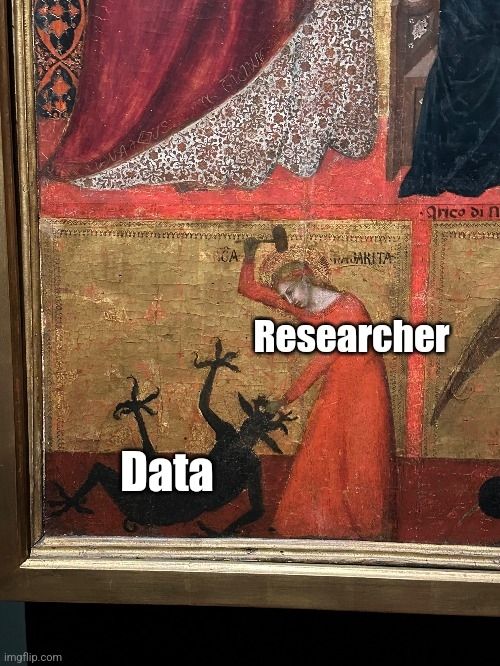
These were experienced teachers, presenting what they found useful in a low-key research design. And the comments from their fellow students were brutal. For starters, the  teachers used the term ‘action research’ which set off the quantitative measurement folks, who called such work unsupportable, unreliable and worse.

There were questions about their sample pool, their “fidelity” in teaching methods, the fact that their numbers were small, and the results were not generalizable. Several people said that their findings were useless, and the work they did was not research. I was embarrassed for the teachers—many of the students in the course had never been teachers, and their criticisms were harsh and even arrogant.

At that point, I had read dozens of research reports, hundreds of pages filled with incomprehensible (to me) equations and complex theoretical frameworks. I had served as a research assistant doing data analysis on a multi-year grant designed to figure out which pre-packaged curriculum model yielded the best test results. I sat in endless policy seminars where researchers explicated wide-scale “gold standard” studies, wherein the only thing people found convincing were standardized test scores. Bringing up Daniel Koretz or Alfie Kohn or any of the other credible voices who found standardized testing data at least questionable would draw a sneer.

In our small groups, the prevailing opinion was that action research wasn’t really research, and the two teachers’ work was biased garbage. It was the first time I ever argued in my small group that a research study had validity and utility, at least to the researchers, and ought to be given consideration.

In the end, it came down to the fact that small, highly targeted research studies seldom got grants. And grants were the lifeblood of research (and notoriety of the good kind for universities and organizations that depend on grant funding). And we were there to learn how to do the kind of research that generated grants and recognition.

(For an excellent, easy-reading synopsis of “evidence-based” research, see this new piece from Peter Greene.)

I’ve never been a fan of Rick Hess’s RHSU Edu-Scholar Public Influence Rankings, speaking of long, convoluted equations. It’s because of these mashed-up “influence” rankings that people who aren’t educators get spotlights (and money).

So I was surprised to see Hess proclaim that scholars aren’t studying the right research questions:

There are heated debates around gender, race, and politicized curricula. These tend to turn on a crucial empirical claim: Right-wingers insist that classrooms are rife with progressive politicking and left-wingers that such claims are nonsense. Who’s correct? We don’t know, and there’s no research to help sort fact from fiction. Again, I get the challenges. Obtaining access to schools for this kind of research is really difficult, and actually conducting it is even more daunting. Absent such information, though, the debate roars dumbly on, with all parties sure they’re right.

I could tell similar tales about reading instruction, school discipline, chronic absenteeism, and much more. In each case, policymakers or district leaders have repeatedly told me that researchers just aren’t providing them with much that’s helpful. Many in the research community are prone to lament that policymakers and practitioners don’t heed their expertise. But I’ve found that those in and around K–12 schools are hungry for practical insight into what’s actually happening and what to do about it. In other words, there’s a hearty appetite for wisdom, descriptive data, and applied knowledge.

The problem? That’s not the path to success in education research today. The academy tends to reward esoteric econometrics and critical-theory jeremiads. 

Bingo. Esoteric econometrics get grants.

Simple theoretical questions—like “which method produces greater student understanding of decomposing geometric shapes?”—have limited utility. They’re not sexy, and don’t get funding. Maybe what we need to do is stop ranking the most influential researchers in the country, and teach educators how to run small, valid and reliable studies to address important questions in their own practice, and to think more about the theoretical frameworks underlying their work in the classroom.

As Jose Vilson recently wrote:

Teachers ought to name what theories mobilize their work into practice, because more of the world needs to hear what goes into teaching. Treating teachers as automatons easily replaced by artificial intelligence belies the heart of the work. The best teachers I know may not have the words right now to explain why they do what they do, but they most certainly have more clarity about their actions and how they move about the classroom.

In case you were wondering why I became a PhD dropout, it had to do with my dissertation proposal. I had theories and questions around teachers who wanted to lead but didn’t want to leave the classroom. I was in possession of a large survey database from over 2000 self-identified teacher leaders (and permission to use the data).

None of the professors in Ed Policy thought this dissertation was a useful idea, however. The data was qualitative, and as one well-respected professor said– “Ya gotta have numbers!” There were no esoteric econometrics involved—only what teachers said about their efforts to lead–say, doing some action research to inform their own instruction–being shut down.

And so it goes.