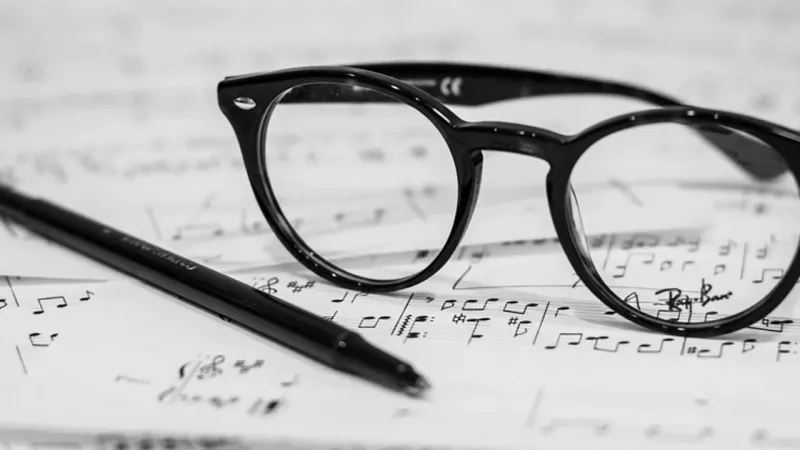
I was a middle and high school band teacher for more than 30 years. In my school, band was an elective; students were mostly in my class because they wanted to be there, year after year. More than once, clinicians and adjudicators remarked about the large numbers of boys in my middle and high school bands.
Usually, boys and girls in my concert bands were fairly balanced. Jazz band was 2/3 boys—and lots of rowdy fun. I didn’t really give it a lot of thought, until I heard it again: How do you get boys to stick with band?
I just read Kate Manne’s excellent Substack on why boys should be theatre kids:
‘It is likely that gendered socialization is pushing boys to flee from certain activities… these patterns are a microcosm of broader trends in the US that are genuinely concerning. Boys participate far less in music, dance, and other lessons, by about ten percentage points, according to recent US census data comparing children in 1998 to children in 2020. Very little has changed during this period in terms of the gender divide for children aged between six and seventeen.’
Rang true to me. As did one of the suggested reasons: Girls join clubs and go out for the school play, chorus and orchestra. Boys go out for sports.
Manne’s point was that boys who rejected music, dance and drama were genuinely missing something: a community that made things, beautiful and emotionally moving things, together. (Pause for an amen.) Boys should be able to try those things, enjoy them, perhaps excel at them, without being labeled or pigeonholed.
The boys that I taught in instrumental music classes, 5th graders to seniors, dealt with being—what’s the right word here? Harassed? Teased? Bullied?—about being in band. I know they did. We had conversations about it, every year, reviewing the reasons that being called a band fag by Joey Halfback was, in the end, meaningless. It was harder for younger kids, trying to find themselves.
You would never be able to imagine this, when you’re in the 7th grade, but when you’re retired, you’re unlikely to be playing football, or any other sports requiring strength, speed and good wind. You might, however, think about how much you liked playing trumpet in the 8th grade band, and pick one up.
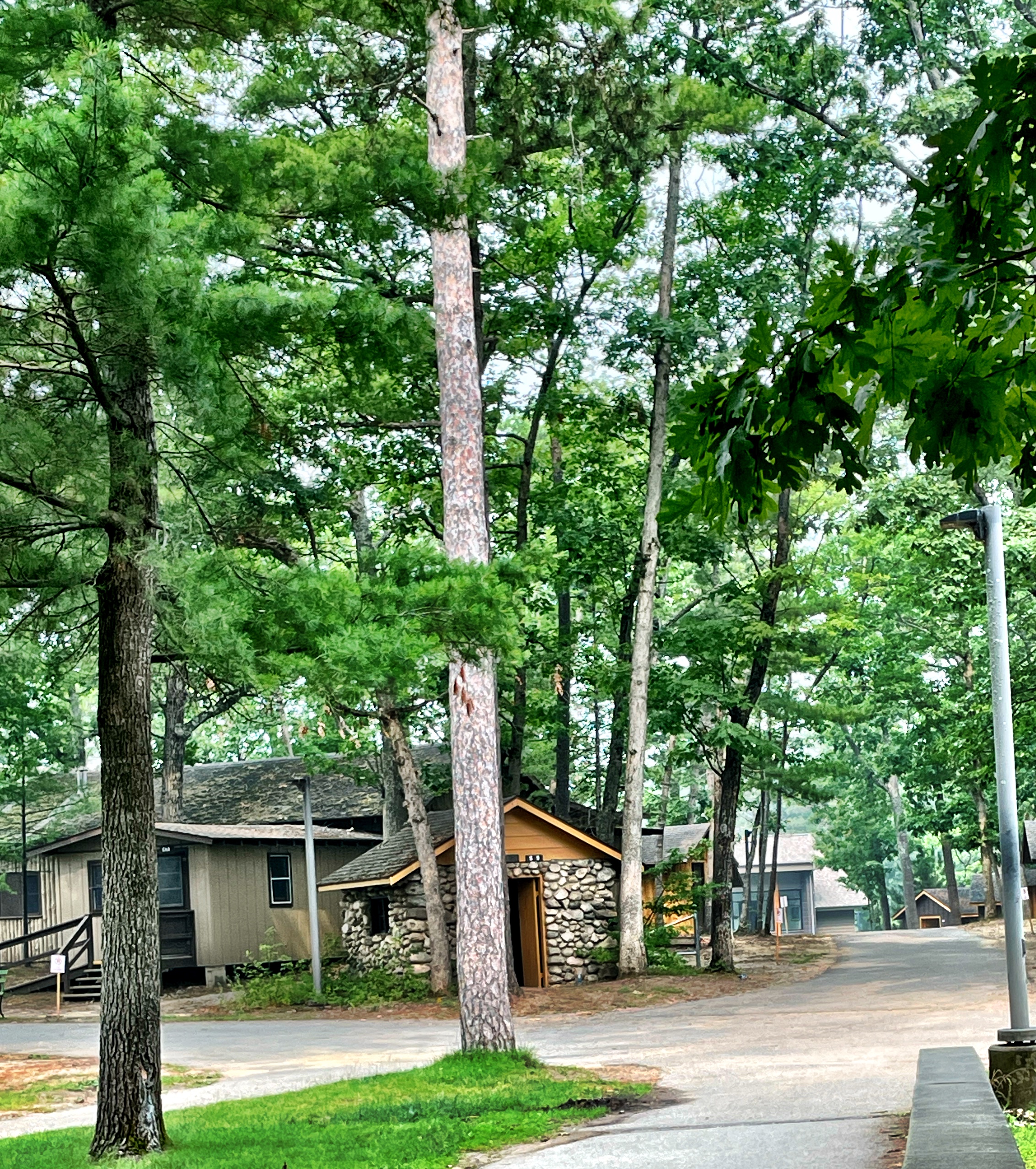
I know this, because I spent last week at the Interlochen Center for the Arts on their beautiful wooded campus, at flute camp. This was an adult ensemble workshop, 35 flutists from all over the country, polishing their skills and playing in groups, for fun. Summer music camp was going on as well—we ate lunch in their cafeteria—with hundreds of middle school and high school singers, dancers and cellists. Girls and boys, lugging cases and stretching out on the dance building porch.
You didn’t need to have years of experience as an educator to see that these kids were in their happy place. A long stretch of time where everybody was like you—a musician or a dancer—and free to be themselves. Nirvana for some teenagers.
So yes—boys should be theatre kids, and maybe run cross country, too. The arts are for everyone.
There were 35 flute players at flute camp; two were men. Make of that what you will.
A quiet moment on Interlochen’s campus. Students inside, due to hazardous smoky air.
 Teacher in a strange land
Lovely, just lovely!
LikeLiked by 1 person
When I was teaching band and I went through the typical “What do you do?” discourse with people I’d meet, I would often hear the following:
“I played [instrument] for a couple of years growing up and then I quit. I wish I would have stuck with it.”
LikeLike