
I’m seeing a lot of fellow political junkies spending their weekend posting about The Road Ahead. What are the most important issues? Where are the quick wins? Two of my local legislators (bless their hearts, unironically) have asked for input on social media. These are mostly exercises in shooting the moon—everything, everywhere, all at once. So much to do.
But it’s OK. As long as someone mentions education in every one of those rambling comment threads. Because public schools are an evergreen issue, and a fundamental part of healing from our recent insanities. We can do so much better for our public school kids.
Let me say that again: We can—we must—rebuild and (I hate the way this word has been abused, but it’s on point) re-imagine public education.
Thank goodness for Jennifer Berkshire and her partner Jack Schneider, who have kept the flame burning for public schools being an issue that the Democrats should own. (There’s good stuff on their Education Wars site on the new, no-evidence Direct Instruction nostalgia trip, as well.) There’s work to be done, and perhaps, a window of opportunity.
If I have had an overarching life goal—my professional mission, if you will—it would be preserving and enhancing public education as central and critical to the shaping of American culture and democracy. America needs a strong public education system, for purposes ranging from nurturing civic engagement to building workplace skills to understanding our global world. Not to mention developing productive human relationships—or the range of literacies now required for successful life in America.
Give me a minute to tell you about a classic exercise often used in professional development sessions for teachers: the Four Directions Leadership Compass. I’ve seen this done a dozen different ways, but it’s basically an exercise in understanding that the way you like to work may not be the way other people prefer to accomplish common goals.
In the exercise, participants are asked to identify with one of four groups: North (Action), South (Community), East (Mission) and West (Organization). Profiles of the four preferences are shared—the Get ‘er done, task-accomplishing North, the South teacher who brings donuts to the staff meeting and cares about needy kids—and the West educator with her color-coded files and two months of pre-written lesson plans.
Almost invariably, educators identify as North, South or West. In the questioning and debrief, they identify East as the teachers who derail staff meetings by asking “Why are we doing this?” and resisting change without endless discussion beforehand.
This is not surprising. Teaching, especially these days, is more like putting out continuous fires, running to stay ahead of the next crisis, than gathering to think deeply about our vision for an excellent school that serves all students well.
But. Missions matter. Visions can inspire.
Way too much work done by educators is ticking boxes, test prep, following someone else’s plans, often developed for students that don’t exist, and getting through another day. Besides, having a vision of how much better things could be is only step one. If there’s anyone who understands the disconnect between the visionary and the barely good-enough, it’s public school educators.
In a recent blog, I wrote about my surprise at discovering that the mission statement I carefully discussed and composed with my district teaching colleagues, one that embraced the idea of nurturing caring individuals, had been overturned and replaced with some blah-blah about ‘enabling all students to be independent and successful to the maximum of their potential.’
Of course, we want students to succeed. But defining that success, and our role in pushing students to succeed, remain unclarified by that statement. What it says to me is that it was written by people who believed they could identify the “maximum potential” of students (probably by data) and train them to use that potential for their own benefit. And to hell with the community. And maybe dreams and visions.
The blog led to interesting discussions on my social media outlets, about the process of writing a mission statement. I’ve forgotten a whole lot about my 32 years as a classroom teacher, but I remember writing that mission statement, something required by the Michigan Department of Education as part of a (here it comes) “re-imagining of public education.”
I remember old veteran teachers who saw a mission statement as just more phony reform nonsense being drawn, by a skillful principal, into discussing what brought them into teaching and kept them there. I remember Jack McManus (may he rest) finally saying—Well, in my day we saw public education as a way to build citizens and democracy, to stir the melting pot, and develop appreciation for the American way of life and opportunity.
There’s a mission if I ever heard one.
Maybe—probably—your statement would be different. There’s room for other ideas about what constitutes a purpose for public education. There’s room for action, organization and community. But the mission is the horse that draws the cart. And yes, I am an East.
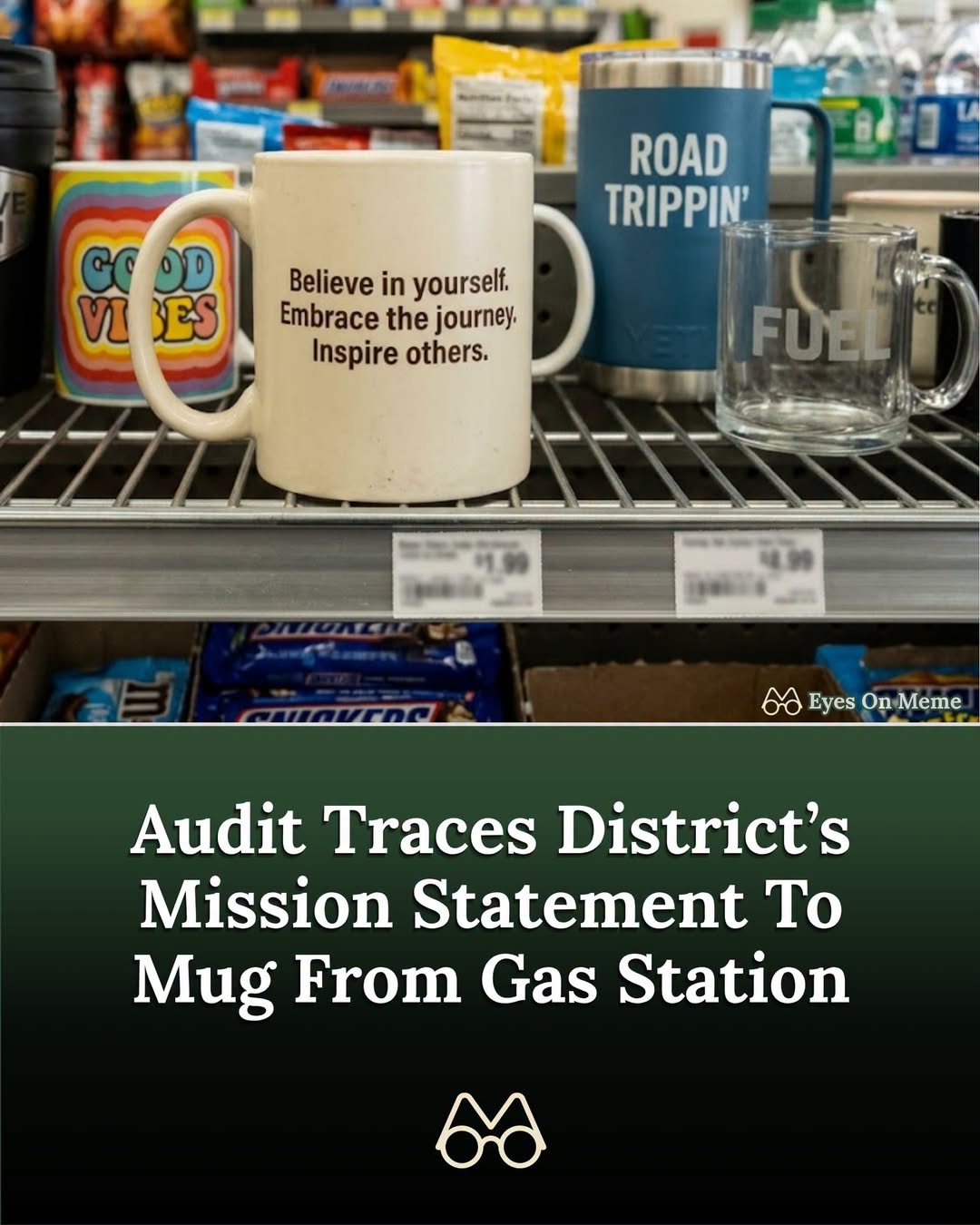
Illustration credited to Eyes on Meme. If you spent any time in the classroom, check the site out. It’s hilarious and so obviously written by teachers.

