For maybe a decade, MACUL was the hot ticket, worth burning a personal day, sitting in ballrooms looking at guys in logoed polo shirts and khakis, narrating fast-paced product-focused PowerPoints with amusing memes sprinkled throughout. The first question you got, wandering through the massive exhibits hall was “Are you in charge of tech purchases for your school?”
Nope, I wasn’t.
What I was looking for was new ways of thinking about education, specifically music education. It seemed to me that music, as a human endeavor, was way more than what I was teaching: how to play an instrument and replicate pre-written pieces, as accurately as possible. These were skills that were fairly easy to standardize and grade, but 180 degrees away from creativity and improvisation, the capacity to play with musical ideas, and evaluate your own results. Not to mention things like joy and fun.
I was working in a system that privileged the standard school band, including competitions evaluating fidelity to everything from instrumentation to tempo markings. The party line on music education is that it’s creative, but secondary music education often leaves little room for students’ imagination or original work. The teamwork and drive for excellence are valuable, but usually end when a student graduates.
But how could I encourage my students to try out their own musical ideas? To have fun, even jam, without a conductor and sheet music and—God forbid—weekly playing tests, speaking of pre-set system reqs… This seemed to be something that technology might do.
Now, 20 years later, there are plenty of creative music apps to carry around on your phone or tablet. But what the techies were selling, back then, fell into three buckets:
The first was programs to make school administration easier— attendance, budgets, scheduling,etc. The second group were things to make teachers’ non-instructional duties easier—grading, standards, lesson planning, and so on. The third cluster was programs for students, most of which were usable by classes, in computer labs and directed by teachers.
There was lots of new! exciting! software, but nobody seemed to be interested in developing programs that let students experiment with the tools of music. At least, not for schools, where performing concerts and musical events for parents and the community were the ultimate curricular goals.
It was a system I didn’t create, and innovative technologies were no help in budging it. Even in ways that I knew would be good for kids, building their confidence and exploring their individual musicianship.
First thought: Do teachers WANT to bring AI into their classrooms? If so, for what purposes?
Second thought: Why is the AFT jumping on this bandwagon? To “get ahead” of some imaginary curve? To get “free” (and none of this is truly free) stuff?
Third thought: Since AI is essentially composed of stolen content, what does this do for teachers who still believe in nurturing students’ imagination? Somebody created all the literature, art and other media that goes into the giant maw of AI, so there are also ethical questions.
Final thought: Why are we ‘training’ educators to do what OpenAI thinks they should be doing? Did we ask teachers first—what would you like to know about AI? How do you think it could be useful in your classroom?
Once again, we’re forcing teachers into systems they did not create. And that’s never a good idea.
I can remember the first time I heard about ADHD. It was in the early 1990s—and the person who was educating me was the mother of one of my students. His teachers—six of us, plus an admin—were sitting around a table, meeting to discuss his classroom behaviors (not good), when she whipped out stapled packets of articles on ADD.
He’d been officially diagnosed, and she was part of a parent support group, which provided materials for teachers. The packets she gave us were thick—maybe 50 pages—and filled with scientific-sounding information about diagnosis and treatment of this disease, then thought to apply to perhaps three percent of all students.
Reading through it (rather than round-filing it, as a couple of colleagues did), you could see what was coming. The Attention-Deficit Era had begun. He wasn’t hyperactive or oppositional-defiant, or a troublemaker. Not anymore. He had ADD.
Let me say, upfront, that I believe ADHD is a real thing, and using medication judiciously to treat it is often a lifesaver for parents and teachers. Let me also say that the way some classrooms operate is not conducive to deep learning for a range of students who need lots of movement and hands-on activities. And—side note– this is often not their teachers’ fault, given our increasing national focus on testing, compliance and narrowing the curriculum. Raising the damned bar.
I was horrified to read in Paul Tough’s excellent piece in the NY Times Magazine, Have We Been Thinking About A.D.H.D. All Wrong?that nearly a quarter of 17-year old boys in the United States have now been diagnosed as having ADHD. Tough does a good job of tracking the factors—drug treatments, specifically—that have made one in four boys unable to focus in a quiet classroom without chemical assistance.
He rightfully notes that ADHD symptoms also look like a lot of other things: anxiety, head injury, lead exposure and many other traumas.
But the piece ends on a hopeful note, with lots of testimony from young adult men who have found the right jobs and life circumstances and seldom experience troublesome ADHD symptoms. Which makes me ponder what there is about school that makes the kids we used to call hyperactive need drugs to get by every day, even though the medicines don’t improve their learning.
“Believing the problem lay in their environments rather than solely in themselves helped individuals allay feelings of inadequacy: Characterizing A.D.H.D. as a personality trait rather than a disorder, they saw themselves as different rather than defective.”
The kid whose mother insisted he had a disease, rather than merely being disobedient? He was, in fact, hyperactive and prone to (cheerfully) destroying order in a classroom. Once, while I was moving band equipment, chairs and stands across the hall from the band room for an assembly in the gym, I instructed him to load percussion equipment on a flat pushcart. (Teacher tip: Always give restless students an important job.)
Instead, he assembled the drum set on the cart, then had another kid push him down the hall while he pounded out a little Metallica. Down the hall—and past the office. It didn’t end well for either of us. He wasn’t a bad drummer, by the way. According to mom, it was his favorite class.
I looked him up on internet, and he’s now a multimillion-selling real estate agent. Go figure.
I taught for two more decades after that day I first heard of ADD. Lots more students were diagnosed with ADD, over time—then, ADHD. My colleagues and I talked often about accurate language, and accurate diagnoses, and the differences in kids when they were medicated. Sometimes, parents let teachers know their child had been diagnosed—sometimes, they didn’t.
I took kids to camp and on field trips where I had to administer their ADHD medications, or have conversations with their concerned parents about behavior issues when they were unmedicated—at an evening performance or band camp.
And I often felt grateful that I was teaching band, with 65 students at once, all holding noisemakers. There was a lot of stimulation in the band room, plenty of activity. There was also discipline (because otherwise there would be chaos), but my attention-deficit kids could tolerate rules and procedures, as long as they were moving and doing things. Mostly.
I also taught 7th grade math for two years. I found that maintaining student focus with 28 students in a desks-and-chalkboard setting was often way more difficult than keeping 60 band kids on track.
Read Paul Tough’s piece, if you get a chance. It’s nuanced and layered with contradictions, like most things about schooling, and raising healthy children. We could be doing lots more for kids who are immersed in screens and entertainment daily, and have difficulty staying on task when that task involves paper and pencils.
But then—we could be doing a lot more for many kids, who bring their various backgrounds and issues to school. If only we had the resources. And a genuine commitment to the next generation.
Lots of great writing about where we find ourselves as a nation, as well—I am learning to get along without the Washington Post, with the great political commentary coming from independent newsletters like The Contrarian, Meidas, Robert Reich, Heather Cox Richardson, Lucian Truscott, The Education Wars and the Bulwark, which are only the ones I’m currently paying for. Can’t add much, beyond my personal open-mouthed horror, to the wall-to-wall political coverage available.
In case you’ve missed it (and you’re forgiven if you have):President Donald J. Trump — who recently overhauled the once-bipartisan board of directors at the John F. Kennedy Center for the Performing Arts and installed it with loyalists who elected him to serve as its chairman — held court Monday in a place that he had not publicly visited during either of his terms in office: the Kennedy Center.
Remarks were made to the Washington Post by Trump officials who recently toured the arts venue and described it as “filthy,” noted that it “smelled of vomit,” and added that they “saw rats.”
But not to worry! Trump alone can fix the Kennedy Center. In fact, Trump—who could have been a superb musician, if his parents hadn’t pushed him into becoming an outstanding athlete and phenomenally successful businessmaninstead— can add “born arts connoisseur” to his already-substantial resume’. Because ‘the test’ showed what we’ve all missed: the guy who bragged about punching out his music teacher in second gradewas really an untapped musical genius.
Like all Trump anecdotes—Sir! Sir!– this one is mainly bullshit:He told the assembled board members that in his youth he had shown special abilities in music after taking aptitude tests ordered by his parents, according to three participants in the meeting. He could pick out notes on the piano, he told the board members.
If you polled actual music teachers, all of them could tell you stories about small children whose parents considered them exceptional, because they could dance to a beat , clap a rhythm or pick out a tune on the keyboard. Many of them had a great-grandmother who taught piano or uncle who was a whiz on the saxophone—thereby confirming that their talent was inherent, according to mom.
Some of those kids (especially the ones whose parents encouraged practice and persistence, attending every concert) turned out to be good musicians, after some basic musical instruction. Others, not so much.
Second: Testing children’s innate musical ability has fallen out of favor, for the same reasons that other standardized testing has been rightfully criticized. In the post-war years, a ‘musical abilities test’—the Seashore Test—was popular, often used to determine who should get to use expensive school-owned instruments. I took it myself, in the 4th grade.
What the Seashore Test did, mostly, was identify kids who had some musical experience—piano lessons, singing in the church choir, music-making in their families. Because the more you do music, the better your ‘ear’ and sense of rhythm. Kind of like the way kids who go on family trips to the library or museum get a leg up on other kids, when tested on their reading abilities or content knowledge.
Is there such a thing as talent? Sure. But testing as a means of determining talent—or taste, or creativity—when the testee is a child is pointless. Genuine, exceptional talent emerges as a result of passion and tenacity and, sometimes, good luck.
Why did such testing fade away? Because it missed a lot of students who became strong musicians—singers and trombonists, the lead in the school musical—down the road.
Lesson learned: ALL children should all enjoy making music in our schools. Because you never know if someday your child might be Chair of the Kennedy Center Board.
Like all educators, I’ve been following the repercussions of the “Dear Colleague” letter the federal government sent to public schools, threatening to cut off funding for schools that dabble in things like human rights and accurate history. The fact that the poor, strapped (snort) Department of Education used some of their evidently dwindling resources to set up a snitch line so parents could rat out teachers and school leaders is telling.
To make this all seem “normal,” the ED sent out a nine page read-what-our-lawyers-say explainerthat further muddies the waters. The purpose of this second epistle seemed to be upping the threat while appearing to be efficient and legal-ish.
Many times, in my long career as a vocal and instrumental music teacher, I’ve had dear colleagues (ahem) express mild envy over that fact that the general public saw my subject discipline as what we used to call a “frill”—nice, but neither substantial nor essential.
Parents, these teachers suggested, didn’t really care about what kids were learning or singing in music class. It was an elective, not part of the more important career-preparation/serious-academics curriculum. In other words, my students were not being tested on the music curriculum, like theirs were. In band and choir class, we were just, you know, playing around. Fluff.
As you may imagine, I’ve written countless blogs and think pieces about what kids take away from a quality music program. If you think that the arts are a value-free zone—not tested, so not important—I’ve got news for you.
The classroom where I spent more than 30 years, teaching secondary vocal and instrumental music, was a platform for learning about lots more than the fingering for Eb and how long to hold a dotted quarter note. It was a place where we could explore how the music that students are marinating in, 24/7, came to be—a cultural voyage, through time and place, and the human response to make art reflecting the artist’s circumstances.
Proof of that–a couple of days ago, a young band director, on a Facebook page for instrumental music, asked his dear virtual colleagues for advice on this dilemma: His 8th grade band had been preparing Moscow 1941,a terrific composition, for an upcoming performance. Given the current fluctuating official opinion on Russia, Russia, Russia, he was stymied by his middle schoolers asking if they were playing a Russian march to show support for the Trump administration.
What do I do? he asked. Do I tell them Russians were the good guys in 1941, but not now? Do I say it’s just notes and rhythms, forget the title? Do I just pick something else? The kids like the piece and we have it ready for performance. Also—I’ve already talked to the kids about great Russian composers and the dark and moody music they have produced, over centuries.
First—I love that there’s an online forum for discussing these professional issues. Responses were mostly thoughtful, ranging from “tell kids the truth about Russia, then and now” (including a couple of good resources) to “get your principal involved.” There were also a few “avoid conflict, always—dump the piece” responses, which I took as evidence that teachers, in general, are rightfully anxious about threats from federal, state and local officials. Music programs are chronically in the crosshairs and choosing music that Trump-voting parents could misinterpret could be risky.
The discussion morphed into examples of band directors who chose music to represent Ukraine, and other masterworks inspired by political events, like Karel Husa’s Music for Prague, 1968. This is what the arts are supposed to do—help us make sense of the world.
Back in the 1990s, I bought a piece for my middle school bands called A Lantern in the Window,a musical depiction of the Underground Railroad. There was a quiet, spooky opening, followed by a pulse-pounding chase, and the piece ended with a richly harmonized quote from an old Negro spiritual, Steal Away to Jesus.
I programmed Lantern often, every two or three years, because it was a perfect teaching piece. There were multiple tempos and styles, and I could talk about the use of familiar songs, how a few measures could remind us of a powerful cultural idea.
Students always wondered why an enslaved person would believe in Jesus—and yes, these conversations had to be carefully handled. But they were worth it. They illustrated the power of music to tell an important story. And that, I thought, was the heart of my job.
Last week, “The President’s Own” Marine Band quietly canceled a concert program originally billed as the “Equity Arc Wind Symphony.” The performance was to be the culmination of a “multi-day music intensive with musicians from ‘The President’s Own’” and high school musician fellows selected through auditions organized by the Chicago-based Equity Arc, a nonprofit organization that provides “specialized mentoring support for young BIPOC musicians and helps institutions take meaningful steps toward equity and inclusion.”
When I see stories like this in the news, I wonder how music teachers, specifically, can stand against federal threats. Our job—our low-paying, high-importance, mega-stressful job—is to give children of all ages, colors and abilities the chance to love, understand and perform music. Politicizing that—for whatever stupid reason—is both wrong and damaging to children and to our American culture. That’s a good reason to push back.
Over the past few years, I have volunteered in four local schools, in varied programs. And—as a retired veteran teacher—I understand why students’ identities and actions must be rigorously protected. But I want to share this recent experience, because—even with 30-odd years in various middle school and high school classrooms and plenty of exposure to Things Kids Say—it rocked me. Which school, which program—doesn’t matter.
It’s a marker about the coarsening of our culture—but the question is why.
So–there’s an 8th grade boy who’s talking to other middle school boys. They’re not huddling in the corner or trying not to be heard. The boy refers to a girl they know as a “Hawk Tuah girl”. The other boys snicker. There is some head-turning in the room, including another adult volunteer.
What did you call her? she asks, curious. And the 8th grade boy proceeds to share an accurate definition of “hawk tuah”—out loud, with sound effects. Boys try to suppress their mirth, again. Girls walk away, clustering together. The other volunteer turns to me, wide-eyed, and says: Have you ever heard that word before?
Unfortunately, yes. Just didn’t expect to hear it explicated in a middle school classroom.
I’ve seen and heard plenty of appalling things in the classroom. I’ve heard angry students drop the F- bomb and nice girls call other nice girls ‘whores’ when their boyfriend showed interest. Also, if you haven’t been in a K-12 classroom since your own experience there, the line of what is acceptable and what will get you sent to the office has definitely moved over time.
My own vocabulary—both public and private—is hardly pure. Sometimes, I’m kind of like the dad in that You Tube video, trying to explain how the word fuck loses its power depending on how it’s used. Because this isn’t precisely about naughty words, per se.
Sending a kid who swears (especially if it’s not habitual) to the office isn’t ever likely to achieve anything useful. Plus—with social media and personally selected entertainment in every teenager’s pocket—it’s become harder and harder to say what is and is not overtly wrong.
The 8th grader learned how to define certain girls from watching videos and social media. He’s 13 and has no reliable filter for “inappropriate”—trust me—and he wasn’t swearing. So who do we blame for his language, let alone his idea that someone he knows and goes to school with just might be a Hawk Tuah girl, ha-ha? Do you call his parents? What will that yield?
Early in my career, I was called into the office by my principal, who said she’d fielded a complaint about me swearing in class—and the parent had already called the superintendent. I was genuinely mystified. What did I (supposedly) say?
Ass, she said. You said [Student] was an ass. Yesterday. He went home and told his mom you swore at him in class.
Well, the truth of the matter was this: The kid (a percussionist) was dropping cymbals on the tile floor. I directed him to stop. So he started kicking over suspended cymbals and temple blocks, which are on easily tipped stands. I took him out in the hall for a cheek-to-cheek, and chatted with him (severely, I admit) about why was he back there acting like a jackass? He had no response.
His mom, of course, hadn’t heard that part of the story. But when she did, she said that dropping equipment was no excuse for a teacher swearing. Damaging expensive equipment that all the bands use?Not a factor, apparently.
Today, language is at the heart of the ongoing, month-long trashing of our entire federal government—way more trigger wordsthan George Carlin ever dreamed of. From a piece in the Atlantic:
Fear that other words could run afoul of the new [anti-DEI] edicts led anxious agency officials to come up with lists of potentially problematic words on their own. These included: Equity. Gender. Transgender. Nonbinary. Pregnant people. Assigned male at birth. Antiracist. Trauma. Hate speech. Intersectional. Multicultural. Oppression. Such words were scrubbed from federal websites.
Language is powerful. When we are afraid to speak freely, explore ideas, argue about meanings and outcomes from the language used in the classroom, we’re in real trouble. A whole lot of the purpose and success of a quality education depends on the language we use, and the way students understand it.
Should adults—calmly and dispassionately–explain to kids why their language may be offensive? I know that makes me sound old and out-of-touch.
But I keep thinking about the girls in that classroom, listening to the boy describe sexual acts he’d heard about on social media, and the girls who were willing to engage in them. It felt like witnessing an obscenity, performed by someone who didn’t fully realize it was offensive, that it wasn’t just about sexual behaviors, but about denigrating all girls?
As the distracted touring group wandered around snapping pictures of the impressive statuary, our guide completed her thumbnail history and then, very quietly, said that Hungarians—so brave and bold—were losing their democratic independence to their authoritarian Prime Minister, Viktor Orban.
Glancing around, she spoke for perhaps two minutes about how he was suppressing freedoms and dismissing the courts, stealing money and power from the people. It was clear that she was nervous, and that this was not part of her assigned guide-spiel. Most of the Americans in this heavily American group were not paying attention to her final, whispered words: You Americans are lucky.
Democracy is in greater peril today than at any time in modern U.S. history. America has been backsliding for a decade: between 2014 and 2021, Freedom House’s annual global freedom index, which scores all countries on a scale of zero to 100, downgraded the United States from 92 (tied with France) to 83 (below Argentina and tied with Panama and Romania), where it remains.
The country’s vaunted constitutional checks are failing. Trump violated the cardinal rule of democracy when he attempted to overturn the results of an election and block a peaceful transfer of power. Yet neither Congress nor the judiciary held him accountable, and the Republican Party—coup attempt notwithstanding—renominated him for president. Trump ran an openly authoritarian campaign in 2024, pledging to prosecute his rivals, punish critical media, and deploy the army to repress protest. He won, and thanks to an extraordinary Supreme Court decision, he will enjoy broad presidential immunity during his second term.
While this is a powerful statement, it is not difficult to find a dozen pieces, by credible authors, in credible publications, saying pretty much the same thing, over the last three weeks. We are headed toward Hungary (Global Freedom Score: 65) or perhaps Saudi Arabia (GFS: 8), where our President is now going to sell out Ukraine (GFS: 49).
There’s a reason why the Department of Education is being so quickly dismantled. It’s not a business (as everyone is fond of saying). It doesn’t make money. It’s entirely dependent on a mixture of public funding streams. There are accountability strings (state and federal) on nearly every aspect of the way public education runs, from where the money goes, qualifications for workers, rules for instructional materials and practices, punishments for low test scores, how to get kids to school, even when they prefer not to go.
For the current administration, bent on “saving” federal dollars for their own preferences, breaking up this monolith will be a giant display of power that impacts some 50 million students and their families. Think you’re in charge of your local school, your classroom? Think again. Easy peasy.
No, the federal government–and supporting Republicans and conservative courts–say. No, we don’t want your media literacy classes. No, we don’t want kids nosing around in issues like fairness and equity in our recent history. No speaking Spanish. No arts classes or events to help students make sense of the worldthey live in. No vaccines to protect them, or accurate health information.
Now, she seems like a prophet. Guard what you have. You never know when you’re going to elect a despot. Before our schools crumble, I hope every teacher will gather up their courage and speak truth to power, even to first graders.
As Steven Bechloss wrote:Despite this onslaught of gaslighting, aggression and attacks on facts, don’t assume we are powerless to respond. This is our duty to the future and the truth.
Here’s a reflective statement that will probably irritate—or enrage—my fellow music educators: When it comes to inappropriate behavior on the part of educators, performing arts teachers have a bad reputation. Often deservedly so.
Why are teachers in certain disciplines and grade levels more prone to sexually abusive behaviors? Opportunity. When you take students to camp, or on regular field trips—or when you are responsible for private lessons or after-school rehearsals—there are plenty of occasions when bad stuff can happen.
Holly Berkley Fletcher has a great piece on the hearings in Bulwark: Mullin went on, “The only reason I am here and not in prison is because my wife loved me, too. . . I’m not perfect, but I found somebody that thought I was perfect . . . but just like our Lord and Savior forgave me, my wife’s had to forgive me more than once, too.”
Mullin’s mini-sermon was a lasagna of problematic messaging—the lauding of a woman for sticking with an abusive man, more generally giving women responsibility for men’s redemption, and calling longstanding patterns of behavior a “mistake.” Oh, and there was also the obligatory reference to Jesus—whom Hegseth also repeatedly invoked to get out of every jam free.
David Brooks, in the NY Times, had a hissy fit about all the ‘character’ questions lobbed at Hegseth, calling them “short attention span” and “soap opera” queries. He lists some undeniably concerning realities about our military and the global conditions it might be called upon to address—and hey, all of that is fine, and very relevant.
But. Character still matters in the application of expertise (which, it must be noted, Hegseth has pretty much none of, either). Being in charge of our military is the ultimate “opportunity for malfeasance” job.
As I watched the brand-new, low-information Senator from Montana—not naming him either—joke with Hegseth about how many genders there were and how many pushups he could do, I thought about how this works in my bailiwick—public school teaching.
What do we ask new teachers or principals, in hiring interviews? Questions that reveal character? Or questions strictly related to the disciplinary knowledge and pedagogical skills necessary for the job? More specifically, how did all those music teachers I’m not naming get hired?
(And yes, I do realize, that merely getting someone certified to teach is often the best many districts can do, in 2025, given teacher shortages.)
Not all that long ago, Michigan was a teacher exporting state. Recent grads, who would have preferred to teach near home, were actively recruited by other states, often in the south. Interviews and job offers were done by telephone—before Zoom, where you can at least see the person you’re talking to. A number of my former students moved out of state to begin their teaching careers after a couple of phone calls netted them a job.
I used to wonder how administrators or hiring teams felt they knew enough about a person to believe they would do a good job with the children entrusted to them, with only a phone conversation. One of my formers, on her way to South Carolina, told me that her interviewer said they were impressed with her local university’s reputation as a teacher-prep institute, and her resume’ (which, it must be noted, showed zero experience as an actual teacher).
As Fine Arts Department Chair for many years in my district, I sat on lots of hiring committees. A strong resume’ is a good reason to interview, as are references. But there are things—character things, maybe even “soap opera” things—that emerge in an interview.
The guy who’s too slick, and can’t meet your eyes. The person who makes promises when they have no idea whether they can keep them. Worst of all, the teacher who’s leaving their previous district because the principal is “dysfunctional.” Things like this emerge when you ask character-related questions. And you use your human judgment skills to observe and evaluate.
This week, we’ve had a front row seat for the most important and consequential job interviews in the nation. Every person being grilled by senators has a comprehensive, publicly available resume’. And each of them deserve to have the nation watching them squirm or deflect or repeat their pre-arranged, “anonymous smear” responses.
Who’s going to get hired? As always, the person the administrator wants. But establishing a public record of questions asked and answered—or avoided—is critical.
And no question—not a single one—is unfair or irrelevant.
If you’ve been paying attention to the DOGE Brothers—Elon-n-Vivek—lately, as they explain their personal theories around the failures of American parents to instill tenacity and a work ethic in our young citizens, you may have seen Ramaswamy’s rant on our deficit culture: A culture that venerates Cory from “Boy Meets World” or Zach & Slater over Screech in “Saved by the Bell” … will not produce the best engineers. More movies like “Whiplash,” fewer reruns of “Friends.”
Ramaswamy goes on at some length, all Tiger Dad, about the virtues of immigrant parenting vs. native-born slacker parenting. As a veteran teacher, and thus long-time observer of American parenting, I think he’s flat-out wrong. True, there are parents who simply want to make things easy for their kids. But there are also plenty of non-immigrant parents who run a tight ship, academically, pushing their kids toward competitive excellence, breathing down their necks. The idea of hard work leading to a better life is not exclusive to immigrants.
It’s tempting to ignore the DOGE boys’ blah-blah on Twitter, although our incoming President has anointed them fixers of the entire political economy. It’s hard to see how your average Trump voter will suddenly decide that it’s time to claw their way to STEM careers via choosing the right TV charactersto admire, or deciding not to (Vivek’s words) venerate mediocrity any more.
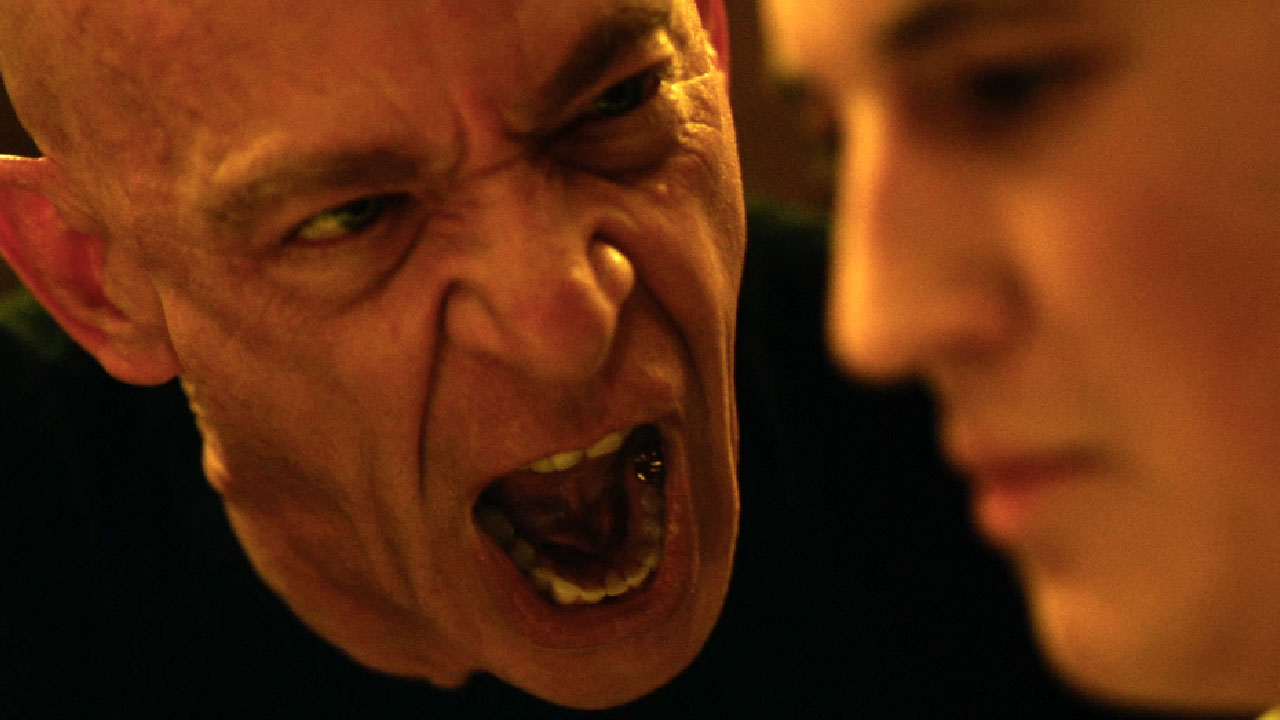
But we’re not going to nurture talent and work toward genuine accomplishment via movies like Whiplash, which is possibly the worst movie about education ever produced.
OK, maybe not the worst movie ever. But a stylish, seductive acting tour de force based on All the Wrong Stuff. An excellent showcase for two major talents–J.K. Simmons and Miles Teller–but with precisely the wrong message, for young people who want to excel in spite of setbacks, for educators, and for anyone who ever hoped making music was a rewarding, life-affirming pleasure instead of just another competition.
Several years ago, I had a very talented drummer–call him “Zach”– in one of my middle school bands. Zach was a natural–great innate rhythmic sense, great unforced stick technique and most important, a kind of fearlessness you don’t often see in an 8th grade percussionist. When something went wrong in the music-reading process he–perfectly illustrating the cliché– never missed a beat. Zach was what teachers call a “good kid,” to boot–polite, friendly, and willing to let other kids have the spotlight often, even though he knew he was a better drummer.
Zach’s mother was a physician, and at our first parent-teacher conference, she let me know that my ace drummer’s biological father (someone he now saw only sporadically, once or twice a year) was also a musician. She was clear: her son’s formal musical education would be ending with 8th grade; it was “too risky” to have Zach get involved in the high school band program, even though he was interested in doing so.
Zach was bound for better things than music, she said, adding a few bits of folk wisdom about how musicians aren’t trustworthy, goal-oriented or even rational, and make terrible husbands and fathers. It was her story, and she was sticking to it.
When I saw Whiplash I remembered that conversation with Zach’s mother. Because Whiplash is pretty much a dishonest conflation of myths (the only way to pursue excellence is through cut-throat competition) and truths (a lot of music teachers embrace that myth, the blood-and-thunder school of music teaching). The artist as anti-social and single-minded, driven stereotype.
When I watched J.K. Simmons, playing Fletcher, the tyrannical jazz band director, scream “MY tempo! MY tempo!” I flashed back to all the petty dictators I’ve seen on the conductor’s box, over 50 years of being a professional musician and school music teacher. I’ve witnessed at least a dozen school band directors say the exact same thing, transforming into little Napoleans, using their baton as weapon, “proving” that students must be prodded into worshipful obedience in order to play well.
Here’s the thing: you can be a superb, meticulous, demanding music teacher without being a hostile jerk. You can also be a driven, determined, even obsessed music student, bent on creative brilliance and perfection, without being inhuman or ruthless.
In a movie supposedly about “what it takes” to achieve true excellence in performance, we never saw Fletcher teach, or drummer Miles Teller’s ambitious character, Nieman, learn anything about music via guidance, example or instruction. Everything that was accomplished happened via psychological manipulation: Terror. Lies. Tricks. Bodily abuse. Even, God help us, suicide.
It was a movie designed to prove Zach’s mother right: music is a rough, vicious game, filled with people whose talent means more to them than family or human relationships. It’s about ego–and winning.
Except–it isn’t, really. Music is available to everyone, from the supremely talented to the amiable, out-of-tune amateur. It’s what we were meant to do as human beings–sing and play and express our own ideas.
Music is my life. I play several instruments and sing. I majored (and double minored) in music in college and am active in civic groups and church music as participant and conductor. I even went to flute camp (for adults) last summer. And I spent 30-odd years as a public school music teacher.
So– I have a love-hate relationship with Christmas music. Mostly love. But.
December can be brutal for musicians—and for school music teachers, brutal on multiple levels including community expectations and endless rounds of kids-on-risers. Music teachers become de facto activity directors, lurching from frigid parade to caroling at the nursing home.
But still—there’s the rich opportunity to teach excited kids something about their cultural inheritance and surround. Which includes a clear definition of the divide between music as spiritual practice and music as auditory clutter.
Because you really can’t get away from Christmas music in America in December (or November), hard as you might try. People of other faith traditions, people who don’t believe in any of the Christmas iconography (like Santa or Jesus), people who loathe the downtown decorations and the Hallmark channel—we’re all stuck when Santa Claus comes to town.
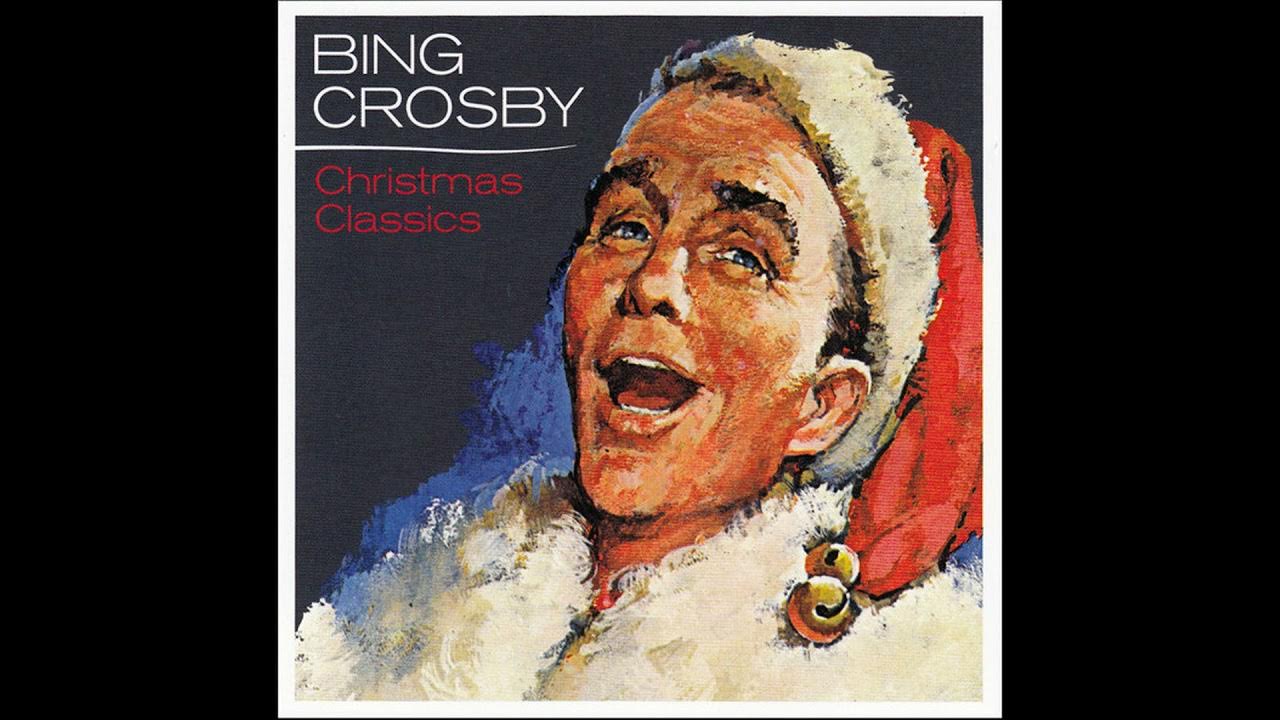
For many people, Christmas music becomes irritating aural wallpaper, especially if they’re tuned into one of the omnipresent satellite radio Holly-day stations, or actually paying attention to what’s on the PA system as they’re perusing cheese in the dairy aisle. Because most of the commercial Christmas music readily available in businesses and on Sirius is, frankly, somewhere between uninspired and dreadful. I don’t want to hear—to choose just one example—Burl Ives at any time of year, let alone at holly, jolly Christmas.
I started listening to Christmas music on my little portable record player (Christmas gift from my parents), beginning with the LP records from the gas station ($1 will Fill-up!), where Percy Faith and Ella Fitzgerald were interspersed with the Chipmunks and the NY Philharmonic. When I got my flute, in fifth grade, I was invited to play Angels We Have Heard on High for the church Christmas pageant, a gig I kept through junior high because I liked the wings and halo, as well as the tune. I was hooked.
So I started collecting (and studying) seasonal music as a teenager, eventually making yearly cassette tapes of my favorite cuts. Cassettes morphed into CDs in the 1990s. I made annual gift CDs for family and friends—then eventually, due to the magic of iTunes, custom-selected CD playlists and discs for my regular customers. I requested multiple catalogs from folk and jazz artists and ordered new CDs, unheard, in the fall. At one time, I owned 500 holiday CDs, and had a catalog of over 3000 digital cuts on iTunes.
Yeah, I know—when does a hobby become a sickness?
The last year I made CDs was 2018, when I realized most people no longer had the equipment to play a CD. I still make my own annual December playlists on Spotify—there are still arrangers and artists creating beautiful new seasonal music. I love listening, but I am really picky about what I am listening to.
Here’s the thing, though, about so-called Christmas music: it’s familiar, or will become familiar in time. A tune you recognize, when you hear it again, come December. We don’t have a lot of those commonly remembered classic songs anymore, holding our culture together. Nostalgia is a part of cultural norms.
For centuries, there was mostly sacred music—all of which has cultural value, whether the listener is a believer in the divine, or not. O Come, O Come, Emmanuel dates back to the 9th century, for example. How often do young listeners authentically interface with such a different time, except through music?
Commercial music has been shaped by the march of new technologies and low-bar popular opinion (lookin’ at you, Frosty). Children no longer know folk songs sung around campfires in the 19th century—unless they learn in school to cross the wide prairie with Betsy from Pike. We are losing bits of our cultural heritage, including traditional carols.
Whatever you want to listen to today is immediately available on your phone. But if you haven’t explored the truly glorious—magnificent or austere or funky–songs and carols of the season, how will you know what to ask for, to know what musicians have created from a simple tune?
In collecting mountains of Christmas music, I have favorite versions of all the songs, of course. But when I want to relax on Christmas Eve, with a glass of wine, this is what I put on: https://open.spotify.com/track/5c0sQY87Iw7qUu46N31f3v.
I remember sitting in the teachers’ lunchroom at my middle school, January 2001, and having a woman I like and consider a good teacher exclaim–after Dubya was finally declared president-by-hanging-chad– “Doesn’t it feel good to have a nice, respectable family in the White House?”
It didn’t feel all that great to me–and that feeling grew worse and worse, as we rolled through 9/11, Abu Ghraib, the Iraq war and the financial meltdown.
Still–she was sort of right. It is undeniable that character matters in public leadership. Or should. Turns out, however, that good character—the kind of person whom we can trust to lead– is very much in the eye of the beholder. Welcome to 2024.
Nobody needs to hear what I think about what went wrong with this election. I would describe myself as bewildered. Sorting through the post-mortem will take time.
But I have to say that my one niggling worry, watching Kamala Harris run an energizing, upbeat, intersectional campaign through these last 100 days, was this: She’s a woman.
Backwards, in high heels, and all that. Please don’t let this be another case of a fully qualified woman passed over for a blowhard jerk.
The campaign downplayed the “firsts”—first woman, first Black woman—but mixed in with the horror of who got elected and what they promised to do, is the bone-deep conviction that this loss had a lot to do with sexism, coupled with racism. What America is “not ready for.”
So—I am only speaking for myself here. But as the meme says: We ask women why they don’t come forward when they are sexually assaulted. It’s because we live in a world where an abuser can become President.
In a must-read article in Atlantic,Xochitl Gonzalez says this: Sexism, it turned out, was not a bug but a feature of the Trump years. Misogyny certainly appears to come naturally to Trump, but it was strategically amplified—through surrogates and messaging—to attract supporters, particularly younger men of all races.
Many of these young men apparently see Trump—with his microphone-fellating pantomime and his crowds chanting the word bitch—as presidential. Misogyny helps disempowered men feel empowered. After Trump’s victory, the right-wing activist Nick Fuentes tweeted: “Your body, my choice. Forever.” It really is a man’s world now.
Trump’s return to power—his imminent control over the Supreme Court and the federal judiciary, the coming dissolution of the very idea of the government providing any sort of guardrail against corporate power, carceral violence, and environmental destruction—is the beginning of a political era that will likely last decades.
I’m not sure I have decades.
What seemed—last week—like a more equitable way of addressing (and I hate this phrase) the war of the sexes has melted away. And for me, it’s personal. Here’s my story—one I’ve shared before—about a very powerful man using that power to abuse women:
I did my student teaching in the mid-1970s. I was assigned to a male band director (they were 98% male, back then), who told me at our first meeting that he was accepting me as student teacher because he needed a free assistant. He had a top leadership position in the state organization for instrumental music teachers which took him to many conferences and meetings. He said that he never would have consented to taking a woman as a student teacher—the university had merely asked him if he was interested, and he assumed that, naturally, I would be a young man, ready and willing to do the things he didn’t have time to do for a semester.
He repeated those remarks to the audience at my first concert. By then, it had become a polished story–“I said yes–and then they told me it was a woman!” (Audience hilarity.) I, of course, was making the morning coffee, re-ordering his messy music files and writing his monthly columns–the man couldn’t construct a coherent sentence–for the state organization newsletter.
I was also being sexually harassed and bribed by the promise of a good evaluation and letters of recommendation, something that I very much needed to get a job in a male-dominated field.
I put up with it for about a month, making up excuses to leave early so we wouldn’t be alone together. He grew more aggressive. Finally, I went to the student teaching supervisor from my university. I have repressed a lot of memories about that time–but I can remember that meeting as if it were last week. The supervisor, behind his large polished-wood desk, was wearing a red ski sweater. Behind him, multiple holiday photos of his family, in front of a fireplace, the lovely wife and four children.
I told him my story, in detail. He leaned back, hands folded over his chest. “Are you sure you’re not leading him on?” he asked. Then he ticked off the reasons why he would not recommend another placement: It was too late and would cost me another semester in time and fees. Nobody would take me, once the story of my accusation became public–and it surely would, possibly all over the state given the man’s public profile.
I would be seen as a too-sensitive whiner in a male-dominated field. I thought you wanted to be a lady band director, he said. This is what it’s like. Either handle it yourself or drop out now.
So I handled it, as best I could. I can’t say I learned anything about being an excellent music educator during the remaining three months–the man never turned his classes over to me, not even for a single rehearsal. His pedagogy was best described as intimidation and humiliation. Plus openly flirting with high school girls.
I worked individually with students in the practice rooms (where I learned, from a sweet flute player, that Mr. Exemplary Band Director was also having sex with his students). The one time I was allowed to stand on his podium and conduct a number, he stalked around behind me, making faces and mocking my conducting.
I got through, by “ignoring” lots and lots of grabbing. I had proof that telling anyone what was going on would reflect badly on me–that I would be labeled the spiteful “nasty woman” who was seeking to take down someone who had earned his considerable fame.
After graduation, I got a job far away from the man, in spite of his mediocre evaluation (which specified that I would be best placed as an elementary music teacher, as secondary band directors needed more “stamina” than I had). I built a successful 30+-year career as a band director, including being named Michigan Teacher of the Year. When I saw him at music conferences, I avoided him.
Famous Band Director lost his job–very publicly–about a decade later, when a student finally came forward, supported by her parents, to report that he had lured her into a sexual relationship. He denied it, in the newspaper pieces, then pointed out that the school had one of the state’s top band programs–all because of him.
Mostly, I stopped thinking about him, after that. Then, a few years ago, after community band rehearsal, one of my colleagues, a man I deeply respect, caught up with me after rehearsal, asking “Did you hear that [Famous Band Director] died?”
The first words out of my mouth were: I hope he rots in hell.
Taking a deep breath, I mentioned I’d done my student teaching with the man. My friend already knew–the man had been having breakfast regularly with a group of retired band directors, and had talked about me. Explaining why this monster had been invited to the breakfast club, after being fired for sexually abusing students, my friend said: We took pity on him.
I realized that the Band Director’s breakfast companions, a kind of Old Boys Club, had probably been fed a fabricated storyline about me, too. I felt like I was going to vomit. And nearly 40 years had passed.
Because paying attention to bullies and sexual abusers feeds their megalomania. And lets them train a new generation of persecutors, the white men who feel they’re entitled to power and the women who hope to bask in their reflected glory.