What Do Parents Know About Public Education?

Not much.

But don’t take my word for it. Kappan recently took a look at American adults’ knowledge of public schools:

Our findings shed light on a key question: What do adults know about U.S. education? Specifically, what do they know about what is taught, who makes decisions, the role of parents, and the belief systems driving education policy? Our results have important implications for how we might support children and improve the education system.

No kidding, Sherlock.

The survey results would come as no surprise to veteran public school educators: Half of adults don’t know what is/is not taught in their local school. Most are unsure about who’s making curricular decisions. Most are unclear on the impact of privatization on their public schools. Some of the surveyed issues (Critical Race Theory and learning loss) revealed a complete lack of understanding.

Least surprising finding: Adults’ perceptions of what’s happening in public schools mainly come from their own personal experiences (and this includes people with no K-12 children in the home). The percentage of people who read books or articles, watch cable news or videos, or listen to podcasts about education is small. People who get their education news from newspapers? Fifteen percent. Second highest source of ed news? Social media.

That’s a lot of guesswork, memes and faulty memories.

Kappan makes the case that more information means that the general public will make better choices around education—correctly evaluating the corrosive impact of privatization, say, or understanding why a teacher can’t create 30 different assignments, or seeing the benefits of teaching real history. Better communication will lead to better schools, they say.

Well, maybe.

As Larry Cuban says, we’ve been fixing public schools again and again and again, frequently with little or no evidence that our bright ideas will be effective:

Ideologies and political power matter far more than research-derived evidence. Very little evidence, for example, accompanied the New Deal economic and social reforms to combat the Great Depression in the 1930s. Nor did much evidence accompany the launching of Medicare or the Elementary and Secondary Education Act in the 1960s. And very little evidence drove federal oversight of U.S. public schools in No Child Left Behind (2002). Reform-driven policies are (and have been) hardly research-based.

Again—anyone who’s worked in a school for years can testify that, yes, ideologies and political power matter more than research or concrete evidence. And much of that local political power (elected boards, school administrators, influential parents) yields decisions based on personal experience, decades earlier. No evidence or data in sight.

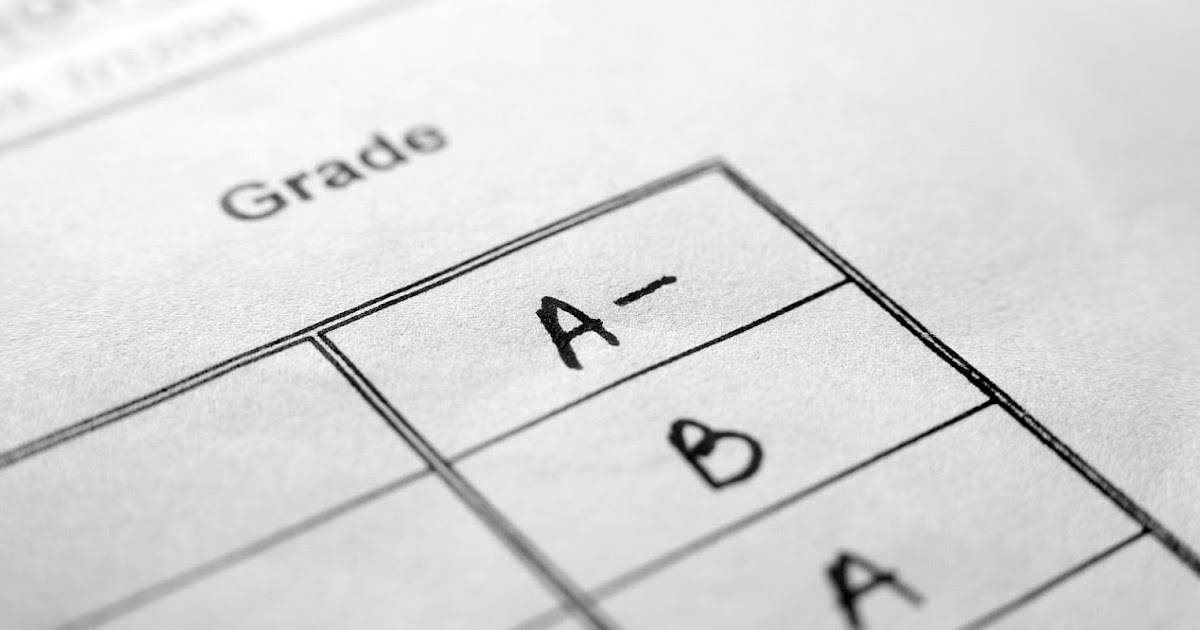
Here’s an example. Some years ago, the curriculum director in my district proposed a new student reporting system for all our elementary students. Instead of grades—a single grade for each subject, plus a checklist for appropriate behaviors—he created a complex system wherein teachers would evaluate multiple objectives for each subject. The number of objectives would increase, in each of the six reporting cycles, until the final report card, which would include the entire years’ curriculum, laid out in sequence.

It meant the teachers would be evaluating—from introduction to mastery—well over 100 skills and knowledge nuggets. Six times a year, for 30 students. Parents would be given several pages of personalized data, a detailed guide to the entire grade-leveled curriculum, as laid out in the district’s master plan (which the teachers called ‘the black notebooks’), and concrete evidence of their children’s progress.

He actually got this plan through the school board, buoyed by professional journal articles about standards-based assessment. Teachers were less than enthused.

But the plan ultimately failed because parents emphatically did not want pages math and language skills. They wanted grades. They knew what a B+ meant. They did not want to know whether their child could calculate a percentage or identify the subject of a sentence. That was teachers’ work.

Another example: How do we cope with teacher shortages? States and districts all over the country are scrambling to fill positions. Any teacher could give you the right answer: Pay teachers more. Provide adequate resources. And give teachers control over their professional work.

Why are we even talking about reducing qualifications for teaching? Do parents want under-qualified pseudo-teachers heading their kid’s classroom? I doubt it. Recent surveys asked students which quality made teachers “good.”

If you’ve been a teacher, you know the top—73%–answer: They cared about me, as a person. If a would-be teacher cares about students and their learning, they’re willing to jump through the hoops of certification and preparation. They’re willing to invest in a professional teaching career.

And—what do parents know about college? That college is the path to a better job? That getting into the ‘right’ college means everything? Not so fast. College loans burden 43 million Americans who might otherwise be investing in housing. Or—attn, JD Vance!—starting a family.

Parents who support public education by putting their kids into neighborhood schools, then paying attention to what comes home—stories, student work—are doing exactly what makes schools community centers and produces good citizens.

My story about the Report Card from Hell is evidence of this. Parents felt free to critique a new plan (based on their personal experiences and preferences)—to the point that the plan was scrapped. Administrators got over their ‘research says’ biases. Teachers weren’t spending additional weekends cross-referencing student work and checklists, for information that could change tomorrow. The community was satisfied.

What communities need is not more information. It’s trust in their public schools.

How People Vote. How People Choose a “Good” School. Is it Common Sense?

When my son—a Korean adoptee—was in 5th grade, he had a student teacher who was Korean-American. Alex idolized Mr. Thacker, one of the very few Asian faces in our 96% white community. Mr. Thacker took him fishing. When the district hired Mr. Thacker to teach 6th grade, I requested that Alex be placed in Mr. Thacker’s class the following year.

Alex’s 5th grade teacher caught me in the hallway after school, at the end of the year. You know Mr. Thacker is a newbie teacher, she said—and there are some excellent choices among the 6th grade veterans. This will be his first year of teaching. Someday, he’s going to be a great teacher, but…

I’d already had that conversation in my head—and gone with my heart. What mattered most to me was having a great role model. Even if that role model was still filling his instructional toolkit and mastering the curriculum. Kids learn more when they’re seen, acknowledged for who they are.

I think that’s how people vote, as well. When the candidate—for County Commission, Township Supervisor or President—acknowledges YOU and your beliefs, rings your chimes, you’re going to vote for them. Even if they’re racist, traitorous and don’t make a lot of sense.

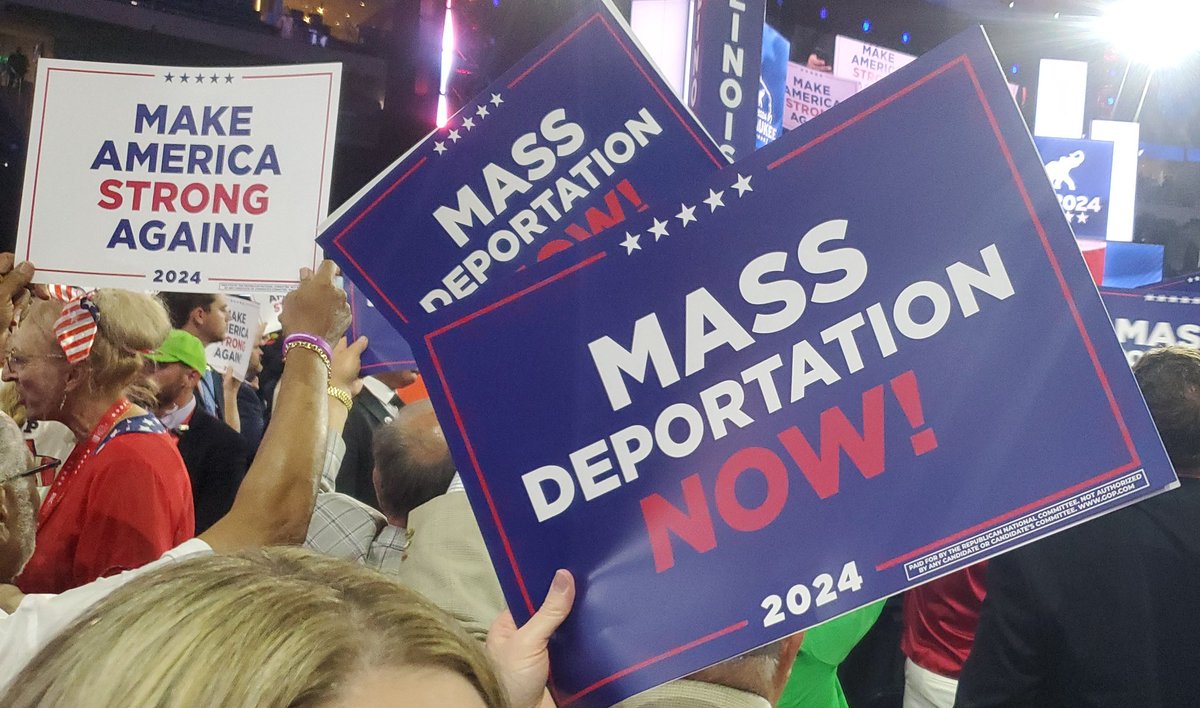
Some of this is partisan, some mere habit. But driving downstate, along the western Michigan coastline last week, through largely white, economically stressed communities, I was stunned by the number of Trump signs. These are the people who think they were better off when their loved ones were dying from COVID but gas, which OPEC couldn’t get rid of, was $2 a gallon.

A couple days after Trump was elected, in 2016, there was a dust-up in a middle school cafeteria in Royal Oak, Michigan, with kids shouting “Build That Wall.”  It was handled quickly by school personnel, but a video surfaced, and was widely shared by teachers.

Here it comes, we said to each other. Chaos and racism have been set loose.

For anyone who has spent lots of time in a classroom, it’s clear that the attitudes and speech and actions of the wider world (and especially parents) show up– quickly– in the things their children do and say in school.

The campaign to demean public schools and teachers, ongoing since 2016 (and put on steroids in the pages of Project 2025), is reflected in the despicable remarks of the right-wing commentariat. Despicable remarks about Gus Walz and Ella Emhoff—not going to link to those—and top-of-ticket candidates will draw some voters in.  And those remarks will harm kids. Kids in our schools.

It’s easy to label them low-information voters—they are, in fact. But they’re also responding to old beliefs and stereotypes. They’ve been explicitly taught to reject mainstream media and fact-checking. They go with their gut and “their own research,” such as it is.

From a great piece in New Yorker:

Scott, who works in private equity, stuck by his guns… “I think Monica goes directly to sources of information.” This, he suggested, was not the right approach. “Use common sense,” he went on. “Food is much higher now. There’s so many things against restaurants right now.” The Biden-Harris Administration was at fault, he concluded. “They created this.” 

Maybe “common sense” isn’t all that it’s cracked up to be. Or easy to define.

Maybe “common sense” lies in a PR firm’s ability to give people license to embrace their biases, as well as their fantasies: Morning in America.  Boots, not flip-flops.  Make America Great Again.

With the wave of education ‘reform’ that started when Boots-not-Flipflops took office, and tried to recreate the Faux Texas Miracle nationally, lots of people who should have known better got on board. Tests! That’s the ticket! Now we’ll know how to identify a good school—data!

School choice orgs and spokespersons revved up the charters/vouchers machine. Every child deserves a good school—who could disagree? Not me, certainly.

But as the whole NCLB juggernaut lurched along, many of those reformers were dismayed to notice what choices untrained, garden-variety parents valued: Winning sports teams. Transportation. After-school childcare.  Programming for their kids that didn’t necessarily result in higher test scores, like an orchestra, drama club or robotics.

Maybe people choose schools—or teachers—the same way they vote. With their gut.

I taught school with guys like Tim Walz for more than three decades—the coach who taught Social Studies. Walz, as Jan Ressenger notes in this fine piece, is an unabashed apologist for public education:

What does it mean that after two decades of attacks—first with No Child Left Behind’s branding schools by their test scores as “failing,” and now since 2019, with blaming schools and teachers for school closures during COVID—someone running for Vice President of the United States just casually drops a comment celebrating public schools as America’s great contribution?

My favorite Tim Walz meme, making the rounds right now: This is a real thing that happened: Tim Walz was inducted into the West Mankato HS Sports Hall of Fame. He stuck around after the ceremony to help put the chairs away.

As I said—I know this guy. And thousands like him. The kind of teacher and coach who draws families to the local school, so their kids can have a role model. Someone who sees their kids and acknowledges them for who they are.

For those who think this is low-information, sentimental baloney: Walz, a former public school teacher and football coach in Mankato, Minnesota, draws on his experience as an educator to inform his political persona and policy beliefs, saying in a 2007 interview with Education Week—after he was elected to Congress—that teachers are “more grounded in what people really care about.”

As governor of Minnesota, he acted on that philosophy of caring by pushing for and signing into law a $72 billion state budget in May 2023 that significantly increased funding for the state’s public schools, provided for a new $1,750-per-child tax creditfree college tuition for families earning less than $80,000 per year, funding for free school meals for K-12 students statewide, and paid sick leave for workers, as well as a paid family and medical leave.

So there’s your policy.

As for Mr. Thacker? Still teaching. Still taking kids fishing. Still the kind of guy who hangs around and helps put the chairs away.

Hysterical Women

Truth nugget: Education policy is 100% shaped and impacted by the fact that three-quarters of the education workforce is female.

Another truth nugget: After Trump was elected in 2016, over a million women descended on Washington DC to march against what he stood for.

And now, after the events of Summer 2024? Well, do your own math, draw your own conclusions. Maybe start your own organization and host a national call.

As the inimitable Dahlia Lithwick noted: The court granted itself the imperial authority to confer upon the president powers of a king, but although Justices Sonia Sotomayor and Ketanji Brown Jackson said as much in their respective dissents, it fell to Big Daddy Chief Justice Roberts to intone to his readers that their aggregated dissents strike “a tone of chilling doom that is wholly disproportionate to what the Court actually does today.” Implying that the dissenters were overreacting, and without ever attempting to address the substance of their claims, Roberts accused them of “fear mongering on the basis of extreme hypotheticals about a future where the President ‘feels empowered to violate federal criminal law.’”

In other words, sit down ladies. You’re hysterical. We don’t appreciate your chilling doom or your extreme hypotheticals. A President who feels empowered to violate federal law? Hahaha! That could never happen!

This type of response could come in handy for pacifying those whose policy/practice wheelhouse is education. It’s a familiar tone policing strategy for those of us whose professional lives revolve around the classroom, especially in public schools. You’re overreacting! It’s only bus duty! What’s one more kid in your class? Why can’t you maintain control over 24 second graders on Zoom?

But. What if women were united to push the ed policy envelope?   Connie Schultz, wife of the SENIOR Senator from Ohio, Sherrod Brown, has some wise words about what happens when women organize: I know that something else—something glorious—often happens when women gather for a cause. I think of it as coming home.

More wise words, these from Kate Manne:

Many of you are now in the same position I am in: all in for Harris as the person who can beat Trump and head off the incalculable threat facing our country. We are terrified as/for girls, women, and any person who can get pregnant. We are terrified as/for the racially marginalized people who Trump has firmly in his sightlines. We are terrified for trans and queer folks who would face existential threats to their well-being and very existence under the next Trump administration. We are terrified for whatever semblance of democracy that remains and might perhaps be rebuilt. The list goes on. There is no question that Harris’s candidacy will open up a torrent of misogynoir, the intersection of misogyny and racism (particularly anti-Black racism, although Harris is also of course South Asian). It’s our job to fight it in our circles and even ourselves.

Do women have the power to transform thinking about the bedrock value of a strong public education system, in the face of Project 2025? Just a reminder:

Trump tells voters on his campaign site a few ways he would manage education:

  • Cut federal funding for schools that are “pushing critical race theory or gender ideology on our children” and open civil rights investigations into them for race-based discrimination.
  • End access for trans youth to sports.
  • Create a body that will certify teachers who “embrace patriotic values”.
  • Reward districts that get rid of teacher tenure.
  • Adopt a parents’ bill of rights.
  • Implement direct elections of school principals by parents.

That last suggestion is sheer folly, by the way —any teacher OR school administrator will tell you that it’s a recipe for never-ending chaos and enmity in schools. Besides, parents can run for the local School Board or elect people to that Board who will select appropriate school leaders for the community. I personally have seen, on multiple occasions, a group of parents make things hot for a principal, via a democratic process involving their elected board. I have also seen good administrators protected—by the same Board—from a single outraged, vindictive parent.

Kate Manne is right when she says we need to fight bad policy and reprehensible candidates “in our circles” and even in our selves. And nobody is going to fight against misogyny and racism more effectively than the people who are impacted. Therefore, protecting your public school may be most effectively accomplished by women, gathering for a cause.

Don’t want public education to be taken down by the slings and arrows of Moms4Liberty and Project 2025? Talk to your friends. Put up a sign. Donate. Volunteer. Organize in Zoom circles. Repeat vigorously for the next 82 days.

Derek Thompson of The Atlantic points out, in a revealing column that …parties aren’t remotely united by gender. After all, millions of women will vote for Trump this year. But the parties are sharply divided by their cultural attitudes toward gender roles and the experience of being a man or woman in America. When the VOTER Survey asked participants how society treats, or ought to treat, men and women, the gender gap exploded. Sixty-one percent of Democrats said women face “a lot” or “a great deal” of discrimination while only 19 percent of Republicans said so. In this case, the gender-attitude gap was more than six times larger than the more commonly discussed gender gap.

With a majority-female workforce, change will come only when women demand policy that invests in public education. Women teachers, often working mothers, value tenure. Women teachers do not want mandated certification of their “patriotic values.” And they don’t want a President or Congress that embraces the horror show of Project 2025, especially when it comes to education.

Reminder: The Chief Justice of the Supreme Court called his female colleagues “fear-mongers, on the basis of extreme hypotheticals.” In writing.

Critical Issues and Minutiae of Public Education

I have been fascinated, in the past 48 hours, by online conversations about the tumultuous political week we have just lived through—especially the comments and questions generated by teachers.

Non-teachers are heartbroken or thrilled or both, by the Biden step-down. They’re nosing out the negative PR and potential VP picks of the presumptive new nominee. There are running threads and analyses around the assassination attempt, a mass shooting where everyone knew the intended (again, presumptive) target, a change from the faceless victims—many children, damn it—of other mass shootings.

So much is in flux. So many building blocks of democracy, teetering on the edge. Including public education.

But we’re approaching (in many parts of the country) the beginning of the school year. Much of the ongoing cyber-conversation around public education centers on clearing back-to-school lists (i.e., teachers begging for essential supplies the school can’t afford), the futility of professional development for yet another silver-bullet reading program, why teachers aren’t paid for setting up their classrooms and other garden-variety School Stuff. The kinds of issues and beefs we see annually.

There are a hundred things that weigh heavily on teachers’ minds as they prepare for another year. What I’m wondering is if teachers are focused on the trees, rather than the destruction of the public education forest. Because focusing on bulletin boards and class lists instead of the section of Project 2025 that deals with education feels do-able, not overwhelming. Or terrifying.

Washington Post advice columnist Carolyn Hax posted a letter about a “rude” teacher who created individual certificates for each of her students at the end of the year. The mother who wrote the letter was upset that individual kids were nicknamed Class Clown and Social Butterfly and–gasp!–her daughter was designated “Miss Manners.” So upset that she reported her ire to the superintendent, after the principal gently suggested these certificates were warm-hearted, not criticisms of children’s character.

Aside from the fact that many parents would be delighted or relieved were their child awarded recognition for having excellent manners—the letter bothered me way more than it should have. Because I have been that teacher, striving at the end of the year to recognize and acknowledge students’ achievements, but also their individual quirks, their signature traits, their contribution to the musical community we built.

Hax rightfully chides the mom for attacking a well-meaning second grade teacher, on the last day of school, no less. But what most folks—non-teachers—will miss is that the success of any teacher, broadly defined, lies in building honest relationships with kids who bring varying intellectual and emotional strengths to school.

Not everyone is an academic superstar or natural helper. Many students will need to be coaxed or cajoled into effort, participation and belonging. Those skills are just as important as content expertise, a full toolbag of instructional techniques and endlessly logged data.

My own end-of-year awards included every band kid. Now—decades later—I still hear from students who remember the last full day of school (after the instruments were all oiled and stored for the summer, the music sorted and filed, and the sink—yuck—cleaned and shiny): The thank-yous. The in-jokes for band members. The Jolly Ranchers. The camaraderie. I recently heard from a woman who remembered winning the “Most Improved Section” award—and she was the only oboe. She included a smiley face.

The Hax column drew hundreds of responses from teachers.

Today, I have been watching teachers on social media saying:  Be kind to the social studies teachers in your building. We’ll be working on overdrive!

Well, yes. You go, teachers. The world is on fire, and your job is to pretend that the only thing that matters is following the prescribed curriculum and keeping your head down in the classroom. We get it—and we love and support you.

But as we launch 2024-25, it is incumbent upon all of us whose livelihoods are not threatened by free speech to keep education policy and the very real threat to public education bubbling up every day on social media and in our friend groups.

 It’s been a wild couple of weeks. But keep your eyes on both the threat and the prize.

Ignoring the Real World in the Classroom

Are you reading Jess Piper? If not—start now.

Piper is a Missouri educator (among other things) whose commentary on teaching in a bright red state, and having been raised in a fundamentalist church, rings my chimes, again and again. She ran for a position in the MO State Legislature in 2022, and lost—but her blogged reflections on that experience amount to an answer to the question uppermost on my mind in 2024: How can people vote for a confirmed liar and obvious scam artist? Who are these people?

Today, her Substack blog described teaching on January 6, 2021, as the US Capitol was being overrun by Proud Boys, Oath Keepers and assorted other rage-filled people with improvised weapons:

What would I say when I started class?

I told them the truth. I told them the US Capitol was under attack. They asked by whom? Again, I told them the truth. By Americans.

My students wanted me to turn on the news, but I decided against it, fearing they may see something they would never be able to unsee. I am of the Space Shuttle Challenger disaster generation, and I was always overly-careful about what they saw in my classroom.

I don’t remember how much 7th hour accomplished that day, but I’d say it was minimal. I think we talked about what our country was experiencing…the division.

And next, of course, came the classic example of chickenshit leadership in schools: A warning from the Superintendent not to discuss the biggest news story of the year, a story that has had an impact on everyone in the United States for the past three and a half years.

Her story resonated with me. I’m considerably older than Piper, and I can remember many times when teachers in my school were directed by an administrator not to talk about a headline story—stories that were easily, overwhelmingly available and playing constantly via whatever media was being piped into our students’ homes and brains.

I remember discussing Anita Hill—I believed her—in the teachers’ lounge, and watching my male colleagues smirk about Clarence Thomas and a certain Coke can.  Bill Clinton’s affair with Monica Lewinsky—something happening on TV, day in and out–was similarly verboten.

A friend teaching in my district was written up for responding to a question from a student about the Jonestown Massacre, when 901 Americans died by drinking cyanide-laced Kool-Aid, influenced by cult leader Jim Jones. And the Flint Water Crisis, happening 20 miles up the road from my school, was “not in the curriculum” and not to be mentioned in class.

What happens when teachers can’t take questions about the daily news? It makes us look like idiots, for starters. Uninformed content-dispensers, unable to connect facts to causes or outcomes. What have our students learned from our unwillingness to discuss national crises, like 9/11? 

In November of 2000, when the outcome of the Presidential election hung in the balance for more than a month, the room across from mine was occupied by an 8th grade social studies teacher. Every morning, we would stand together in the hallway—bus duty—as students streamed into the building and went to their lockers, talking under our breath about What Was Going on in Florida, the Brooks Brothers riot, and so on.

She’d been directed by administrators not to discuss the election results. I don’t believe I was so warned, but that’s likely because someone thought teachers only talked about things that fell into the realm of their assigned disciplinary standards, and 8th graders took American history.

It was absurd. We were making history, but teachers had to wait until ‘the facts’ had been approved and inserted into textbooks. And you know what they say about who writes history.

There are, of course, times when students aren’t mature enough to process terrible realities and should be shielded. It would be difficult to share stories of what’s happening in Gaza with a class of preschoolers, for example, although children of the same age are tragically losing their brief lives there. There are political, religious and psychological reasons to keep kids innocent of global horrors and inappropriate sexualization.

But even small children are impacted by the Big Issues and Big Stories. If we can teach first-graders what to do when there’s a shooter loose in their school, we can talk—age-appropriately—about why terrible things happen. We should think about devices and platforms—but the only way for children to interpret news stories is via dialogue with an educated adult.

In April of 1994, when Kurt Cobain was discovered dead of a self-inflicted gunshot wound, word of his death was being shared during homeroom, and many of the girls in my class were crying. It would have been an easy call for a traditional band teacher to silently sniff about Nirvana, and steer around any discussion of suicide by starting class.

I wasn’t sure the girls could articulate why they were crying, but it seemed appropriate to say something kind about Cobain’s music, and note the pain he must have felt to contemplate taking his life. Then I stopped talking—and they talked. I think it was a shock to be 13 and have someone’s music speak deeply to you—then learn that the music’s creator didn’t want to live any more.

I don’t remember how long we talked about his death—10 minutes, maybe—before turning to our usual band class. But I do remember the absolute silence in that very large class, when I mentioned Cobain’s name, and how simply acknowledging students’ feelings was a better way to start class than pretending nothing happened.

Jess Piper resigned, after 16 years of teaching English, in February 2021. She was planning to run for office, and you can’t teach school and run for office in Missouri.

Think about that.

What Schools SHOULD Be Teaching

…that isn’t in the regular, designated curriculum.

So many things, right?

You’ve undoubtedly seen the memes: Why aren’t schools teaching personal finance, including credit cards and taxes? What about home and car repairs? Insurance? First aid? Time management? Study skills? Stress relief? How to find a job, feed yourself and do your laundry?

Frequently, the post will draw supportive comments, ranging from unwarranted criticisms of what schools actually DO attempt to teach, to nostalgic memories of the days when all the boys had to take woodshop in 9th grade. There was never a shortage of handcrafted birdhouses in those days, by golly.

And—dipping into fantasy here—wouldn’t it be great if schools picked up responsibility for teaching all the life skills one needs to be a fully functioning adult? In addition to math, languages, history, sciences and literature, of course.

The ones that really get to me are the folks begging schools to teach good interpersonal communication and conflict resolution, with maybe a dash of leadership thrown in, but then picket the school board because Mrs. Jones has launched a social-emotional learning through mindfulness (SEL) program for 4th graders, and you know what that means.

A friend just posted a meme reminding us that 100 years ago, students were learning Latin and Greek in high school, and now, high school graduates are taking remedial English in college.

There are multiple responses to that one, beginning with an accurate explanation of just who went to high school in the 1920sand what percentage of students go to college today.

The utility of studying Latin and Greek (or Logic and Rhetoric) in 2024—as opposed to, say, Spanish or robotics—is debatable, as well, but everyone understands the underlying purpose of such a meme: Schools today are failing. Tsk, tsk. Discuss.

If you’re a long-time educator, you learn to take these comments in stride. Just more evidence that everyone’s been to school, and thus believes they understand what schools and teachers should be doing. It’s an evergreen cliché that happens to be largely true.

But there are a couple of points worth making:

  • The required curriculum is overstuffed already. Way overstuffed, in fact. Michigan—which has a tightly prescribed “merit curriculum” for HS students– just added a requirement that all students take a semester-long course in personal finance. This can take the place of a math course—or a fine arts course, or a world languages course. Every time a requirement is added via legislation, students who want to take four years of a foreign language, or play in the orchestra for four years, have to juggle their schedules and make unpleasant choices.

There simply isn’t enough time in the day to cover everything—and it’s maddening to have someone at the state Capitol directing your path by limiting your choices.There are lots of important things to know about adulting, and you only get so much time to go to school for free, in the U.S. Expecting schools to teach things that used to fall squarely into the purview of parent responsibilities, without providing additional time and resources, is unfair.

  • This is educators’ professional work. Let’s take Mrs. Jones, the 4th grade teacher who decided to incorporate an SEL program into the daily life of her class. She’s doing that for a reason, I can assure you. Either these techniques have worked in the past to create a happier classroom atmosphere, or this class is particularly conflict-prone. She’s trying to make it possible for students to learn the other (required) things, by focusing first on communication and techniques that calm students, helping them focus.

Do educators sometimes get students’ curricular and personal needs wrong? Sure. But they are the first line of defense, and best positioned to incorporate non-disciplinary work (like time management, stress relief and how to properly thank someone) into the classroom. And all of them appreciate these things being reinforced at home.

  • You can’t get away from teaching things that fall into the wider scope of how to be a successful adult and citizen, as a schoolteacher. You’re always, always modeling, correcting, observing and suggesting behaviors, whether your students need help getting into their snowsuits or help in getting over a failed romance. Even if you’re teaching AP Calc, there will be inadvertent lessons in addressing challenges, persistence and the value of studying something so abstract and elegant.

There is a prevailing belief, especially in the past couple of decades, that the only way Americans can compete in the global economy, maintaining our preeminent position, is to “raise the bar.” This usually translates to harder coursework, required earlier in a student’s academic career, monitored by increased testing. More top-down control. More competition.

When you drill down far enough, what’s missing is a clear objective for public education. Are we, indeed, trying to help every child reach their full potential (in which case, bring on the handcrafted birdhouses and mindfulness)—or are we trying to strengthen the economy by creating skilled and compliant workers?

A Semi-Elderly Teacher’s Reflection on the Digital World and Education

So—I’m a retired teacher, with more than three and a half decades of classroom practice under my belt. Supposedly, I should be sitting at home, enjoying sunsets and repeating how glad I am that I’m no longer in the classroom.

I actually know a few retired teachers like that—glad to be golfing, disinterested in educational politics—but not many. For those of us who invested our lives in public education, what’s happening in public schools right now is an insult to the low-paid, little-understood work we did to build good citizens in divergent communities; it’s a betrayal of our commitment to our students.

Watching curricula being destroyed and public schools defunded by voucher schemes is soul-crushing. Maybe the most frustrating thing is the naïve belief that technology is going to save us, that students most need screen-delivered, standardized content, not face-to-face human relationships with well-educated adults, who can help them make sense of disciplinary knowledge.

Every aspect of becoming truly educated depends on our students’ ability to comprehend and evaluate information. To think that students aren’t negatively impacted by the unfiltered digital stew surrounding them is worse than naïve. We have not served our students well, offering up their test data (legally mandated, of course) to corporations, or letting them zone out digitally, while in school with their fellow humans.

I remember, back in the 1990s, my colleagues’ collective consternation over Mortal Kombat and Grand Theft Auto, when they were the hot ticket with our middle schoolers. Does spending six hours a day in front of a screen, shooting things or wrecking cars, have an impact on students’ curiosity or kindness or any other pro-social habits? Guess we were going to find out.

I thought of that when I read this headline: Uvalde families sue Instagram and Call of Duty maker over deadly school attack. ‘Unholy trinity’ of Instagram, Activision and Daniel Defense accused of ‘working to convert alienated boys into mass shooters.’

The NYTimes recently ran a feature article on a family whose 13-year old daughter was spending her whole ninth-grade school year without the internet, a phone, a computer or even a camera with a screen.

The benefits of learning to live without dependence on social media seemed pretty obvious to me. Communication with her family would happen the old-fashioned way: letters, via snail mail. A school year like that—this was a boarding school, in the Australian wild, hundreds of miles from home—could shape a personality, even a lifetime. A year at this school also costs $55,000.

So—some people are willing to pay big bucks for their children to develop apart from 24/7 connectivity. And there seems to be a building wave of acknowledgement that digital media has done a number on teenagers. Not to mention our neighborhoods, civic organizations, schools and families.

Half of all adults in America get ‘at least some’ of their news from social media. And the results of that—the mistrust of mainstream media, the ease of delivery, the alternative facts—means that ‘truth’ is illusive in the political realm, a situation that matters greatly right now.

We used to argue, back in the day, about the advisability of using white boards, if the ability to ‘publish’ student work online would make them more motivated, and whether calculators would render students unable to, well, calculate. One-to-one devices were going to be the saving grace.

But it turns out that corporations were way ahead of us—Google, Facebook, Instagram, Amazon, X, Tik-Tok—and pretty much in control of what our students see and potentially think. For better and for (much) worse, schools are now fighting for their share of the attention economy.

Social media outsources the monitoring and managing of this colossal data load to poorly paid workers in Africa and Asia. Ever had your innocent Facebook post taken down as “inappropriate?” That’s why. Mis-information and dis-information are now central to public life.

No, technology and digital media are not going to save us, or drag our schools into the 21st century. Technology, in fact, has made possible the distribution of propaganda that threatens our lives and core beliefs. And social media harvests its core product—information and content—from us. And from our children. For free.

I just finished reading (old-fashioned book) Our Biggest Fight, the in-print manifesto of Project Liberty:leading a movement of people who want to take back control of their lives in the digital age by reclaiming a voice, choice, and stake in a better internet.’ 

Sounds good, no? I’m less sanguine than the CEO of Project Liberty, Frank McCourt Jr.. about the prospect of a citizen-led withdrawal from the addictive hold social media has on American adults, and especially on American kids. McCourt says we need great stories to turn this around, and reclaim the power of the internet—and I’m not saying he’s wrong. Only that teachers and schools have been trying to tell great, non-digital stories about our history and values for decades, and it’s an uphill battle.

You may have noticed that this semi-elderly retired teacher has so far avoided the topic of AI. I’m only too familiar with being pitched on the magical powers of a developing technological marvel to make things “easier” for schools, teachers, learning, etc. etc. Peter Greene has posted a number of great blogs on the folly of believing AI is what we educators have been waiting for.

Here’s Sarah Kendzior’s take:

What gets marketed as “artificial intelligence” is plagiarism: scraped off bits of real people’s ideas, devoid of context or credit.

Google’s AI Overview is worse, though. It seems set on killing you.

“How many rocks should I eat each day?” people asked Google. AI Overview responded that people should eat at least one small rock per day because they contain healthy vitamins and nutrients. The source was an Onion article, but AI cannot discern satire.

And so it goes.

Just Who is Trashing Public Education?

Get ready for a big dump–a deliberately chosen word–of anti-public education blah-blah over the next five months. It’s about all the right wing’s got, for one thing–and it’s one of those issues that everybody has an opinion on, whether they went to public school. have children in public schools, or neither.

Public education is so big and so variable that there’s always something to get upset about. There’s always one teacher who made your child miserable, one assigned book that raises hackles, one policy that feels flat-out wrongheaded. There’s also someone, somewhere, who admires that teacher, feels that book is a classic and stoutly defends whatever it is—Getting rid of recess? The faux science of phonics? Sex education that promotes abstinence? —that someone else finds ridiculous or reprehensible.

Not to mention—teaching is the largest profession in the country. So many teachers, so many public schools, so much opportunity to find fault.

In other words, public education is the low-hanging fruit of political calculation. Always has been, in fact.

A few years back, when folks were going gaga over Hillbilly Elegy, seeing it as the true story of how one could rise above one’s station (speaking of blahblah)—the main thing that irritated me about ol’ J.D. Vance was his nastiness about public education. Vance has since parlayed a best-seller that appealed to those who think a degree from Yale equates to arriving at the top, into a political career—and putting the screws to affirmative action, in case anyone of color tries to enjoy the same leg-up he did.

J.D. Vance’s education—K-12, the military, Ohio State—was entirely in public institutions until he got into Yale Law School. He doesn’t have anything good to say about public ed, but it was free and available to him, a kid from the wrong side of the tracks. When I read Rick Hess’s nauseating interview with Corey DeAngelis in Education Week, I had a flashback to ol’ J.D., intimating that he achieved success entirely on his own, without help from that first grade teacher who taught him how to read and play nice with others.

DeAngelis says:

I went to government schools my entire K–12 education in San Antonio, Texas. However, I attended a magnet high school, which was a great opportunity. Other families should have education options as well, and those options shouldn’t be limited to schools run by the government. Education funding should follow students to the public, private, charter, or home school that best meets their needs. I later researched the effects of school choice initiatives during my Ph.D. in education policy at the University of Arkansas’ Department of Education Reform.

So—just to clarify—Corey DeAngelis went to public schools K-12, for his BA and MA degrees (University of Texas), as well as a stint in a PUBLICLY FUNDED program at the notoriously right-focused University of Arkansas. That’s approximately 22 years, give or take, of public education, the nation-building institution DeAngelis now openly seeks to destroy.

I’m not going to provide quotes from the EdWeek piece, because anyone reading this already knows the hyperbolic, insulting gist—lazy, dumb, unions, low bar, failing, yada yada. He takes particular aim at the unions—although it absolutely wasn’t the unions—shutting down schools during a global pandemic. He paints schools’ turn-on-a-dime efforts to hold classes on Zoom as an opportunity for clueless parents to see, first-hand, evidence of how bad instruction is. He never mentions, of course, the teachers, students and school staff who died from COVID exposure.

Enough of duplicitous public school critics. My point is this:

The people who trash public education—not a particular school, classroom or curricular issue, but the general idea of government-sponsored opportunity to learn how to be a good, productive American citizen—have a very specific, disruptive ax to grind:

I got what I needed. I don’t really care about anybody else.

This goes for your local Militant Moms 4 Whatever on a Mission, out there complaining about books and school plays and songs and health class. It’s not about parents’ “rights.” It’s about control. And never about the other families and kids, who may have very different values and needs.

It’s about taking the ‘public’ out of public education. And it’s 100% politically driven.

Occasionally, you’ll see someone put forth a visionary principle for public education, like the meme that wonders why schools don’t focus on their students’ strengths. Wouldn’t that be lovely?

Small classes, focused on individual talents and gifts, kind of like Corey DeAngelis’s magnet school. A warm and welcoming community of learners. Ample resources. Ask yourself WHY we don’t have that in every public school (worth noting: some schools get pretty close).

It’s not because educators—or schools, if you will– don’t want to meet student needs. They do.

Just who is trashing public education—and what are THEIR ultimate goals?

What about Homeschooling?

Families who choose to homeschool their children have never been on my negative/activist radar, as a veteran public school educator. I have had both positive and not-so-positive experiences with students who were homeschooled–from a pair of shy, well-behaved sisters who fit seamlessly into the middle school music program due to years of independent music lessons, to a sweet boy who had never really learned to read in the 7th grade and tended to wander aimlessly around the music room, once his mother finally decided to send him to school at age 12.

My ambivalence about homeschooling is likely because I became a teacher in a time when homeschoolers were often young hippie parents who worried that schools would suppress their children’s natural gifts in favor of compliance and standardization.

This was the era of Paulo Freire and Summerhill, and—perhaps my favorite book about education— “Teaching as a Subversive Activity,” by Neil Postman and Charles Weingartner. The subtitle is worth mentioning:  A No-Holds-Barred Assault on Outdated Teaching Methods-with Dramatic and Practical Proposals on How Education Can Be Made Relevant to Today’s World. (1971)

Today, homeschoolers are often escaping what they see as Godless classroom chaos, or a curriculum that acknowledges certain truths about our diversity and honest national history. The pandemic and its aftermath pushed parents on both sides of the masking question into involuntary home academics, and left people frustrated.

So much for drama and relevance, letting children direct their own learning, at their pace and honoring their interests. Instead, as David Labaree and Deborah Malizia note:

Schooling moved from a shared learning and cultural experience that generated a sense of community and common purpose to an individual competition for the grades, credits, extra-curricular achievements and degrees that determine students’ future life chances.

Once college enrollments surged in the mid-20th century, the struggle became a contest to gain admission into the most selective college possible. Rising levels of income inequality have only intensified the competition. One result is the devastating increase in student stress and social disconnection, in a setting where every student becomes a potential adversary in the race for extrinsic achievement, and the relentless pressure hurts students at all levels. 

This is not how schools were supposed to evolve—they were supposed to be sites for building citizenship, democratic equality and opportunity. But here we are.

Still. If Mama wants to educate her little ones at home, I’m OK with that, as long as my tax dollars are not paying for skiing lessons or $500 LEGO sets, part of a misguided voucher scheme.

We are likely to see those kiddos at some point, in the public system, perhaps middle school or high school when the home-school teacher’s curricular expertise across the board founders. Or when one of the kids wants to play in the band, join the chess club or the public school basketball team.

Just as public schools have tried to adapt to their surroundings and unplanned events, like a global pandemic, families have tried to custom-tailor their children’s education. I’m not saying that I think all of those pull-your-kids-out choices were good ones –thinking here about that 12-yr old non-reader, or kids whose parents reject the idea of getting along with people who are very different from you, in a pluralistic society.

But–a strong public school system, built on quality teaching and rich curriculum, still can serve multiple perspectives in a healthy  community, including the desire to educate one’s children at home.

Where I get off the homeschooling train is when homeschoolers refuse to follow community-driven policies. Vaccinations, for example. If you want a free, high-quality public education, or the opportunity to use public schools, at any point, as a springboard for your children’s ultimate goals, you may have to follow a few rules.

The Michigan Legislature is currently considering a registry of all school-age children. Homeschoolers would have to, by law, notify the state that they were homeschooling their children. Beyond that—things like curriculum and testing, which are largely controlled by legislation, for example—there is a great deal of freedom for homeschoolers.

This feels like common sense to me, much like a census or licensing vehicles. Where are the kids being homeschooled—are there are large number in a particular district? Why? Can we expect to see them return to the public school and prepare for that? Where are the kids who are not being schooled at all, home or otherwise—and are they safe? Why do homeschoolers find a simple registry threatening?

It’s interesting how many homeschoolers see this as government interference. Given the increases in homeschooling, this seems like critical data to have: Michigan is home to roughly 1.7 million school-age children, and 1.36 million are in public schools, while 182,000 are in private schools, according to 2022 Census data. That would leave about 150,000 students who are either homeschooled or have dropped out.

That’s a lot of kids. I’d be willing to bet that not all of them are being lovingly homeschooled by teachers with the skills to help them move forward academically.

Ten Questions that Felt Worth Answering

Cleaning out some files, I came across these questions (in a file creatively labeled Ten Questions). I have no clue where/when they originated. It was either answer them or plunk myself in front of, you know, the Trial, on TV.

Grande Soy Green Tea Frappuccino with Extra Whip or House Blend Black?

(Sing to the tune of “Holy, Holy, Holy”):

Coffee, coffee, coffee. Praise the strength of coffee. Early in the morn we rise, with thoughts of only thee.

If you were going to write a book, what would its title be?

“The Genuinely Professional Teacher: Way Overdue”

Rate graphic novels on a scale of 1-10, with 1 representing “useless” and 10 representing “simply amazing.”

Two or three. Just not worth the effort to scale down the words in favor of stylized art. I realize this is not a popular opinion and the fault may lie with me, as geriatric reader.


What member of your digital network has had the greatest impact on your professional growth?

There are an awful lot of people I see only online who have made me a better thinker, writer and activist, and their impact has waxed and waned (and sometimes waxed again) over time. Blogging for Ed Week where I had a good editor helped tighten and tone down my writing, and helped me understand the difference between well-supported opinion and simply venting. When it comes to education blogs, Jan Ressenger’s writing is what I aspire to, if I had to name someone.


How do you feel about the holidays?

Which holidays? Oh—those holidays. It’s the most wonderful time of the year?
What is the best gift that you’ve ever gotten?

A piccolo. Completely unexpected. And an item I would prefer to pick out myself. But–in one of those rare, grace-filled moments–I got the perfectly chosen present that I didn’t even know I wanted.

If you had an extra $100 to give away to charity, who would you give it to?

The World Central Kitchen.

What are you the proudest of?

Choosing to follow my principles rather than a paycheck, on a couple of memorable occasions.


What was the worst trouble that you ever got into as a child?

My parents bought me a two-wheeler for my 6th birthday, and I was afraid to ride it without training wheels. My mother told me if I didn’t work up the courage to ride it, they’d take it away. So I got up on the bike, went forward about 25 feet, then had to turn, to stay on the sidewalk. The bike wobbled, tipped, and I fell, hitting my head on a large rock placed at the corner of the sidewalk and driveway, giving myself a concussion. In my first grade school photo, you can see the bruising—and the shiner.

What was the last blog entry that you left a comment on? What motivated you to leave a comment on that entry?

Peter Greene’s Curmudgucation– he’s written 5000 blogs, a ridiculous number, especially considering he wrote most of them while teaching full time (and parenting twins). And his blogs have only gotten sharper (and funnier). He’s an excellent role model for teachers who want to write about what happens every day in their classroom—and why public education is worth saving. Peter also serves as Curator in Chief for Ed-Blog World, at the Network for Public Education. If you want to read a selection of great education writers, check out NPE’s Blog Post of the Day.

Feel free to share your own answers—all ten or selected queries.