I was talking with an acquaintance, and made a comment about ICE being reported in Leelanau County. Don’t you want to see illegal immigrants gone? she asked. Besides, they’re only picking up the ones with a criminal record.
I was dumbfounded. I knew she was likely a Republican; our points of contact have nothing to do with politics. But still– it came as a shock to know that she felt ICE was doing good, justifiable work– keeping her safe, here in nearly all-white Leelanau County.
This didn’t feel political. It felt personal. How could anyone who’s paying attention to the news support an out-of-control federal agency, ripping families apart and harming American citizens, with our tax dollars? Could you be a good person while accepting government-sponsored violence against innocent people?
There were lots of questions I could have asked, researched and validated arguments to be made, beginning with data about the non-criminals and citizens who have been detained. But–shamefully, I admit–I said nothing, just changed the subject to the reason we were meeting.
Thinking it over, I resolved not to just ‘let it go’ anymore. It’s true that many of these folks have made up their mind and are impervious to facts. And, at this moment, nobody is out in the streets when the wind chill is 25 below.
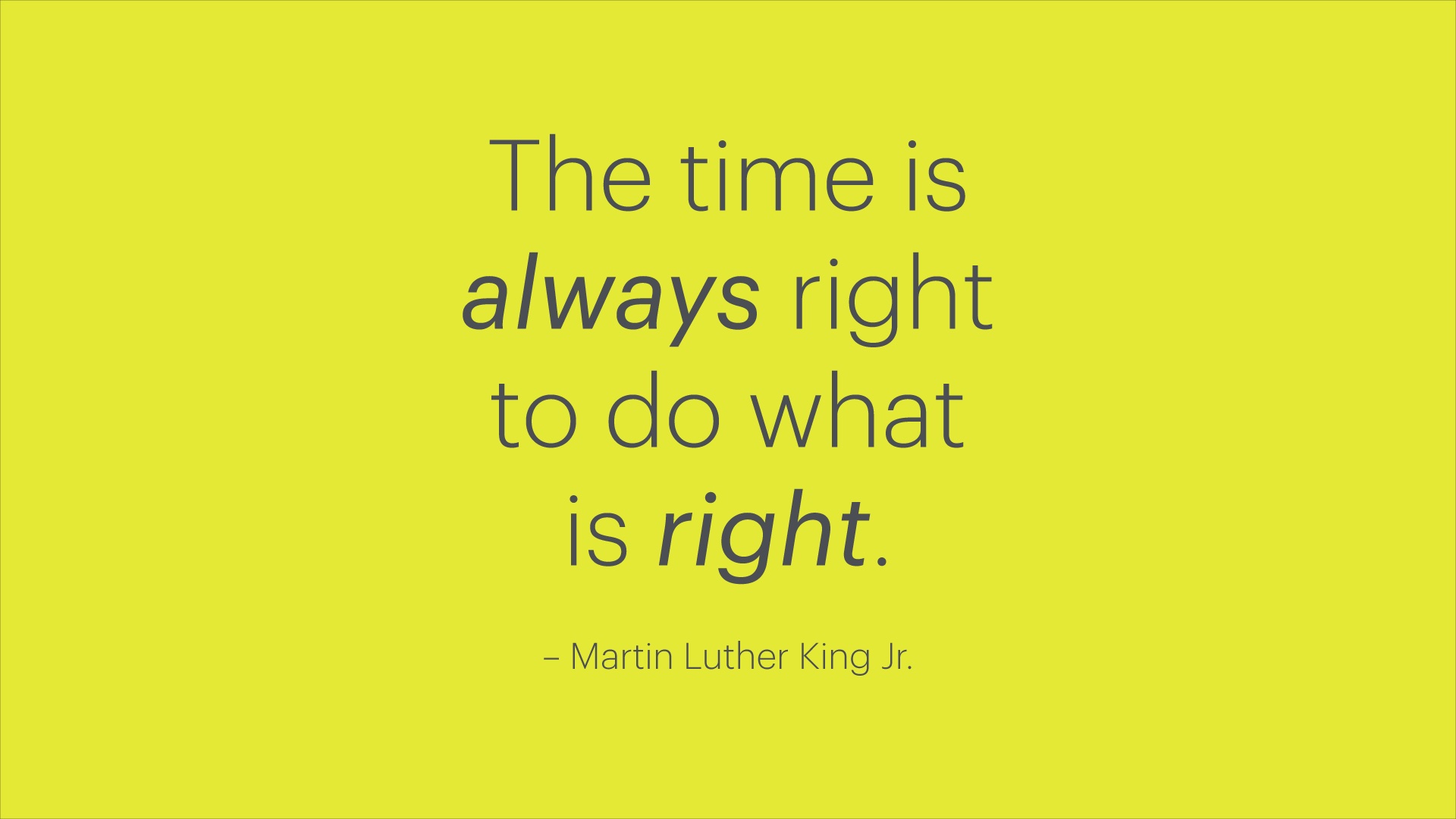
But–thinking people, actual good citizens, care about the people who live in and serve their communities. We are not seeing public safety being played out. We are seeing the base of a presidential posse–men with vicious grudges and biases empowered to destroy public services and schools. We all need to speak up.
Even when it’s socially awkward or unlikely to change minds.
Why? Well– read the article below. It’s a gift article, so you can read the whole thing.
… A Fox host said this weekend that more Americans need to buy artificial Christmas trees because tree farms are needed for AI data centers: “There will be transmission lines that have to go through developments and farms. That’s the nature of a growing economy. Everybody needs to get on board. Buy a fake tree.” (Meidas)
I have never had an artificial tree. Some of my best friends, as the saying goes, have beautiful artificial trees, for all kinds of reasons—convenience, cleanliness, allergies—and I am seriously Not Judging.
But learning from Fox News that I should buy an artificial tree—presumably to make tree farming, a local industry, fail so that the devalued land could be looted for an AI data center—made my holiday blood boil.
Tree farms—like this one—do not despoil the rolling, wooded terrain of northern Michigan, unlike AI data centers. Most are family businesses, employing local people, investing for decades in trimming and watering, for an annual end-of-year payoff. Unlike AI data centers.
You’d think they’d jump at the chance to build a huge data factory—construction jobs in an uncertain economy when unemployment is rising? But no. They knew that “the nature of a growing economy” was going to come back to bite them with ugly power lines, jacked-up utility prices and the loss of 1500 acres of state-owned land.
When Fox News decides that fake trees are patriotic, urging us to buy plastic trees mostly made in China, to support the modern economy, something is very wrong.
But you already knew that.
We have purchased beautiful live trees from three different local sources—two of which have gone out of business in the past decade. We are scaling back this year, with a 9-foot Fraser Fir (the photo, a 12-foot Fraser, is from two years ago). Neither of us wants to get on anything higher than a stepstool anymore.
The tree cost $60, a $10 increase over last year, with the elderly, babushka-ed lady at the cash register apologizing to each and every customer. They have to charge more, she says, to stay in business. There are lots of post-teens working—hard—in the miserable cold, probably the same ones who had summer jobs trimming trees with machetes.
Our tree was cut less than 24 hours before we took it home, bundled and tied into the back of our pickup by those same local guys. It can eventually be chipped into mulch. It smells nice.
Best of all, it’s a subtle strike-back at the wave of Artificial “Intelligence” rolling toward us.
O Tannenbaum. Wie Treu sind deine Blatter.
Happy Holidays to all Teacher in a Strange Land readers.
Well, yeah. A.D.H.D. is now better defined and diagnosed. And I certainly believe that anxiety is on the rise with our youngest people—their world came crashing down five years ago with a global pandemic.
But have our expectations of children really changed? And are schools at fault?
Annoying headline aside, there’s a lot of alarming data in the article:
‘One million more children were diagnosed with A.D.H.D. in 2022 than in 2016. The numbers on autism are so shocking that they are worth repeating. In the early 1980s, one in 2,500 children had an autism diagnosis. That figure is now one in 31. Nearly 32 percent of adolescents have been diagnosed at some point with anxiety; the median age of “onset” is 6 years old. More than one in 10 adolescents have experienced a major depressive disorder, according to some estimates.’
It’s actually an informative read. Diane Ravitch deftly reviewed the piece in a blog post entitled Our Pressure Cooker Schools Are Destroying Children and Childhood. In fact, people have been writing about the ever-growing pressure on kids to excel for decades (especially those in high schools where getting into the Ivies or considering a gap year is common).
A couple of decades ago, ironically, we were talking about high-pressure Asian schools and why Singapore topped the international test scores. Was that what our kids needed—a literal kick in the pants? More competition? And why wasn’t the school providing that?
Here’s the thing: Schools in general—more about that word in a minute—aren’t the cause of students’ mental health issues. Schools do what they can with what they’re given, and what they are directed to do, for the most part.
First, a “school” is not precisely defined. Let’s say a good school has competent teachers, capable and cooperative support staff, thoughtful administrators, a clean and safe facility and enough resources to serve the kids assigned there. Those features can all be undone by bad policies and the social factors surrounding the school.
To say that “schools” are responsible for an uptick in mental health issues for students is not only unfair—it’s not accurate. The world—especially in 2025—is a scary place. For many (not all, but many) kids, school is the safest place for them to be, and I include in that number children who live in nice houses and have plenty to eat.
Just talk to teachers. They’ll tell you that kindergarten is the new first grade. They’ll share stories of kids whose behavior is driven by shame and frustration. They’ll tell you that 15 minutes of outdoor play is a benefit, not a waste of time better used on worksheets. They’ll testify that building a cooperative community is always the first step toward learning, in pre-school and in chemistry class. They can tell stories about seeing kids work through an academic roadblock, with patience and humor—not shaming and blaming.
Maybe we start addressing mental health issues by understanding just what it is that is making children anxious and distracted, and putting our attention and resources there.
Don’t misunderstand—I’m not saying that schools (in addition to all the other jobs they’re expected to do) can “fix” a child with failing mental health. But schools can be a significant factor in contributing to a child’s sense of security, belonging and worth.
‘If you’re not on TikTok, you might not have heard about the woman who’s been calling religious organizations to see how they respond to a mom’s request to source formula for her two-month-old daughter, whose cries you can hear in the background. (Nikalie does not have a two-month-old daughter; she plays a recording of a baby’s cries in the background).
Nikalie records the conversations (Kentucky, where she lives, is a one-party consent state, so this is legal) and then posts them to TikTok, along with a tally of how many organizations have offered to help and how many have declined. You can see all the videos here, but viewers have been compelled by the overall stats: only a quarter of the religious organizations she’s called have offered direct assistance. The larger the organization, the less likely it is to help.‘
Even if you’ve seen the Tiktok, I recommend reading the Culture Study piece, wherein Anne Helen Petersen deftly dissects this kind-of experiment, pointing out that some of the organizations that did not offer formula or money sent the caller to another resource, where they did.
She also raises the right questions: How do we help the needy efficiently, elevating proven logistics above feel-good impulses? Should religious institutions have serving the poor as an ongoing mission? (Yes.) And—why are there so many needy folks right now?
As a veteran teacher, in a relatively well-off suburban school system, I’ve been part of any number of school-based community service projects. My middle school used to have a canned goods drive around Thanksgiving.
Homerooms competed to see who could bring in the most cans, with the winning class getting donuts and cocoa. Piling the cans into an edifice—you can make a fairly impressive structure with hundreds of them—then plunking a few students in front of the Great Can Pyramid—well, there’s a shot for the monthly newsletter.
But it always bothered me. There were the rabid competitors—Come on! Just go where your mom stores cans and put a few in your gym bag!—who were definitely in it to win it. I mean, free donuts! From the bakery! There were also plenty of well brought-up girls who wanted to feed the poor (and maybe get their photo in the newsletter), counting and re-counting the cans.
The people who didn’t get mentioned: The Student Council advisor who had to transport a thousand-plus cans to the food bank. And food bank volunteers who had to organize the donations, throwing out outcoded or bulging cans of beets and butterbeans.
Not to mention the folks who depend on food banks, getting there early to get what they actually needed (formula, perhaps) and not be left with stuff that had been sitting in suburban cupboards for years, unused.
For several years, I was advisor to the National Junior Honor Society,the stated mission of which was acknowledging scholastic excellence in middle schoolers. Hey, I was always down to honor academic effort, and lots of my band kids were in the NJHS. It was one of those “make of it what you will” volunteer jobs, and I thought it was a place where some smart kids could wrestle with the idea that they were more fortunate than—well, the rest of the world. A middle school kind of noblesse oblige.
One year, we raised money by hosting a dance, then sent those proceeds to a homeless coalition in Detroit. It was a pretty bloodless project—the only outcome for us was a nice thank-you note from the nonprofit—but it was a good opportunity to talk about just who the homeless were, and how you get to be without shelter in the richest country in the world.
Another year, we “adopted” a family through the local Salvation Army (this was before their stance on LGBTQ folks was questioned), to provide a nicer Christmas. The first order of business, after raising a few hundred dollars, was discussing the word “adoption,” relative to extending charity to folks who are less well-off, but live in the same community. We were not adopting anyone; we were providing temporary, anonymous assistance.
Then, we went shopping. There were two cars full of 8th graders, with lists provided by the Salvation Army, pushing carts around Meijers, picking up a holiday dinner and gifts for everyone in our assigned family. What was interesting to me was the assumption that “the poor” weren’t like the kids in the NJHS; they should have to live with less expensive, less attractive products and even be grateful for them.
In our assigned family was a girl (14), who needed a warm winter jacket. The kids debated: the cheaper, ugly one or the acceptable style that was $20 more? This took a lot of time, standing in the aisle. I asked: Would YOU wear cheaper/ugly? No. Never in a million years. So—why should she? The answer (a good answer): because then we could get frozen macaroni and cheese for their Christmas dinner.
In the end, the chaperone mom and I kicked in extra cash, and we got them both. But life isn’t always like that.
I don’t think you can teach kids to care for their neighbors via school projects—but you can teach them to think about inequity and compassion. Just because SNAP benefits returned this month does not mean the less fortunate will be well fed in the long term. And the misfortunes of rising unemployment, rising food prices and rising social uncertainty will not be ending soon.
The foundations for eliminating food insecurity are cracking. The best gifts: Money and time. Happy Thanksgiving.
We need to make sure our coverage is rooted in enduring principles and values. We need to make sure we don’t “both sides” the issues when it comes to objective truths. We need to speak and deliver news with moral clarity. (Ben Meiselas)
I would imagine that most sentient people—red- or blue-leaning—would agree with Meiselas, an activist attorney and founder of Meidas Touch news network. To be more specific—most teachers would acknowledge that there are objective truths, common values upon which we have built our most enduring institutions, including public schools.
Anyone who’s spent considerable time in front of a classroom knows that dispensing assigned content is only a small fraction of the job. The easiest part, in fact. It’s much harder to get students to care about that content and agree to practice useful skills that will serve them well as adults.
In addition, classrooms serve as involuntary communities, places where kids will spend somewhere between 180 and 1000 hours together over the course of a school year. And functional communities have common values.
Any teacher who’s ever posted her list of classroom rules (or, God forbid, the Ten Commandments) and then been surprised when her students blithely ignore them, understands this principle. It takes time to establish what you might call moral clarity in a classroom.
How do you build a classroom community with common values? Some teachers initially rely on threats, fear and punishments to get what they want: compliance. Sound familiar?
Threats and fear will work on some kids, especially younger ones, for a time. But they don’t establish trust or a genuine sense of belonging, two enduring values in a classroom where everyone feels safe enough to learn (or disagree—or even act out).
‘In the fantasy of civility, if we are polite about our disagreements, we are practicing politics the right way. If we are polite when we express bigotry, we are performing respectability for people whom we do not actually respect and who, in return, do not respect us. The performance is the only thing that matters.’
I like Gay’s word choice: respect. Classroom interactions built on respect will, over time, build communal trust, but only if the respect goes three ways: teacher to students, students to teacher, and students to students. Which means that every day, every lesson, is fraught with opportunities to build a functioning community that can actually absorb content, discuss Big Ideas and build skills.
Or tear it all down with a false remark, impulsive action or empty threat. Roxana Gay is right—if you don’t respect your students and what they bring to the table, don’t expect them to respect you or follow your rules, let alone learn what they’re supposed to be learning in your classroom.
What are the hallmarks of moral clarity in a public school classroom?
Mutual respect
Truth telling—kids are excellent lie detectors.
Purpose—Every teacher should be prepared to answer questions about why we’re doing this, and how it will be useful in the future. And that answer should never be “because it’s on the standardized test.”
Modeling behaviors that reflect intellectual curiosity, humility and forgiveness.
That last one? Admitting you don’t know everything and apologizing when you have wronged a student? Very humbling—and very important. I remember standing on the podium in front of 60 middle schoolers and apologizing for losing my temper the previous day and verbally castigating a couple of boys in the back row. I’m sorry, I said. This performance means a lot to me, but that’s no reason to jump all over somebody. I apologize.
There were several beats of shocked silence. I picked up my baton. And we proceeded to have an excellent, focused rehearsal. And after class, the two boys apologized to me.
Modeling.
In fact, if we were to sit down together over a cup of coffee, I could tell you dozens of stories from my teaching career that illustrate both moral clarity in my classroom, as well as times when I absolutely failed at establishing a trusting, collaborative ecology. It’s probably enough to say that I got way better at it, over 30+ years.
Moral clarity has been on my mind lately, as the country’s 250th birthday approaches, and the Department of Education launches its America 250 Civics Coalition with about 40 national and state organizations, including many conservative and religious groups, that will create curriculum for K-12 and university students in civics education.
If there ever were a subject that requires moral clarity, truth-telling and purpose, it would be the study of our nation’s history, government and values.
As events of the last week unfolded, it struck me that the blurry kids in the video would now be about the same age as Tyler Robinson, the man who shot Charlie Kirk. Were they now part of the cluster of young white men who spend all their time online, getting radicalized? Do they follow Nick Fuentes or hang out on 4Chan?
Or—best case scenario—had they merely been immature, clueless, early-adolescent jerks whose irresponsible, harmful “prank” of insulting and perhaps scaring classmates of color, was made clear to them by a community of teachers and parents? In one of the news clips from 2016, the Royal Oak Superintendent talks about how the perpetrators will be dealt with summarily, keeping in mind that youthful mistakes can be learning experiences.
Because—despite the persistent myth that teachers should just spout content and inculcate skills, nothing more—learning happens in context. When some part of your class feels rejected, afraid or angry about being harassed in the cafeteria, nobody learns. Much of what we absorb in school are lessons about right and wrong. Civility and respect.
Things that weren’t on the lesson plan–no matter how old your students, or which subject you’re teaching. School is where students learn to deal with personal differences, taking turns and not always getting your way. And teachers—witness the illustration for this blog, just posted by a friend in a series of photos of her classroom—create materials, lessons and discussions to that effect, right out of the gate, even though it’s often considered not their job or, any more, none of their business.
We are at a point, this week, where teachers in twelve states have been fired or suspended for making remarks online about Charlie Kirk’s murder. In some states—you can guess which—state officials are inviting anonymous tips on teachers who may have said something in class that offended somebody, although the veracity of who said what, reported by students, then routed through parents, has to be uncertain at best.
Not to mention a giant waste of time at the beginning of the school year, as teachers are trying to build community and trust. Nor is any of this reducing the likelihood of the most politicized and terrifying violence in our classrooms: school shootings.
While teachers should absolutely keep their partisan loyalties to themselves, speaking about political violence is speaking about current events. As Brittany Page says:
“Political violence” isn’t just a conservative activist getting murdered.
Political violence is a Supreme Court that gives the green light for people to be stopped and detained based on their perceived race or ethnicity, what language they speak, where they work, and where they happen to be standing.
Click on the link. It’s a powerful piece, proof that we are all wading around in political violence every day, no matter how much they want us to shut up about it. It’s evil. To pretend it doesn’t exist makes it even more dangerous for all of us, including children.
‘Things have changed and it’s not hard to pinpoint the moment when the normalization of political violence re-emerged among our political elites. To pretend otherwise would be to hide our heads in the sand—to deny the plain political reality of the moment. But it doesn’t have to stay that way. Times change; people change.‘
The best part of that quote comes at the end. Times do change. People do change. And I would assert that changing people for the better happens in good schools, every day. Not all classrooms, not all playgrounds, not all teachers—but public schooling is an overall force for good, for a better, healthier nation.
Robert Reich: ‘If you examine our history, you’ll see that the core of that identity has not been the whiteness of our skin, or the uniformity of our ethnicity, or agreement on religion, or like-mindedness about sexual preference or orientation.
The core of our national identity has been the ideals we share: our commitments to the rule of law, to democratic institutions of government, to truth, to tolerance of our differences, to equal political rights, and to equal opportunity.‘
Every clause in that last paragraph ought to be taught every day in every classroom in America. It’s the antidote to political violence.
A few years back, I was facilitating a day-long workshop of self-identified teacher leaders in a western state. The topic: Blogging as a Tool for Change. It was a room chock-full of smart, feisty, articulate educators, eager to share their experiences, to let the world know how complicated and important their work was.
There were teachers whose students’ families were largely undocumented—they talked about student registration cards where there were no listed addresses or phone numbers. Some of them taught in districts where all the homes cost more than a million dollars; some of them taught on an Indian reservation. All of their stories were powerful.
Then a prospective blogger asked: Where will we get our ideas for what to blog about? How will we frame our experiences as part of a bigger picture? (I told you they were smart.)
It won’t be a problem, I assured them. Not if you follow the news, read education journalism, and think every day about the world our children will live in, what things you can teach them that they will use for their whole lives. I told them I kept an always-full folder on my desktop, where I dumped articles, quotes, links to reports, ideas to develop.
I told them there was plenty to write about. Start with provocative questions—something like Is this the end of public education?(hearty laughter around the room)
Besides, all teachers with a few years under their belts are familiar with the education pendulum. First, we “all” (OK, some) believe in one immutable pedagogical fundamental, then a new way comes along, and we shift (or are involuntarily shifted) to new practice. Until the Next Big Thing comes along.
Moral: Be wary of the silver bullet. And understand that every new administration brings its own bag of ideas designed to ‘fix’ all the existing problems.
Remember when personal devices were dubbed the Library of Congress in every HS student’s pocket—and now entire states are banning cell phones in the classroom? New Math? Grit? Americans seem to be susceptible to the latest and (frequently not) greatest. There are things of value in almost every trend or program. But no education trend is the One Best Way.
Five years later, I actually wrote a blog titled The Demise of Genuinely Public Education: You might think I would be applying the evergreen ‘this too will pass’ theory to what’s happening today, confident that the pendulum will swing, the pandemic angst will fade,and we’ll be back to our highly imperfect normal: public education under siege, but still standing. It’s taken some time for me to come to this opinion, but I foresee the end of what we currently call public education.
That was a hard thing to write. I think public education is genuinely America’s best idea: a free, high-quality education for every child, no matter what they bring to the table.
One of my favorite education writers and thinkers, Jennifer Berkshire, recently posted this piece: Is Public Education Over? It’s a terrific, wide-ranging read that pulls no punches in listing a number of blockheaded, failed education reforms that we seem to have learned nothing from (sometimes, both ends of the pendulum are disasters):
Part of what’s so frustrating about our current moment is that by leaning into a deeply unpopular vision for public schools—test them, close them, make them compete—a certain brand of Democrat is essentially incentivizing parents to seek out test-free alternatives. Consider too that we’re in the midst of a fierce intraparty debate over what Democrats need to do to win. For the education reform wing of party, the answer to the question is to go hard at teachers’ unions and double down on school accountability, while also embracing school vouchers.
Berkshire mentions that major media outlets (not that they are bastions of truth and integrity anymore) are routinely posting op-ed content about the end of public schools as we knew them—despite the fact that upwards of 80% of all American kids still go to public schools.
Why would we abandon public schools’ infrastructure and experienced personnel? Crushing public education is not policy—it’s vandalism. It makes no sense.
Maybe the question is not: Is Public Education Over? Maybe the question is: What’s worth saving in public education?
Things to salvage from public education: Neighborhood schools. Honoring diversity. World-class universities. Scholarship and community. Music and art. I could list 100 things.
We have entered a whole new phase of threat to public education. Many things that seemed impossible—like quasi-military forces marching on Chicago-–are now daily news. Education funding is threatened (or yanked) and will remain iffy for some time.
Not a great way to start the 2025-26 school year. And yet—I was in a classroom last weekend, two days before school started, and there were all the names of kids in the new class, taped to their desks. By a teacher, getting ready.
I still believe that public education is the answer to the rising tide lifting all boats.
And I pray that it survives.
Photo: My grandmother, in front of her public school, 11-2-1900. She’s 4th from the right.
Mostly, I read Piper for her insights on working-class voters–because my own father, were he still alive, would (despite many years of voting for Democrats, post-War) probably be a Trump supporter, voting against his own interests.
Not a careless, “protect my wealth” country-club Republican. But a grievance-driven voter who resented those he believed were simply and unfairly handed benefits and perks, things he would never enjoy, no matter how hard he worked.
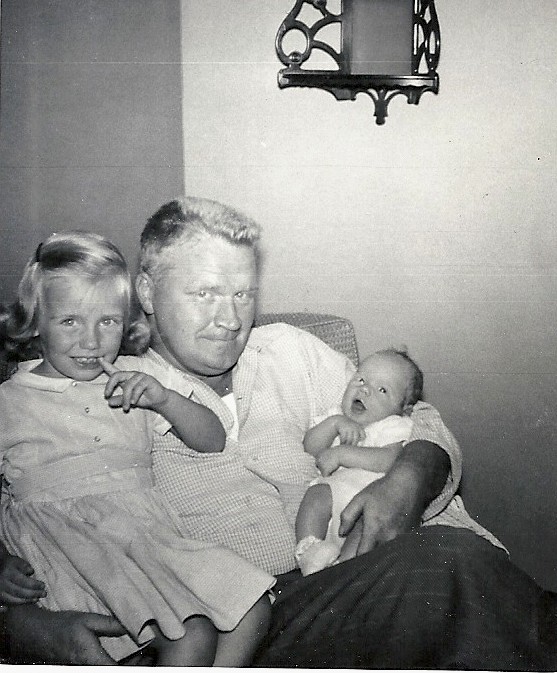
Fear and resentment—and the overwhelming conviction that the little guy never gets ahead—were deeply embedded in his character. That doesn’t mean he was not a good father; he absolutely was, caring for his family and living up to his responsibilities as a hard-working adult and citizen who never missed an election. He was a proud Teamster, a church-goer, and the man who drove me 90 miles one-way to take flute lessons at the university.
My dad served in World War II, in the Army Air Corps (later the US Air Force) in the Pacific theatre. His plane was shot down, in 1944, over the Sea of Japan, and the crew was rescued by an Australian sub. He lost his 19-year old brother Don in the first wave of Marines taking Iwo Jima in February of 1945. I wrote more about these things here, explaining why my dad really never got over the war. But it was more than his wartime experiences that molded his character.
He often expressed the sense that he’d been cheated—that other, less-deserving people were moving ahead, because they had money, or were currying favor, while he (a realist from the poor side of the tracks) was left behind. He voted for George Wallace in 1968, because Wallace claimed there wasn’t a dime’s worth of difference between the two parties: both were corrupt and run by elites. Sound familiar?
Thom Hartmann’s new piece– Culture Is Where Democracy Lives or Dies, Because Politics Always Follows the Story a Nation Tells Itself—goes some way to explaining what’s happening today, but also why my dad, surrounded by protests against the Vietnam war and girls burning their bras, turned to a man who supported segregation and repudiated progressivism: ’ Like no candidate before, Wallace harvested the anger of white Americans who resented the progressive changes of the 1960s. Wallace supporters feared the urban violence they saw exploding on television. With tough talk and a rough-hewn manner, Wallace inspired millions of conservative Democrats to break from their party.’
Like many of Trump’s supporters today, my dad saw Wallace as a truth-teller, an advocate for the working man, someone who would work to defend cultural norms around race, gender, authority and social policy. Even when those norms were outmoded, unjust or morally repugnant.
Today, I know better than trying to talk an irrational, ruby-red voter out of their convictions. I really do understand how pointless, even damaging, it is to accuse Trump voters of destroying democracy and erasing progress. Because I spent, literally, years of my life trying to (cough) enlighten my father, who treated me like other fathers of the era treated their know-it-all college-student kids: as spoiled brats who needed to let the real world take a whack at them.
My father died in 1980, of a brain tumor, at the untimely age of 58. I never changed him, but he never changed me. He thought a college education was a waste of time and money, although when I graduated, he came to commencement exercises and danced with me at the Holiday Inn afterward.
Later, it dawned on me: the fact that he and my mother couldn’t contribute financially to my college education, and couldn’t help me navigate enrollment, might have been part of his insistence that college was for the privileged, not families like ours.
All of this happened in a time when news and opinion came from three mainstream TV channels and the Muskegon Chronicle.Who do Trump voters turn to now for news? Is that source supporting their racism, sexism, xenophobia and bitterness? Is it filled with fact-free resentment?
Where do we start in changing minds and hearts? I wish I knew.
I read it because I couldn’t really think of anything “better” than DEI, as a values template for effective teaching and learning. More on what the author thinks is better, in a minute.
I am of the opinion that DEI no longer can be defined as three important values: the desirability of diversity in making an organization and its goals stronger, the principle of providing equitable resources instead of a dangerous gap between haves and have-nots, and the human need to be included.
As a teacher in a (mostly white) school, long before DEI was something that could be positioned as wrong and against the law, let alone “replaced,” I would have to say that inclusion, equity and valuing student diversity were and remain cornerstones of good classroom practice.
But I realize—and this is what I hoped to understand in reading the article—that policies loosely grouped as “DEI” (affirmative action springs to mind) were maybe a topic that hadn’t been discussed enough to be clarified. Maybe there are other ways to create policies that acknowledged the worth of every student, no matter what they brought to the table, and the struggle to give them resources, including knowledge, tailored to help them live productive lives.
As if.
The author begins with a quote from John McWhortertaken out of context, then lays out his thesis: Linda McMahon signaled she wants to replace DEI with individual student agency, enabled by strong families and schools. He then proceeds to explain how he rose above his working-class station, even though he was forced to attend mediocre public schools, because his family instilled character and a work ethic into their children.
Unlike, of course, other—let’s call them ‘diverse’—families and children, who got into trouble and didn’t achieve. He pushes the success sequence (college, job, marriage, children) as his “something better” alternative to his skewed conception of DEI. As for student agency—something I heartily endorse and practiced for 30 years–he seems to confuse actual agency with a concept right-leaning educators raved about a decade ago: student grit (which leads to hard work, obeying orders and school success).
The whole piece feels like a narrow-vision essay on who deserves to succeed, buttressed by quotes from political leaders and deliberate lies about what teachers are telling students, topped with a light frosting of racism.
So—what should replace DEI?
Actually, if you’re taking away (via federally approved punishments and reduced funding) inclusion, equity and diversity, what you’ve got left is exclusion of non-preferred students, discriminatory distribution of resources, and separation of student groups based on physical characteristics. In other words, Arkansas in 1957. What happens when a latter-day Orval Faubus emerges?
The Southern Poverty Law Center has a great piece on the anti-student inclusion groups and initiatives forming around the country—this goes way beyond Moms for Exclusion—and (important) who’s funding them: Together, these groups represent a growing trend: weaponizing public outrage and social media virality to enforce a narrow vision of education. Their strategies of harassment and public shaming have injected fear into discussions around race, gender and equity in the classroom.
So—one thing that can happen is resisting that fear, teachers intentionally developing collegial trust, clarifying their mission to serve all children well. And yes, I spent more than three decades in the classroom, most of those in a single district, and fully understand just how difficult that prescription would be. But still—courage and persistence are essential when you’re resisting something malign. And the anti-DEI movement is definitely malign.
I was taken by this piece by James Greenberg, shared by one of his Facebook friends:
“This dislocation isn’t imaginary. It’s rooted in real structural shifts. The collapse of industrial jobs, the erosion of social mobility, the fragmentation of public education, the disappearance of local media—all contribute to a pervasive sense of loss. Add to that climate disasters, housing precarity, and the stripping of rural and working-class communities by extractive economics, and you get fertile ground for stories that promise a return to order—even if that order is cruel.
The “stolen America” narrative—amplified by cable news, talk radio, and algorithmic social media—offers a simple explanation: you are losing because others are taking what’s yours. It’s a lie, but a compelling one, because it replaces confusion with clarity. It locates blame. It gives identity to those who feel erased.”
I would add to Greenberg’s analysis—the COVID-19 pandemic. But I like his characterization of public education as fragmented. Because that is precisely what has happened to our public schools, even those who rode the COVID wave, then dug into repairing the damage it did to trust in our teachers and school leaders. The voucher craze isn’t about giving parents choices—it’s about breaking up successful school districts attempting to serve all students as best they can.
What can replace DEI? Nothing. If we lose our framework of serving all kids equitably, we go backwards 75 years.
It used to be fairly common in Traverse City, Michigan—a Michael Moore sighting. I once stood in line behind him at a Coldstone Creamery on Front Street (no longer there, alas). During the summer TC Film Festival (also no longer in existence), he was everywhere, leading panel discussions and walks around TC’s beautiful, turn-of-last-century downtown neighborhoods.
Michael Moore’s star has faded here, for various reasons. He’s never been an easy person to watch on TV, full of himself and, sometimes, an explosive but unreliable narrator of what’s happening in this country. You certainly know where he stands—but he can be a grating spokesperson.
Nevertheless, I read his free newsletter and found his April 30 column on the Vietnam War—where he points out that we’ve never as a nation, admitted our guilt or apologized–moving and worth deep consideration:
“They kicked the ass of a military superpower — and sent 60,000 of our young men home to us in wooden boxes (nine of them from my high school, two on my street) and hundreds of thousands more who returned without arms, legs, eyes or the mental capacity to live life to its fullest, forever affected, their souls crushed, their nightmares never-ending. All of them destroyed by a lie their own government told them about North Vietnam “attacking” us and the millions of Americans who at first believed the lie. This past November 5th showed just how easy it still is for an American president, a man who lies on an hourly basis, to get millions of his fellow citizens to fall for it.
I think we need to do this for our children’s sake, for our grandchildren, for the sake of our future if there still is one for us. We should take just one day every year and participate in a national day of reckoning, recollection, reflection, and truth-telling, where together we actively seek forgiveness, make reparations and further our understanding of just how it happened and how easy it is for the wealthy and the political elites and the media to back such horror, and then to get the majority of the country to go along with it… at least at first. And how quickly after it’s over we decide that we never have to talk about it again. That we can learn nothing from it and change nothing after it.
Teach our children this truth about us. About our history. Give them this knowledge and with it comes the opportunity for us to change and make different choices for our future. To be a different people. A peaceful people. The Germans did it. The Japanese, too.”
And here we are, again, creating an unnecessary war—this time on our own city streets. And the question bubbles up: Are we teaching our children the truth about the place where they live? And, even more important, what will happen if/when they believe the lies their government is peddling?
It’s a reasonable statement you might expect from any accomplished teacher—but one that could now get you fired in some states and districts.Chaos and fear and flooding the zone are part of media assessments of public education in June 2025, along with smiling photos of HS graduates and end-of-year academic honors.
Robert Reich said it well: “Why is Trump trying to cancel “Sesame Street,” which has helped children learn to read and count for over half a century? Why is he seeking to destroy Harvard University? Why is he trying to deter the world’s most brilliant scientists from coming to the United States?
Because he is trying to destroy American education — and with it, the American mind.”
Is there anything teachers can do to stop the ongoing attack on becoming genuinely well-educated? To not be fearful of ideas or painful truths?
Individual teachers are seldom visible enough to draw widescale media-fed wrath (which is why I found the new National TOY’s remarks brave)—political opponents of public education generally target teacher unions, well-endowed universities, and programs that provide free breakfast and lunch or wraparound healthcare for kids who need it.
With the upcoming NO KINGS National Protests, I’ve seen lots of social media memes urging people to do what they can. To march and carry signs, of course—but also to speak to those in their circle of influence, to write, to model democratic principles. To behave as engaged citizens—and to teach their children the truth about our history, with the goal of becoming a peaceful people.