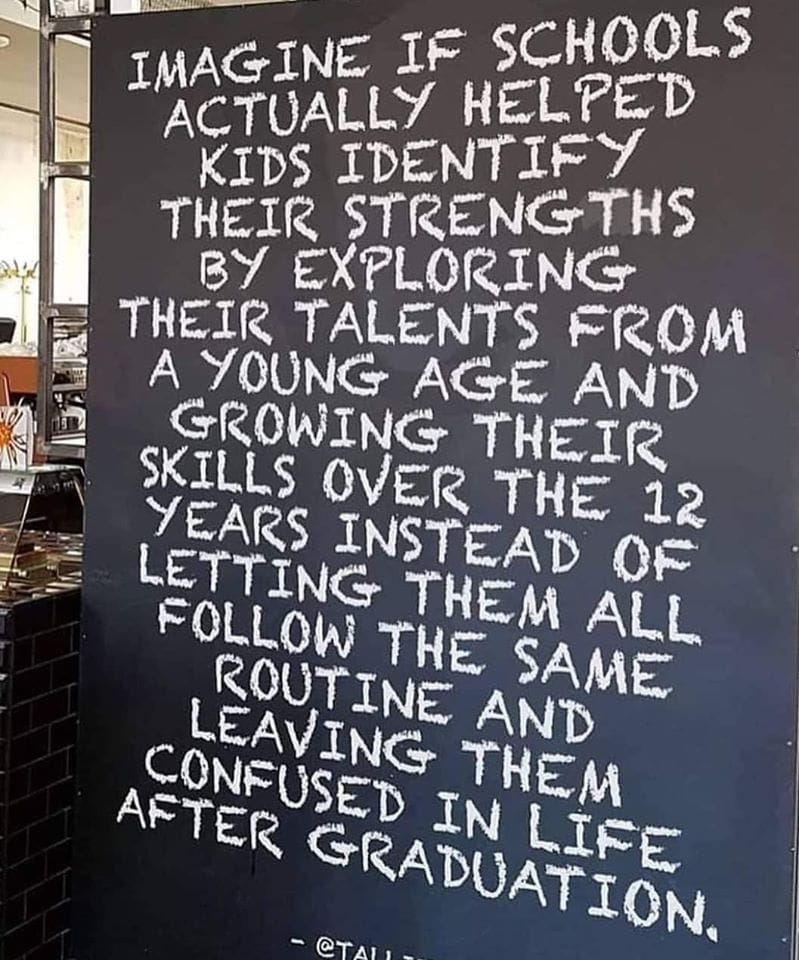
What about Homeschooling?

Families who choose to homeschool their children have never been on my negative/activist radar, as a veteran public school educator. I have had both positive and not-so-positive experiences with students who were homeschooled–from a pair of shy, well-behaved sisters who fit seamlessly into the middle school music program due to years of independent music lessons, to a sweet boy who had never really learned to read in the 7th grade and tended to wander aimlessly around the music room, once his mother finally decided to send him to school at age 12.

My ambivalence about homeschooling is likely because I became a teacher in a time when homeschoolers were often young hippie parents who worried that schools would suppress their children’s natural gifts in favor of compliance and standardization.

This was the era of Paulo Freire and Summerhill, and—perhaps my favorite book about education— “Teaching as a Subversive Activity,” by Neil Postman and Charles Weingartner. The subtitle is worth mentioning:  A No-Holds-Barred Assault on Outdated Teaching Methods-with Dramatic and Practical Proposals on How Education Can Be Made Relevant to Today’s World. (1971)

Today, homeschoolers are often escaping what they see as Godless classroom chaos, or a curriculum that acknowledges certain truths about our diversity and honest national history. The pandemic and its aftermath pushed parents on both sides of the masking question into involuntary home academics, and left people frustrated.

So much for drama and relevance, letting children direct their own learning, at their pace and honoring their interests. Instead, as David Labaree and Deborah Malizia note:

Schooling moved from a shared learning and cultural experience that generated a sense of community and common purpose to an individual competition for the grades, credits, extra-curricular achievements and degrees that determine students’ future life chances.

Once college enrollments surged in the mid-20th century, the struggle became a contest to gain admission into the most selective college possible. Rising levels of income inequality have only intensified the competition. One result is the devastating increase in student stress and social disconnection, in a setting where every student becomes a potential adversary in the race for extrinsic achievement, and the relentless pressure hurts students at all levels. 

This is not how schools were supposed to evolve—they were supposed to be sites for building citizenship, democratic equality and opportunity. But here we are.

Still. If Mama wants to educate her little ones at home, I’m OK with that, as long as my tax dollars are not paying for skiing lessons or $500 LEGO sets, part of a misguided voucher scheme.

We are likely to see those kiddos at some point, in the public system, perhaps middle school or high school when the home-school teacher’s curricular expertise across the board founders. Or when one of the kids wants to play in the band, join the chess club or the public school basketball team.

Just as public schools have tried to adapt to their surroundings and unplanned events, like a global pandemic, families have tried to custom-tailor their children’s education. I’m not saying that I think all of those pull-your-kids-out choices were good ones –thinking here about that 12-yr old non-reader, or kids whose parents reject the idea of getting along with people who are very different from you, in a pluralistic society.

But–a strong public school system, built on quality teaching and rich curriculum, still can serve multiple perspectives in a healthy  community, including the desire to educate one’s children at home.

Where I get off the homeschooling train is when homeschoolers refuse to follow community-driven policies. Vaccinations, for example. If you want a free, high-quality public education, or the opportunity to use public schools, at any point, as a springboard for your children’s ultimate goals, you may have to follow a few rules.

The Michigan Legislature is currently considering a registry of all school-age children. Homeschoolers would have to, by law, notify the state that they were homeschooling their children. Beyond that—things like curriculum and testing, which are largely controlled by legislation, for example—there is a great deal of freedom for homeschoolers.

This feels like common sense to me, much like a census or licensing vehicles. Where are the kids being homeschooled—are there are large number in a particular district? Why? Can we expect to see them return to the public school and prepare for that? Where are the kids who are not being schooled at all, home or otherwise—and are they safe? Why do homeschoolers find a simple registry threatening?

It’s interesting how many homeschoolers see this as government interference. Given the increases in homeschooling, this seems like critical data to have: Michigan is home to roughly 1.7 million school-age children, and 1.36 million are in public schools, while 182,000 are in private schools, according to 2022 Census data. That would leave about 150,000 students who are either homeschooled or have dropped out.

That’s a lot of kids. I’d be willing to bet that not all of them are being lovingly homeschooled by teachers with the skills to help them move forward academically.

DIS-Information in Schools

You may have heard the story, a couple days back, about a Republican legislator in Michigan posting a photo of buses at the Detroit Metropolitan Airport, claiming the buses were transporting “illegal invaders.”  News stories politely suggested that he was erroneously referring to undocumented immigrants—after all, Representative Matt Maddock is still in the Michigan House—before confirming that the buses were, in reality, transporting four men’s basketball teams competing in this weekend’s Sweet 16 and Elite Eight games in Detroit.

Was Maddock (whose wife, Meshawn, was recently Co-Chair of the beleaguered Michigan Republican party) simply misinformed? Doubtful that he was hanging around a major metropolitan airport (which is not, by the way, in his district), watching planes and buses come and go, and simply, you know, got the wrong impression about a few dozen young men—tall ones– getting on buses.

Nor has he apologized for what might have been a dangerous trigger, inviting local yahoos to saddle up and head for the airport. In fact, he’s continued to post:

“We know this is happening. 100,000’s of illegals are pouring into our country. We know it’s happening in Michigan. Our own governor is offering money to take them in! Since we can’t trust the #FakeNews to investigate, citizens will. The process of investigating these issues takes time. The whole nation knows about the Democrat illegal invasion human trafficking criminal enterprise. Why does the media only work to cover it up?”

Welcome to Detroit, college athletes.

Back in the day, as part of what used to be called a ‘unit,’ my 7th grade English teacher, Alison Olding, taught us the difference between misinformation (when you think you know something, but it’s wrong) and disinformation (when you deliberately plant known falsehoods). There were plenty of examples to share with a group of 7th graders, back then, and now. Spreading misinformation in middle school (a daily occurrence) is always wrong, but making stuff up to harm someone else is a special kind of reprehensible.

And yet, here we are, hip-deep in AI deepfakes and college professors hosting far-right websites protecting “the American way of life”  and government interventions to suppress social media and—God help us—Russian disinformation about their insatiable, immoral war in Ukraine:

 “The strategy that matters most for the Kremlin is not the military strategy, but rather the spread of disinformation that causes the West to back away and allow Russia to win. That disinformation operation echoes the Russian practice of getting a population to believe in a false reality so that voters will cast their ballots for the party of oligarchs. In this case, in addition to seeding the idea that Ukraine cannot win and that the Russian invasion was justified, the Kremlin is exploiting divisions already roiling U.S. politics.” 

Kinda makes you wonder: Didn’t any of the Republican congressmen on the pro-Putin side learn about misinformation and disinformation in school? How to sort out fact from fiction? How to research questions around information that may or may not be true—and how to accurately evaluate sources that may be biased, or flat-out lying?

It’s a serious and critical education question. There are, indeed, public schools where media literacy is a formal part of the curriculum. There are outstanding digital literacy resources for students, supported by high-quality research. What’s missing is the will and the urgency of the need to educate kids about distinguishing between truth and whatever it is they’re getting on TikTok.

Or, unfortunately, at their kitchen tables or their church or on the bus. Misinformation—can you remember Things You Used to Believe?—has always been a factor in growing up and becoming educated. Disinformation is a darker thing altogether. Especially when it comes from people who should, theoretically, represent integrity. Legislators, for example.

Discussing this with one of my favorite cyber-colleagues, Barth Keck, he said: I teach these very strategies in my Media Literacy class. Sadly, I fear most adults nowadays – including the people on this platform – lack the patience or interest in employing them. I just discussed this point with a colleague who teaches Speech & Debate. He’s seeing kids parrot talking points rather than thinking deeply about issues. Whom are they parroting? Many adults are a lost cause; it’s the kids who need to learn to think critically.

A short piece in the Michigan Advance made this point simply: Disinformation makes our communities less safe. We are not powerless in this plight. Disinformation pulls apart our communities, and community itself is key to fighting back.

Even when it’s uncomfortable or not neighborly or involves a guy you may have enthusiastically voted for, once. When someone is spreading disinformation—even if it’s disinformation that faintly echoes your beliefs about the southern border, federal lawmakers or who deserves a handout—it’s wrong, and they need to be called out. For the sake of your school and community.

Disinformation IN schools is often disinformation ABOUT schools. All of those laws nominally designed to “protect” students from things that make folks uncomfortable—like classroom discussions about lynchings or honest talk in health class about sexual preferences—only open the door for students to absorb misinformation and disinformation when they don’t get the truth in school.

Here’s a heartbreaking and lethal example. My school used to offer, as part of community education, a hunter safety class. You had to be a certain age, produce appropriate licensing, learn about (and be tested on) the safe use of firearms, including keeping them secured when not in use.

Michigan is a hunting state. Opening Day in deer season is often a school holiday. We weren’t thinking about guns as evidence of masculinity or patriotism—or revenge. Our parents weren’t giving us handguns as an early Christmas present.  Our legislators weren’t posing with the whole family carrying assault weapons.  That’s the disinformation part.

From a piece on the 2022 school shooting in Oxford, MI:

What’s particularly hypocritical here is that the most strident defenders of this [gun] culture skew conservative and talk a lot about what isn’t appropriate for children and teenagers. What they think is inappropriate often includes educating kids about sex, about the fact that some people are gay or transsexual and about racism. It’s a perverse state of affairs: Exposing children to simple facts is dangerous but exposing them to machines designed to kill is not. You can’t get your driver’s license until you’re a teenager, or buy cigarettes and alcohol until you’re 21, but much earlier than that, kids can, with adult supervision, legally learn how to end someone’s life.

In Michigan, the shooter’s parents are going to prison for providing their son with disinformation; families and a school district are forever torn.

Once more: communities are the key to fighting disinformation. Start now.

Star Tech: The Next Generation of Record-Keeping

In her last year of a degree program in Justice Studies, my daughter took a course called “Surveillance in Society.” The readings and discussion were around intrusions into personal privacy and data made possible by technology. Dear Daughter and I had many amusing conversations about some of her assignments—“Are Bar Codes the Mark of the Beast? Discuss.”—which struck me as paranoid in the extreme. Her professor was obsessed with our imminent loss of civil liberty, always urging his undergrads to be suspicious of anyone asking for personal information, and, presumably, scanning the sky for black helicopters.

However—I have been thinking a lot about the use of technology to gather data and “streamline” normal school processes, like testing, attendance and grading, to present an image of a “21st century school.”  Here is a simple story about data collection and our belief that All Technology is Good.

In 1998, my district opened a new middle school, full of state-of-the-art technological systems. We were the envy of the other buildings, with fully networked software to handle all our data needs. We got some training and the big pitch—our new procedures would save time, paper and man-hours, give us more accurate data, impress parents with e-communications, yada yada,

Under Old Attendance procedures, every teacher took attendance once, at the same time every morning, recorded it in their grade/attendance book, and sent a student to the office, with an attendance form, printed on scrap paper from recycle bins. Secretaries recorded these on a master list, and handled absence data for students who came/left during the day. Teachers got a copy of the master list, to help confirm absences when students needed to make up work.

Under New, Improved Attendance procedures, every teacher had a computer, with separate attendance book and gradebook functions. Teachers were now required to take attendance every hour and enter absences and tardies on the computer within a five-minute window. We were not allowed to keep the attendance program open on our computer desktops (because our gradebooks, protected by the same password, might be accessed by devious students)—so we had to log in every hour.

Because this was 1998, the server’s horsepower was severely strained by 40 teachers logging in simultaneously, and it would take 30-60 seconds for the program to load. Teachers who forgot to take attendance within 5 minutes would be called by the office (where a secretary now sat, monitoring the data coming in every hour), disrupting teachers’ lessons. If someone had a missing assignment, you had to toggle between attendance and grade programs to discover whether the child had actually been absent.

A process that had taken two minutes of teacher-time daily suddenly began to take two minutes every hour. Best-case scenario, teachers would lose ten extra minutes of instructional time each day: 50 minutes/week, four class periods per month, 36 class periods per school year, or six full days of instructional time. Taking attendance.

Lest you think I’m being overdramatic (or are dying to tell me that faster computing and better software have eliminated problems and made attendance-taking an absolute joy)—I tell this story not to whine about record-keeping, but to question our automatic goal of “efficiency” and the uses and purposes of all K-12 tech-enhanced data collection.

The state requires daily absent/present data, and that to ferret out kids who aren’t actually attending school but were counted for funding purposes. A student who went AWOL would not necessarily be picked up any quicker under the new system, and most of our mid-day leavers were signed out to go to the orthodontist with their mom, anyway.

The new system made data-entry mistakes six times more likely and kept a secretary busy checking on students who were marked present one hour, but absent the other five due to teacher error. I had great sympathy for “careless” teachers who rushed through the attendance procedure to get started on, you know, teaching—only to be monitored and chastised later. I was one of them.

Nobody in the office could explain why or how, precisely, the new system was helping us do a better job of serving kids. The on-line gradebooks also came with unanticipated problems—teachers who didn’t post enough grades (remember when formative data included things that weren’t numbers?), the amount of time now required to deal with anxious parents, and so on.

The most obvious reason to question always-available online gradebooks is that responsibility for turning in work and monitoring a running performance record should belong to students, especially in secondary settings. We have always had periodic reporting to parents—four or six times a year, or in some cases, weekly progress reports. Any more than that elevates grades over actual learning and encourages students to let mom be in charge of their education.

Tech-based surveillance of students is now on steroids. In a thoughtful post entitled How Much Should I Track My Kid? Ann Helen Peterson says this:

My parents trusted me because I had earned their trust. Sometimes I stretched that trust, but I was constantly figuring out what felt too risky, what felt right or wrong, who I didn’t want to get in a car with. Maybe that sounds like a lot of discernment for a teen. But how else do we figure out who we are? My parents could’ve lectured me about “making good decisions” all they wanted; I only knew how to make them by finding myself in situations far from them where I had to.

The same principle applied to my grades, to my online use, to how I talked to boys and figured out friendships. In high school, I would see my exact grade around twice during the quarter, when a teacher would distribute printouts that included all graded assignments and your current percentage.

Schools pay attention to what they value. We collect data first, and decide how to manage it later, a pattern repeatedly endlessly in thousands of schools. We assume that everything can be done faster, cheaper and better through technology. Sometimes, the rationale runs backwards—we adopt the technology, and then invent reasons for why we need it.

I’m Not That Kind of Christian

I was eager to read Tim Alberta’s new book: The Kingdom, the Power and the Glory: American Evangelicals in an Age of Extremism. I follow Alberta’s magazine pieces, in the Atlantic and Politico, his appearances on cable and mainstream news and podcasts. I read his previous book, American Carnage: On the Front Lines of the Republican Civil War and the Rise of President Trump, and found it well-written but disappointing, an overly detailed defense of country-club Republicanism that missed the ugly underpinnings of how we ended up with President Donald Trump.

But—cutting to the chase—The Kingdom, the Power and the Glory is a fantastic book. Highly recommended, even though the burgeoning Christians-are-what’s-wrong-with-this-country crowd may be irritated by Alberta’s persistent, conservative choir-boy insistence that the church is a force for good.

I should mention here that I had a front row seat for the rise of the Cornerstone Evangelical Presbyterian juggernaut in Brighton, Michigan (nothing like your mainstream Presbyterian, btw). We moved to Livingston County around the same time as Richard Alberta, long-time pastor at Cornerstone and Tim Alberta’s father. When we were looking for a church, we heard repeatedly about the great things going on at Cornerstone, which was just a few miles down the road—the rapid growth of the congregation, the inspiring sermons, the youth group with 100 members. Pretty soon there would be a school, too—ultimately, there would be six major building expansions in 30 years.

One Christmas Eve, we decided to give Cornerstone a try. My son was three or four at the time and had zero capacity for quiet behavior in a strange place. When heads began turning, my husband took him out into the narthex. After the service, he was holding our coats and standing by the door. We’re not coming back here, he said.

Out in the car, he pulled a fistful of brochures and monographs out of his pocket, collected as he chased our son around the lobby area. Take a look, he said. There were predictable anti-abortion pieces—but also literature supporting capital punishment, and the usual Old Testament scourges against divorce, dark (Harry Potter) magic and homosexuality. We’re not exposing our kids to this, we agreed. We found another church.

But Cornerstone, which eventually grew to 2000 families, held a lot of power and influence in Brighton. Richard Alberta enjoyed stirring up local controversy—when a downtown coffee shop put a tiny rainbow sticker on its door, he wrote a letter to the newspaper, suggesting customers who were willing to order coffee in such a sinful place consider going to “Sodom and Gomorrah” (his too-clever name for Ann Arbor, 25 miles south), instead. The shop closed a few months later.

At Christmas time, when many churches collected gifts for needy families, he declared that there really was no excuse for being needy in well-off Livingston County. Instead, his church filled up a semi-truck with evangelical goods and household items and shipped them to Russia, to support struggling Christians there.

Alberta broke up the Brighton Ministerial Association because he refused to meet with a local gay minister. He brought in “security” specialists when my church, St. Paul’s Episcopal, called a Black rector, claiming that criminals “from Detroit” (code language) would now be getting off I-96 and endangering congregants in Brighton churches’ parking lots.

He went after my church, probably the most liberal mainstream congregation in town, repeatedly and viciously —in the newspaper and any other media outlets he could find, pre-social media. When a reporter at the local newspaper asked for an in-depth interview, he had a putting green set up in his office, and spent the interview nonchalantly practicing his short game, as she sat and took notes.

Many of my students attended Cornerstone and went on mission trips to save the unchurched of West Virginia or wherever. One of my band students’ father was an associate pastor at Cornerstone; at Parent-Teacher conferences, this pastor asked me to call the fees for his son’s upcoming band field trip a “donation” for tax purposes. He came with a typed-up statement for me to sign (I didn’t).

There’s much more, but you get the picture.

Tim Alberta’s book begins with the death of his father, in 2019, and his surprise at learning formerly dedicated congregants were leaving Cornerstone for more MAGA churches. Funeral attendees criticized Tim for his openly non-MAGA thinking (a well-deserved potshot at Rush Limbaugh). Followed up, of course, with the righteous assurance that they were praying for him to see the real truth.

My thought: The Buddhists were right about karma. You reap what you sow.

Which is, bottom line, where Tim Alberta is going in this book. He takes the reader through right-wing congregations, colleges and organizations around the country, a wide-ranging array of appalling examples of religious malfeasance. Mercedes Schneider posted some hot quotes from the book in her blog, if you want to get a sense of the flavor of his writing, and the practices he explores and condemns.

Alberta is careful to note that Trump was merely an accelerant, a permission-giver for bad behavior in the name of the Lord, not the root cause of what has happened to the Evangelicals. But he pulls back the curtain on some distinctly repellant, un-Christian conduct and people, both the globally famous and the local yahoos in Brighton.

He resists passing judgement on more inclusive, mainstream churches, although his conservative perspective is never hidden. He also has the scholarly and personal background to dissect theological and biblical questions raised by the commercialization and politicization of the spiritual. He writes with great confidence and clarity, relishing the opportunity to counter every lazy iteration of “Well, the Bible says…” He spends a half-dozen pages on abortion that are well worth reading.

I learned a great deal from the book. For starters, I began to understand where MAGA and its tribal beliefs and actions come from, how conservative Christians moved rightward—the triggers, the entitlements, the power-hoarding. This was personal for me, too, a look at how all the nice white kids from nice white families in my school district shifted their world-framing and let casual racism, sexism and xenophobia emerge.

It was also clear how the pandemic was a huge political trigger, dividing congregations that wished to protect their more vulnerable members from those who saw vaccines and restrictions as the state trying to control the church, and COVID deaths as God’s will.

Alberta ends the book with some signs of hope—the most convincing of which, ironically, come from women who have been sexually abused and actually fought back—Jennifer Lyell and Rachel Denhollander. Aside from Paula White, Trump’s hottie “spiritual advisor,” the main characters in this book’s framework are men. White men. When Alberta travels, as research, he visits men—genuine pastors, scoundrels posing as clergy, insufferable jerks, the egomaniacal, the greedy and the scheming. Women take a subordinate role in all of the churches and organizations. This is so obvious, in all 500 pages, that it feels like a blind spot. He thanks his wife for essentially raising their three boys in his absence, in the acknowledgements, but it feels like an afterthought, the cookies and coffee after the meat of an intelligent sermon.

Nonetheless, Alberta seems to have had a religious epiphany, taken a well-researched and critical look at what evangelical Christians have become, and bravely wrote about what he’s observed. When I read about mega-churches, pastors living in mansions and castigating their fellow citizens who believe differently, as the donations roll in, I always think “Not all Christians are like that.”

And, lo and behold, there’s a FB page for that: Not That Kind of Christian. There are think pieces—“We Were Wrong”– and bricks and mortar churches where the focus is on doing good and building community, not accruing political power. The traditional church may be fading, as it definitively has in Europe, but it isn’t dead yet.

I am certain that Tim Alberta holds out hope that we’re on the crest of a religious revival. In the meantime, he was harrowingly honest about what he saw. Everyone—believers and non-believers should read the book. Five stars.


Atticus

There’s a strange moment in time, after something horrible happens, when you know it’s true but you haven’t told anyone yet. Of all things, that is what I remember most. It was so quiet.  

Barbara Kingsolver, from the Poisonwood Bible.

So—we are a dog family. Always have been. Before we had kids, my husband and I had a dog. A secondhand dog, like most of our subsequent dogs. In 44 years of marriage, we’ve had six great dogs, with divergent personalities and backstories. Two of our dogs were named Blue (neither was named by us). One dog thought she was a cat—you know, aloof and entirely self-interested. Another flunked out of leader dog school, and one was a beautiful golden retriever named after a Supreme Court Justice. One died, of a snakebite, about 15 minutes before my son’s 6th birthday party.

And the last dog we had was named Atticus. Putting that in the past tense is still hard, although we had to put Atticus down—over the Rainbow Bridge, as they say—in July.

Atticus was found in a Walmart parking lot, a stray, and—good fortune!—taken to a Humane Society in southwestern Michigan which partners with Lakeland Correctional Facility in a program called Refurbished Pets, in which selected dogs are placed in the prison, and inmates care for and train them. Before residing in the prison, foster families care for the dogs, which are often in rough shape.

Atticus was cleaned up and civilized by a wonderful woman named Jean, then entered the RP training program. As it happens, my husband, a criminal defense lawyer, had a client at Lakeland. At a visit, his client, a leader in the dog training program, asked if we might be interested in a great dog. We were in that sweet spot of not owning a dog, where you can travel and go out for the day without worrying about your pet, having lost Annie (the cat-dog) a few months earlier. We hadn’t yet discussed getting another dog.

What’s the dog’s name? my husband asked. Atticus.

And that was that.

We picked Atticus up from Jean’s house. She showed us how good he was at chasing balls, and gave us a thundershirt because Atticus was terrified of storms. She told us he had some “trust issues” but was, at heart, a very good boy. The vet that donated time to Refurbished Pets thought he was about three years old. Thinking about Atticus on his own, riding out storms and scrounging for food, broke our hearts. He was instantly, and irretrievably, our boy.

For the next eleven years, Atticus slept on a cozy bed in the corner of our bedroom and traveled with us—seven times—from Michigan to Arizona, an excellent backseat traveler. Whatever trust issues he had melted away, although he still whined from his bed when there was thunder and lightning.

Of all the dogs we ever had, Atticus was the most food-driven. We got in the habit of storing things in cupboards and the microwave, because anything left on the counter, or the kitchen island was bait. Once, my son and some of his friends bought some gourmet, $$$ cookies while touring northern Michigan, and left them in bags and boxes within striking range. When they returned home, Atticus had eaten most of them and hidden the rest. For the next year, we found cookies under couch cushions, in a bookshelf, and in a laundry basket.

About a year ago, Atticus (probably 14 by now) was showing signs of age: He panted constantly. He paced, all night long. It obviously hurt to lower his back end to the ground, and steps were problematic. The vet said his heart was enlarged, and gave him a medication that caused indoor accidents, something he’d never had before, and made him feel terrible. Plus—he had a collection of symptoms that might be called “acting weird.”

It was time. We were both there, petting him, feeding him treats, holding his paw, as his tail slowly thumped, then stopped. Afterward, I didn’t feel like sharing the news, or posting a photo. It was, as Barbara Kingsolver says, so very quiet.

He was our dog from the wrong side of the tracks, 100% dog, prone to drifting off during walks in the woods (but always returning) and always—until the last year or so—down to pursue a ball or chew up a stuffed toy, especially one that belonged to another dog.

After we made the appointment with the vet, I took a dozen photos of Atticus panting and pacing around the living room, his last afternoon on earth. Here’s one.